← Year 5 PE worksheets

Year 5 Striking and fielding games: striking and fielding skills through cricket worksheet

“Thinking Like a Cricketer” is free to print, with no account. It is the first sheet in the Year 5 PE unit “Striking and fielding games: striking and fielding skills through cricket”, for children aged 9 to 10, and takes about 23 minutes.

Print it on A4. The child's pages come first; the answers, and what each wrong answer tells you, are on the grown-up page that follows. Weeks 13 to 15 of the year, 6 sheets in the unit.

Free sample · answers on the last page

Thinking Like a Cricketer

Name: ____________ · Date: ____________
Year 5 · PE · about 23 minutes
Answers are on the grown-up page

Today I can explain why two-handed batting and accurate throwing help in cricket.

A Look back3 min

  1. 1.

    Which is the best way to catch a ball coming at your chest?

    Watch the ballGet in lineCatch it
    Two hands cupped togetherOne hand, stiff and flatArms crossed over your face
  2. 2.

    Draw a line from each skill to its best tip.

    ThrowCatchStay safe
    Throwing accuratelyCatching a ballStaying safe in a small space
    Two hands cupped togetherClear space, soft ball, grown-up watchingLook at the target and step towards it
  3. 3.

    Which place is best for practising a throw?

    Find a spaceCheck for windowsThrow
    A clear space with a grown-up watchingA narrow path by a busy roadNext to a greenhouse window

B Watch me, then you4 min

Ali practises batting. He wants to score runs by hitting the ball into a gap, not straight at a fielder.

Watch me
Hands on the batFeet side-onAim at a gap

Ali puts both hands on the bat handle.

He stands side-on so his feet are ready.

He aims the ball into a gap between fielders.

Now you
  1. 1.

    Ali sees one fielder close by and lots of empty grass. Where should he aim his hit so the batters have time to run? Write a few words.

    Batter hitsBall rollsBatters run

C Your turn8 min

Safety first: use a clear space, a soft ball, keep away from windows, and have a grown-up watching.
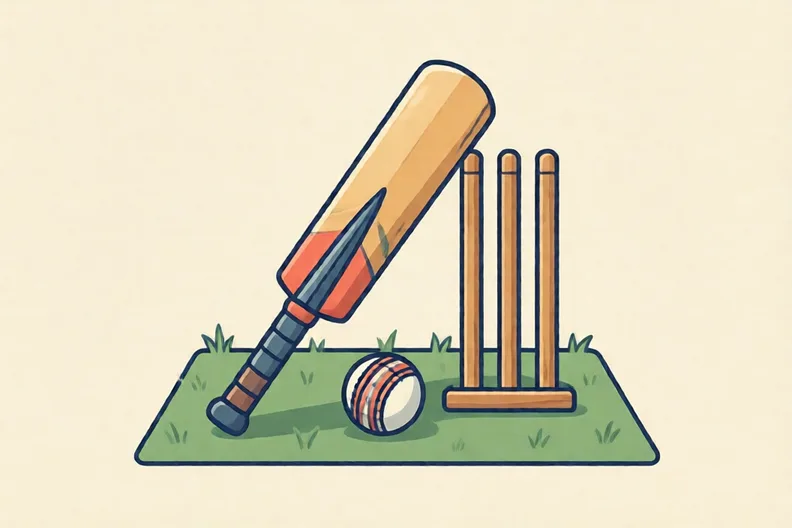
A cricket bat, a soft ball and three stumps on a garden lawn
  1. 1.

    Sort these cards into batting or fielding. Write each card in the right column.

    BatterFielder
    Hit into a gapTwo-handed gripThrow to the stumpsStop the ball
    BattingFielding
  2. 2.

    Put Ali's batting steps in the order he does them above. Number them 1 to 4.

    Step 1Step 2Step 3Step 4
    1. Swing the bat through the ball
    2. Stand side-on with feet ready
    3. Aim for an empty gap
    4. Hold the bat with both hands
  3. 3.

    When you throw at the stumps, which matters most?

    LookStepThrow
    Throwing as hard as you canAiming accurately at the stumpsClosing your eyes
  4. 4.

    Throw a soft ball at a target three times. In the tally, mark each try that hits the target. Then write one sentence about your aim.

    Try 1Try 2Try 3

Say it out loud: Which tip helped your throws hit the target most? Show your grown-up.

D Spot the mistake3 min
A cricket bat and a soft ball resting on a grass lawn
Ali says: “In cricket you only need one hand on the bat, just like in rounders.”
  1. 1.

    Is Ali right? Write one sentence to explain why.

E Think deeper3 min

  1. 1.

    Explain why a hit into a gap can score more runs than a hard hit at a fielder. Write two sentences.

    Hit at afielderHit intoa gap

How did it feel?

Think about today's practice. Which skill felt easiest, and which one would you like to practise again?

I can do it Nearly Not yet
StudyDen · Year 5 · PE · Striking and fielding games: striking and fielding skills through cricketAnswers are on the grown-up page

For the grown-up

Thinking Like a Cricketer · 2 minutes to read

Answers, and what a wrong one tells you

A

1. Two hands cupped together If your child picks one stiff hand, ask what happens when the ball bounces off a flat palm. Then practise with two hands and a soft ball.

2. Throwing accurately → Look at the target and step towards it; Catching a ball → Two hands cupped together; Staying safe in a small space → Clear space, soft ball, grown-up watching

3. A clear space with a grown-up watching If your child picks the greenhouse, ask what a wild throw could break. Move the practice to a clear lawn away from windows.

B

1. Look for: gap, the space between fielders, where the ball is hard to stop If your child writes fielder, ask where the ball can go when a fielder is standing there. Then ask about a gap.

C

1. Batting: Hit into a gap, Two-handed grip · Fielding: Throw to the stumps, Stop the ball If your child puts the throw under batting, ask who is trying to get the batters out. Then sort again.

2. 1 Hold the bat with both hands · 2 Stand side-on with feet ready · 3 Aim for an empty gap · 4 Swing the bat through the ball If your child starts with the swing, look back at what Ali does first. Then ask where the bat must be ready to go.

3. Aiming accurately at the stumps If your child picks hard, explain that a wild throw can give the batters extra runs. Ask them to aim first, then throw.

4. Look for: Up to three marks in the tally, one for each hit, and a sentence about aim or accuracy.

D

1. Look for: No, both hands on the bat give balance and control; one hand is wrong. If your child says one hand is fine, ask them to hold the bat with one hand and then two. Which one feels steadier?

E

1. Look for: A good answer says a gap leaves fielders far away, so the ball takes longer to stop and batters have time to run.

Words to use

Say“Show me where your two hands go on the bat. Which try went into the gap, and what would you change next time?”
Instead of“Just tell them to hit the ball harder.”

After the sheet

In a clear garden space, roll a soft ball underarm to your child. They hit it with a rolled-up newspaper, held with two hands. Count the hits into a gap aloud, then swap roles.

Tick what your child got right in StudyDen. Anything missed comes back in a later Look back box, so there's no need to redo the sheet.

The rest of this unit

5 more sheets come with a StudyDen plan, in teaching order:

  1. Straight arm, side-on bowling(with a plan)
  2. Stopping and returning the ball(with a plan)
  3. Striking into space(with a plan)
  4. Plan, field and score(with a plan)
  5. Calling runs together(with a plan)

Every Year 5 PE worksheet

The worksheets plan opens a printable sheet for every lesson in Years 1 to 6, each with its answers on a separate page for you. It costs £6.99 a month or £59 a year for the whole family, with no free trial.

The full StudyDen plan adds the lessons themselves, marked as your child works, with the worksheets included. It is 7 days free, then £29.99 a month.

Both start with a free account; you choose the plan when you sign up.