← Year 5 PE worksheets

Year 5 Invasion games: shooting, scoring and denying space through hockey worksheet

“Close control dribbling” is free to print, with no account. It is the first sheet in the Year 5 PE unit “Invasion games: shooting, scoring and denying space through hockey”, for children aged 9 to 10, and takes about 20 minutes.

Print it on A4. The child's pages come first; the answers, and what each wrong answer tells you, are on the grown-up page that follows. Weeks 7 to 9 of the year, 6 sheets in the unit.

Free sample · answers on the last page

Close control dribbling

Name: ____________ · Date: ____________
Year 5 · PE · about 20 minutes
Answers are on the grown-up page

Today I can keep the ball close and dribble with the flat side of the stick.

A Look back3 min

  1. 1.

    Put these warm-up steps in order. Write 1, 2 or 3 in each box.

    1. Gently stretch your legs and arms
    2. Jog gently on the spot
    3. Do arm circles and leg swings
  2. 2.

    Why should you warm up before you dribble? Write one reason.

    Warm upReady to moveDribble
  3. 3.

    Where is the safest place to practise dribbling in the garden?

    1234123N
    the clear grass in the middleright beside the house wallunder the tree

B Watch me, then you4 min

Ola dribbles round the cups. Watch how she keeps the ball close to her stick.

Watch me
Knees bentFlat sideSmall tapsLook up

Ola bends her knees and holds the stick with both hands.

She turns the flat side to the ball and uses small taps.

The ball stays close, so she can look up for space.

Now you
  1. 1.

    Ravi dribbles standing up tall with straight knees. The ball keeps slipping away. What should he change?

    Flat sideSmall tapsLook up

C Your turn8 min

Safety first: clear space, a soft ball, away from windows, and a grown-up watching.
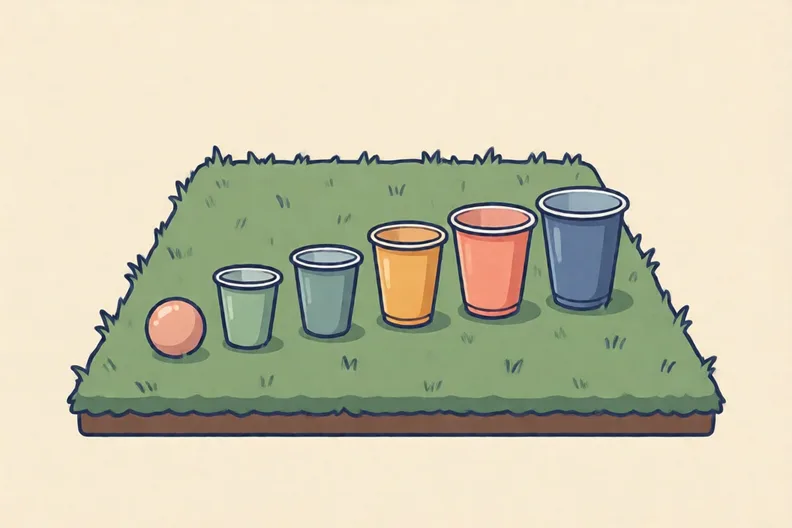
A soft ball and five cups in a line on a short lawn
  1. 1.

    Mia's ball is a long way ahead of her stick. Which fix helps most?

    Keep the ball a hand's width from the stick.Hit the ball harder to get past the cups.Look only at the ball all the time.
  2. 2.

    Put these dribbling steps in the order Ola used them. Write 1, 2, 3 or 4 in each box.

    1. Look up to find space
    2. Turn the flat face to the ball
    3. Bend your knees low
    4. Hold the stick with both hands
  3. 3.

    Join each skill to the coaching point that fits it.

    Flat sideClose controlLooking upSelf-discipline
    Keep trying when it feels hardScan for space and teammatesBall stays near your stickSmooth face used to push the ball
  4. 4.

    Dribble round the cups three times. Your grown-up scores each run out of 5 for keeping the ball close. Colour one bar for each run, then write your best score here:

    My close control scores012345Run 1Run 2Run 3

Say it out loud: Which tip helped you keep the ball closest to your stick? Show your grown-up.

D Spot the mistake3 min
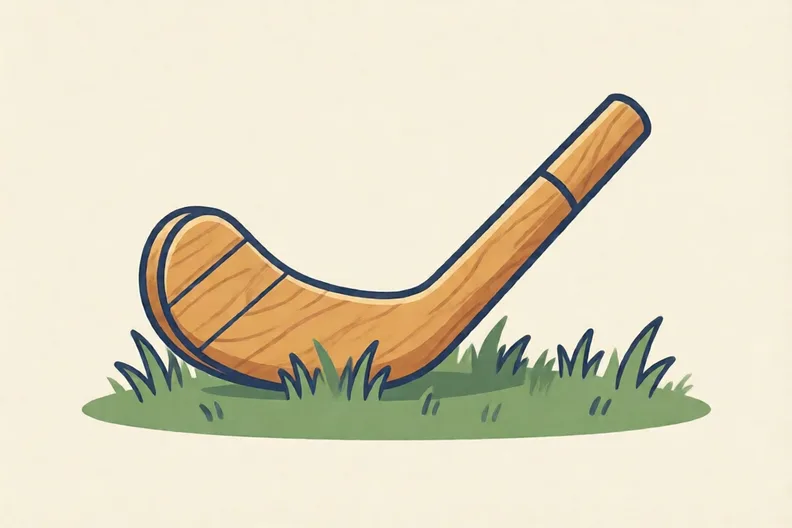
A wooden hockey stick lying on grass, with its flat side and curved back both visible
Ali says: “Push the ball with the curved back of your stick. It gives you the most control.”
  1. 1.

    Why is Ali wrong? Write one reason.

E Think deeper4 min
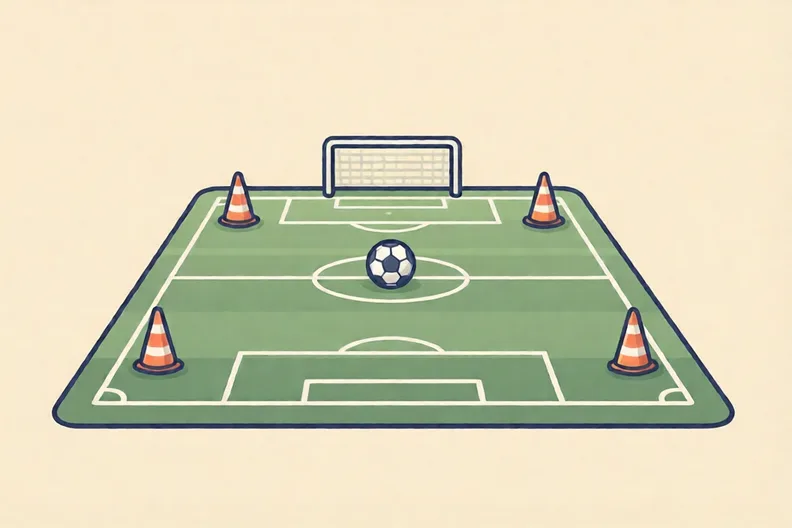
An empty grass pitch with a ball and four cones
  1. 1.

    Why might the fastest player not be the best dribbler? Explain in your own words.

How did it feel?

Think about your three runs. What helped you keep the ball close? What was still tricky? Tell your grown-up one thing you will practise next time.

I can do it Nearly Not yet
StudyDen · Year 5 · PE · Invasion games: shooting, scoring and denying space through hockeyAnswers are on the grown-up page

For the grown-up

Close control dribbling · 2 minutes to read

Answers, and what a wrong one tells you

A

1. 1 Jog gently on the spot · 2 Do arm circles and leg swings · 3 Gently stretch your legs and arms

2. Look for: A reason such as warming the muscles, getting ready to move, or helping avoid injury. If they say it is just a rule, ask: how do your legs feel after a jog compared with before?

3. the clear grass in the middle

B

1. Look for: Says to bend the knees and get low so the stick stays near the ball. If they say hit the ball harder, ask: can your stick reach the ball when you stand up tall?

C

1. Keep the ball a hand's width from the stick. If they pick hitting harder, the ball gets further away and is lost sooner. Ask: how close should the ball stay to the stick?

2. 1 Bend your knees low · 2 Hold the stick with both hands · 3 Turn the flat face to the ball · 4 Look up to find space If they put looking up first, ask: can you see the space if you are still setting your body and grip?

3. Flat side → Smooth face used to push the ball; Close control → Ball stays near your stick; Looking up → Scan for space and teammates; Self-discipline → Keep trying when it feels hard

4. Look for: Three bars coloured, one for each run, and a best score from 0 to 5 that matches the tallest bar.

D

1. Look for: Says to use the flat side, because the curved back is not allowed or because the flat side gives better control. If they say the curved side is fine, point to the flat side and ask which side the rule says to use for dribbling. Then have them dribble once with the flat side.

E

1. Look for: Says that going fast without keeping the ball close makes the ball get away, so the team loses possession.

Words to use

Say“Where is the ball right now? Show me how close it stays to your stick.”
Instead of“Run faster, you'll get it.”

After the sheet

Safety first: clear a space away from windows and breakables, use a soft ball, and watch from the side. Stand five cups in a row with a gap of roughly 50 cm between each. Use a wooden spoon or ruler as the stick. Dribble round the cups three times, then talk together about one thing that improved and one thing still tricky.

Tick what your child got right in StudyDen. Anything missed comes back in a later Look back box, so there's no need to redo the sheet.

The rest of this unit

5 more sheets come with a StudyDen plan, in teaching order:

  1. Passing and receiving with control(with a plan)
  2. Dribble then pass(with a plan)
  3. Defending with my eyes up(with a plan)
  4. Shooting with Good Technique(with a plan)
  5. Switch fast in a game(with a plan)

Every Year 5 PE worksheet

The worksheets plan opens a printable sheet for every lesson in Years 1 to 6, each with its answers on a separate page for you. It costs £6.99 a month or £59 a year for the whole family, with no free trial.

The full StudyDen plan adds the lessons themselves, marked as your child works, with the worksheets included. It is 7 days free, then £29.99 a month.

Both start with a free account; you choose the plan when you sign up.