← Year 5 PE worksheets

Year 5 Gymnastics: flight worksheet

“Flight and power jumps” is free to print, with no account. It is the first sheet in the Year 5 PE unit “Gymnastics: flight”, for children aged 9 to 10, and takes about 20 minutes.

Print it on A4. The child's pages come first; the answers, and what each wrong answer tells you, are on the grown-up page that follows. Weeks 19 to 21 of the year, 6 sheets in the unit.

Free sample · answers on the last page

Flight and power jumps

Name: ____________ · Date: ____________
Year 5 · PE · about 20 minutes
Answers are on the grown-up page

Today I can jump with power and control, using arms, bent knees and smooth flow.

A Look back2 min

Before you move, clear a space away from windows, use a soft ball if you have one, and check a grown-up is watching.

  1. 1.

    What comes last in a PE lesson? Circle one.

    Warm upMain work
    warm upcool downwater break
  2. 2.

    Which action goes in the empty box? Circle one.

    Stand tallPush up
    bend kneespoint toeshold breath
  3. 3.

    In a balance, where do your arms go? Circle one.

    Stand tallHold still
    arms out widearms behind your backarms tight across your chest

B Watch me, then you4 min

A two-footed jump has three take-off steps. Watch how they go in order.

Watch me
Bend kneesSwing arms upPush through toes

Take-off has three steps.

First bend your knees, then swing your arms up.

Finish by pushing through your toes.

Now you
  1. 1.

    You land on your toes. What do you do next? Circle one.

    Land on toesArms out for balance
    bend your kneeskeep your legs straightpoint your toes
  2. 2.

    What keeps the flow between two jumps? Circle one.

    JumpStepJump
    pause after each jumpmove straight into the next movestop to check each time

C Your turn7 min

Each row changes one thing. Work from the first row to the last. Keep the space clear.
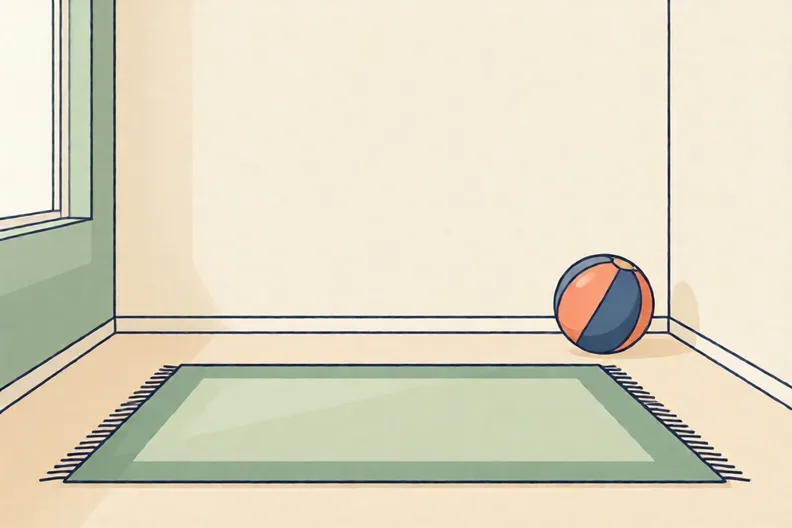
A clear living room carpet with a soft ball resting by a wall, bright daylight
  1. 1.

    Put these landing steps in order. Number the boxes 1 to 4.

    1. Stretch arms out for balance
    2. Stand still with arms out
    3. Land on the balls of your feet
    4. Bend your knees to absorb
  2. 2.

    Join each skill to its coaching point. Draw a line from each skill on the left to one point on the right.

    Tuck jumpFlightLanding
    Keep your tummy tightBend your knees to absorbBring knees up towards your chest
  3. 3.

    Which arm action helps most at take-off? Circle one.

    Swing arms up and forwardHold arms tight at your sidesFold arms across your chest
  4. 4.

    Do three tries of 30 seconds each. In each try, do as many clean two-footed jumps with bent knees as you can. Colour one bar per try to show your count.

    My three tries05101520253035404550Try 1Try 2Try 3

Say it out loud: Which change made your jump feel different: the arms, the knees, or the flow between moves?

D Spot the mistake3 min
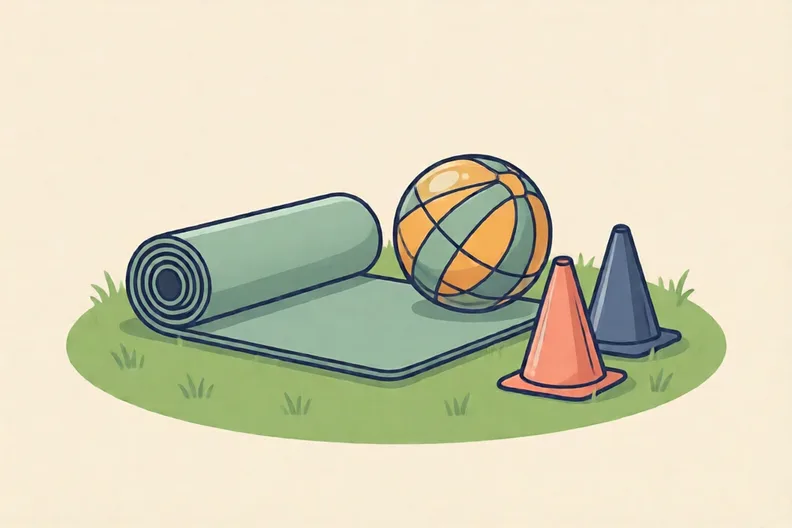
A soft mat on grass with a ball and two cones, ready for jumping
Ali says: “In a tuck jump, bring your head down to your knees.”
  1. 1.

    Why is Ali wrong? Write two things.

E Think deeper3 min

  1. 1.

    Write three different jumps in order for your own sequence. Which one needs the most arm swing, and why?

    LinkLink

How did it feel?1 min

I can do it Nearly Not yet
StudyDen · Year 5 · PE · Gymnastics: flightAnswers are on the grown-up page

For the grown-up

Flight and power jumps · 2 minutes to read

Answers, and what a wrong one tells you

A

1. cool down your child may have picked warm up because it came first. Ask: which part helps the body slow down after hard work?

2. bend knees If your child picks hold breath, say that breathing keeps the body steady. Then ask what the knees do before a push.

3. arms out wide

B

1. bend your knees If your child picks keep your legs straight, ask what the knees could do to take the force. Then do one small, soft landing together with bent knees.

2. move straight into the next move

C

1. 1 Land on the balls of your feet · 2 Bend your knees to absorb · 3 Stretch arms out for balance · 4 Stand still with arms out If the knees come after the balance, the child has landed and then bent late. Ask them to land on the spot and feel the knees bend first.

2. Tuck jump → Bring knees up towards your chest; Flight → Keep your tummy tight; Landing → Bend your knees to absorb

3. Swing arms up and forward If your child picks hold arms tight at your sides, ask them to jump once with arms and once without. Arms add height, so the second jump will feel lower.

4. Look for: Three bars for three tries, each showing a count of clean jumps the child really counted.

D

1. Look for: Knees come up towards the chest; the head stays up, not down to the knees. If your child says it looks silly, ask what the knees should do. Then ask where the head should stay.

E

1. Look for: Three different named jumps in order, and a reason why the arm swing matters for one of them.

Words to use

Say“Show me the take-off, then the landing. Which part moved first, and which part did you feel?”
Instead of“Just do it again faster. The technique will come.”

After the sheet

On a carpet, do a two-footed jump over a folded towel, swinging your arms up and landing with bent knees. Ask your child to say what they saw you do.

Tick what your child got right in StudyDen. Anything missed comes back in a later Look back box, so there's no need to redo the sheet.

The rest of this unit

5 more sheets come with a StudyDen plan, in teaching order:

  1. Turning jumps with control(with a plan)
  2. Jumps with control(with a plan)
  3. Jumping together in step(with a plan)
  4. Jumping in step together(with a plan)
  5. Flow and honest feedback(with a plan)

Every Year 5 PE worksheet

The worksheets plan opens a printable sheet for every lesson in Years 1 to 6, each with its answers on a separate page for you. It costs £6.99 a month or £59 a year for the whole family, with no free trial.

The full StudyDen plan adds the lessons themselves, marked as your child works, with the worksheets included. It is 7 days free, then £29.99 a month.

Both start with a free account; you choose the plan when you sign up.