← Year 5 PE worksheets

Year 5 Net and wall games: tactics to overcome an opponent through tennis worksheet

“Forehand control and follow-through” is free to print, with no account. It is the first sheet in the Year 5 PE unit “Net and wall games: tactics to overcome an opponent through tennis”, for children aged 9 to 10, and takes about 24 minutes.

Print it on A4. The child's pages come first; the answers, and what each wrong answer tells you, are on the grown-up page that follows. Weeks 10 to 12 of the year, 6 sheets in the unit.

Free sample · answers on the last page

Forehand control and follow-through

Name: ____________ · Date: ____________
Year 5 · PE · about 24 minutes
Answers are on the grown-up page

Today I can hit forehands with control and a follow-through towards the target.

A Look back3 min

  1. 1.

    Put these catching steps in order. Write 1 to 4 in the boxes.

    Step 1Step 2Step 3Step 4
    1. Let your hands give as it lands
    2. Watch the ball
    3. Bend your knees a little
    4. Move your feet under it
  2. 2.

    When you throw underarm, which way does your arm swing? Circle one.

    BackForwardLet go
    forwards and lowstraight upbehind your back
  3. 3.

    Before a ball game at home, what should you do first? Circle one.

    Glass door near?Hard ball?People close?
    clear the space and check for hazardsplay near a glass dooruse a hard ball near people

B Watch me, then you4 min

Mia hits soft balls at a hoop on the floor. She takes 5 tries in each set and writes her hoop hits on the chart.

Watch me
Mia's hoop hits012345Set 1Set 2Set 3

Set 1: Mia stops her racket when it meets the ball. 1 hit out of 5.

Set 2: She lets the racket carry on towards the hoop. 3 hits.

Set 3: She finishes with the racket pointing at the hoop. 4 hits.

The more her racket followed through towards the hoop, the more hits she got.

Now you
  1. 1.

    Which shot is more likely to stay inside the lines? Circle one.

    SwingFollow throughBall in
    a smooth swing that finishes towards the targeta hard swing that finishes behind you

C Your turn8 min

Use a soft ball and a racket or a rolled-up newspaper. Tape a square on a wall, or lay a hoop on the floor, as your target. Stay in a clear space, away from windows, with a grown-up watching.
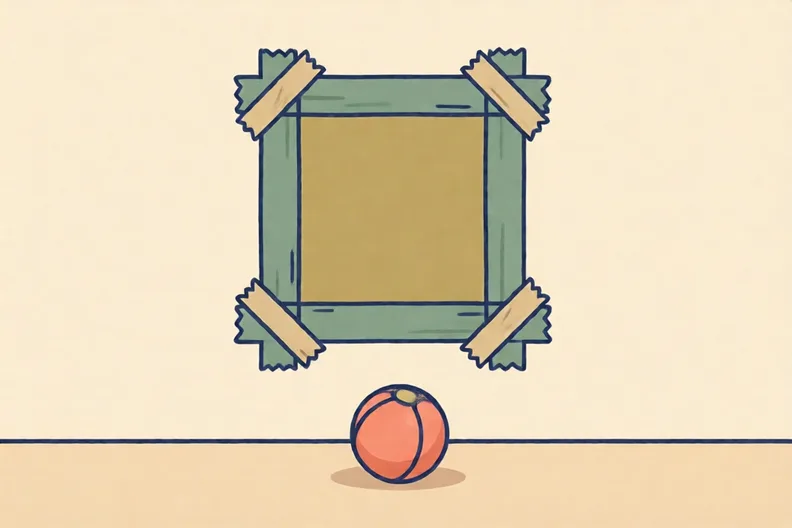
A square marked in tape on a plain wall, with a soft ball on the floor below it
  1. 1.

    Put the forehand steps in order. Write 1 to 4 in the boxes.

    Step 1Step 2Step 3Step 4
    1. Swing forwards through the ball
    2. Follow through towards the target
    3. Get ready with the racket raised
    4. Turn side-on to the target
  2. 2.

    Where should your feet be for a forehand? Circle one.

    side-on to the targetfacing the net, feet togetherturned away from the ball
  3. 3.

    Hit three soft forehands at your hoop or square. Make a tally mark for each try that lands in. Then write one thing you changed between tries.

    Try 1Try 2Try 3
  4. 4.

    What do you do straight after each shot? Circle one.

    HitReadyNext ball
    go back to the ready positionstay where you hit the balllook away from the ball

Say it out loud: What changed each time you hit the ball, and what stayed the same?

D Spot the mistake3 min
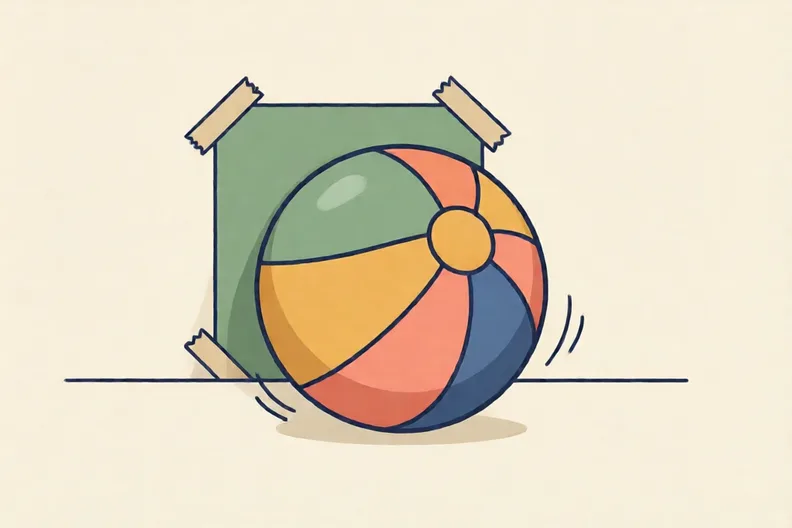
A soft ball rolling off the taped line of a square on a wall, onto the floor
Kit says: “If I hit the ball harder, it will stay in the court more.”
  1. 1.

    Write why Kit is wrong.

E Think deeper4 min

Imagine a partner who keeps hitting the ball too hard and out of the lines.
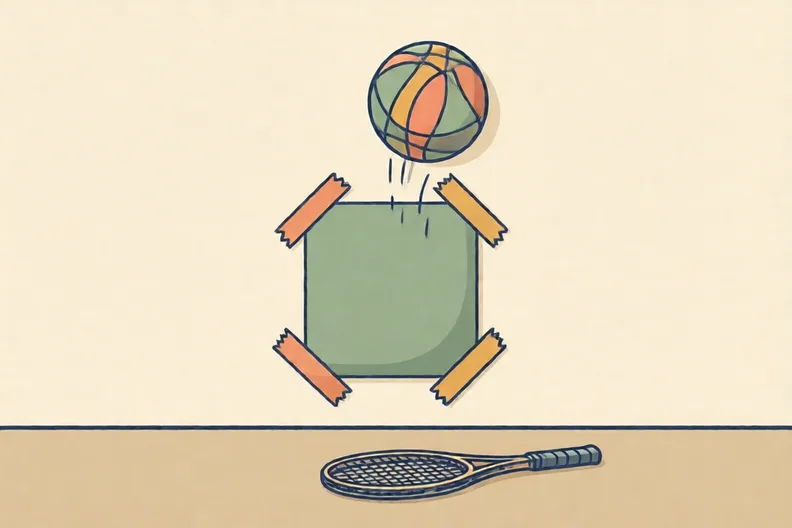
A soft ball flying high over a taped square on a plain wall
  1. 1.

    Make up one tip for your partner. Explain how it will help them keep the ball in.

How did it feel?

Look at your three tries. Which one felt most controlled, and what did your follow-through do?

I can do it Nearly Not yet
StudyDen · Year 5 · PE · Net and wall games: tactics to overcome an opponent through tennisAnswers are on the grown-up page

For the grown-up

Forehand control and follow-through · 2 minutes to read

Answers, and what a wrong one tells you

A

1. 1 Watch the ball · 2 Move your feet under it · 3 Bend your knees a little · 4 Let your hands give as it lands your child may have put the hands first. Ask what the eyes do before the hands move, then go back to the first step.

2. forwards and low If your child chose straight up, ask where the ball would land. A low, forward swing sends it to the target.

3. clear the space and check for hazards If your child picked the glass door, ask what could happen if the ball hit the glass. Clear space keeps everyone safe.

B

1. a smooth swing that finishes towards the target If your child chose the hard swing, ask where the racket is pointing at the end. Hard swings often send the ball out.

C

1. 1 Get ready with the racket raised · 2 Turn side-on to the target · 3 Swing forwards through the ball · 4 Follow through towards the target If your child put the follow-through before the swing, ask them to act it out slowly. The racket must travel forwards before it finishes.

2. side-on to the target

3. Look for: Tally marks for the tries that landed in, plus one thing changed between tries.

4. go back to the ready position If your child chose stay where you hit the ball, ask where the next ball could go. Getting back to ready means you can reach it in time.

D

1. Look for: Says harder hits often go out, and that control comes from a smooth follow-through towards the target. If your child only writes that Kit is wrong, ask what the ball does when the swing is too hard. Then ask what the racket should point at.

E

1. Look for: A tip that slows the swing, finishes the racket towards the target, or aims for a bigger target, with a reason it helps.

Words to use

Say“Show me where the racket points at the end of your swing. Did that try stay in?”
Instead of“Just hit it harder, it will go in.”

After the sheet

Stand side-on to a wall, tape a square at about chest height with masking tape, and practise five soft forehands with a rolled-up newspaper. Swap turns and talk about where the racket finished.

Tick what your child got right in StudyDen. Anything missed comes back in a later Look back box, so there's no need to redo the sheet.

The rest of this unit

5 more sheets come with a StudyDen plan, in teaching order:

  1. Forehand into space(with a plan)
  2. Backhand shots with a racket(with a plan)
  3. Volley with a block(with a plan)
  4. Controlling the serve(with a plan)
  5. Winning Points with Control(with a plan)

Every Year 5 PE worksheet

The worksheets plan opens a printable sheet for every lesson in Years 1 to 6, each with its answers on a separate page for you. It costs £6.99 a month or £59 a year for the whole family, with no free trial.

The full StudyDen plan adds the lessons themselves, marked as your child works, with the worksheets included. It is 7 days free, then £29.99 a month.

Both start with a free account; you choose the plan when you sign up.