← Year 5 PE worksheets

Year 5 Outdoor adventurous activities: orienteering worksheet

“Reading the key together” is free to print, with no account. It is the first sheet in the Year 5 PE unit “Outdoor adventurous activities: orienteering”, for children aged 9 to 10, and takes about 20 minutes.

Print it on A4. The child's pages come first; the answers, and what each wrong answer tells you, are on the grown-up page that follows. Weeks 1 to 3 of the year, 6 sheets in the unit.

Free sample · answers on the last page

Reading the key together

Name: ____________ · Date: ____________
Year 5 · PE · about 20 minutes
Answers are on the grown-up page

Today I can read a map key and work with a teammate to find our way.

A Look back3 min

  1. 1.

    Circle the compass point opposite north.

    NNEESESWWNW
    eastsouthwest
  2. 2.

    Count on in fives from 25. The next number is

    0510152025
  3. 3.

    Your partner is not sure which way to go. Write one thing you could say to help them.

    AskListenHelp

B Watch me, then you4 min

A map has a key. Read the key before you move, and say what you see to your partner.

Watch me
Read the mapCheck the keyMove to the cone

First, look at the symbol on the map.

Second, check the key to see what it means.

Third, move with your partner to the cone.

Now you
  1. 1.

    Your map shows a symbol you do not know. Circle what you check before you move.

    Read the mapMove to the cone
    the key on the mapyour own guessthe sky
  2. 2.

    Write the missing step in the empty box.

    Read the mapMove to the cone

C Your turn7 min

Clear a space away from windows, use a soft ball, and have a grown-up watch the timed run. Read each row, then answer.
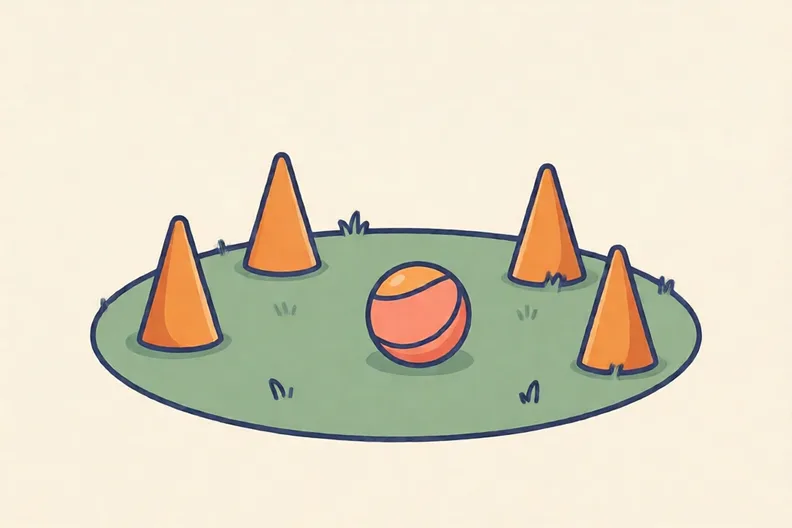
A garden lawn with orange cones spaced out and a soft ball on the grass
  1. 1.

    Your body must be warm before you plan the route. Put these steps in order. Write 1 to 4 in the boxes.

    1. Set off at a steady jog
    2. Stretch your legs and arms
    3. Jog gently on the spot for two minutes
    4. Look at the key with your partner
  2. 2.

    Circle the tip that tells you what a map symbol means.

    Check the key before you moveRun with your head down and guessShout your guess and goOnly read the map when you stop
  3. 3.

    Join each problem to the best tip.

    Unsure which symbol is whichMap is hard to read at speedA teammate is struggling
    Help them find the symbol togetherCheck the key rather than guessRead and check, then move at a steady pace
  4. 4.

    Draw a map of three cones with a key, then follow it with your partner three times. Colour one bar for each run, then write your fastest time. Fastest: seconds

    My three runs051015202530354045505560Run 1Run 2Run 3

Say it out loud: What did you check before each move, and how did your partner help you?

D Spot the mistake3 min
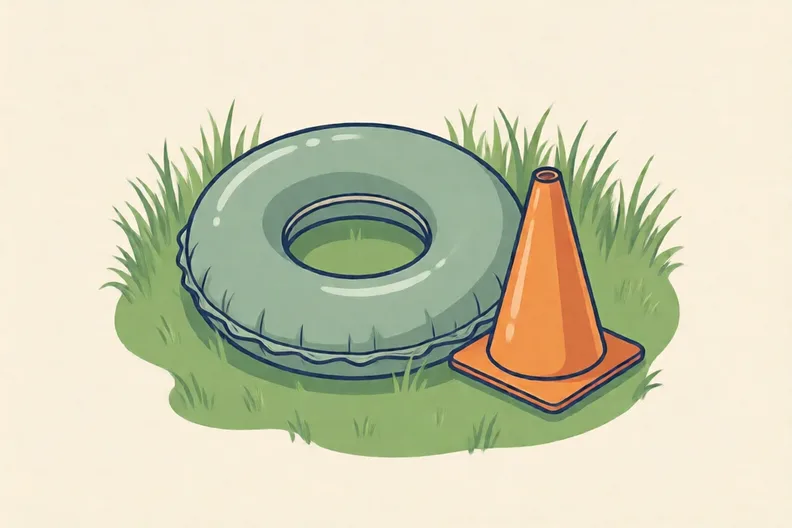
A flat rubber ring lying on grass next to an orange cone
Kit says: “That flat ring on the map is a cone, so I will run to the cone.”
  1. 1.

    The key shows a flat ring for a quoit and a tall triangle for a cone. What is the flat ring, and what should Kit do? Write one or two sentences.

E Think deeper3 min
An open grass field with a tree and a bench at the edge
  1. 1.

    Your team reaches the last marker, but one teammate is still behind. Write what a good leader does next.

How did it feel?2 min

Think about how you worked with your partner today. Talk about one thing you did well and one thing to try next time.

I can do it Nearly Not yet
StudyDen · Year 5 · PE · Outdoor adventurous activities: orienteeringAnswers are on the grown-up page

For the grown-up

Reading the key together · 2 minutes to read

Answers, and what a wrong one tells you

A

1. south If they circle east or west, they have found a side, not the opposite. Turn to face north, then turn fully around.

2. 30 If they write 35, they have jumped by ten. Ask your child to count on one jump of five from 25.

3. Look for: A kind, helpful thing to say, such as offering to look at the map or key together. If they write something unkind or tell the partner to hurry, ask your child how that would help the partner find the way.

B

1. the key on the map If they circle your own guess, the team may head the wrong way. Ask them to point to the key and read it aloud.

2. Look for: Check the key, or a similar phrase about checking the symbol against the key. If they write move or run, the checking step is missing. Ask your child what the symbol means before moving.

C

1. 1 Jog gently on the spot for two minutes · 2 Stretch your legs and arms · 3 Look at the key with your partner · 4 Set off at a steady jog If they put set off first, the body starts before it is warm. Ask your child why the jog comes before the run.

2. Check the key before you move If they circle a guess, the team may head the wrong way. Ask your child where the map shows what each symbol means.

3. Unsure which symbol is which → Check the key rather than guess; Map is hard to read at speed → Read and check, then move at a steady pace; A teammate is struggling → Help them find the symbol together If the teammate is joined to guess, the team is still working alone. Read the tip aloud and ask who it helps.

4. Look for: A whole number of seconds that matches the shortest bar the child coloured. If the fastest time does not match the shortest bar, ask your child to check each bar against the timer.

D

1. Look for: Says the flat ring is a quoit, not a cone, and that Kit should check the key instead of guessing. If they say it is a cone, they have judged by the shape alone. Ask your child to find quoit in the key and compare.

E

1. Look for: Says the leader waits for or helps the slower teammate and checks the key together, so the team arrives as one. If they say the leader should go on to win, ask your child how the slower teammate would get to the finish.

Words to use

Say“Which symbol is that, and what does the key say about it?”
Instead of“Just run to the cone, you will find it.”

After the sheet

Clear a safe space away from windows. Hide three soft objects around one room and draw a simple map with a key. Your child finds them using only the map and key.

Tick what your child got right in StudyDen. Anything missed comes back in a later Look back box, so there's no need to redo the sheet.

The rest of this unit

5 more sheets come with a StudyDen plan, in teaching order:

  1. Map first, then run(with a plan)
  2. Lining up the map(with a plan)
  3. Following my own map(with a plan)
  4. Stay together on the course(with a plan)
  5. Plan before you run(with a plan)

Every Year 5 PE worksheet

The worksheets plan opens a printable sheet for every lesson in Years 1 to 6, each with its answers on a separate page for you. It costs £6.99 a month or £59 a year for the whole family, with no free trial.

The full StudyDen plan adds the lessons themselves, marked as your child works, with the worksheets included. It is 7 days free, then £29.99 a month.

Both start with a free account; you choose the plan when you sign up.