← Year 1 maths worksheets

Year 1 Time - sequencing events and telling the time to the hour and half hour worksheet

“Put the school day in order” is free to print, with no account. It is the first sheet in the Year 1 maths unit “Time - sequencing events and telling the time to the hour and half hour”, for children aged 5 to 6, and takes about 20 minutes.

Print it on A4. The child's pages come first; the answers, and what each wrong answer tells you, are on the grown-up page that follows. Weeks 35 to 36 of the year, 10 sheets in the unit.

Free sample · answers on the last page

Put the school day in order

Name: ____________ · Date: ____________
Year 1 · Maths · about 20 minutes
Answers are on the grown-up page

Today I can put events in a school day in order, using first, next and last.

A Look back3 min

  1. 1.

    What number is between 14 and 16?

    111213141617181920
  2. 2.

    5 and 3 make

    53
  3. 3.

    This ten frame has 6 counters. How many more make 10?

B Watch me, then you4 min

A school day is a sequence. Look at the order of this one.

Watch me
RegisterStory timeHome time

Register comes first, at the start of the day.

Story time comes next.

Home time is last.

Now you
  1. 1.

    Circle the event that comes first.

    Story timeHome time
    RegisterLunchHome time

C Your turn5 min

Circle the event that is missing from each school day.

  1. 1.

    The gap is the last thing in the school day. Circle the missing event.

    RegisterStory time
    Home timeLunchPlay time
  2. 2.

    In Jun’s school, children eat in the middle of the day, after play time. Circle the missing event.

    RegisterPlay timeHome time
    LunchPlay timeStory time
  3. 3.

    In Jun’s school, the day starts with a book on the carpet. Circle the missing event.

    Play timeHome time
    RegisterLunchStory time
  4. 4.

    In Jun’s school, children run around in the yard after they eat. Circle the missing event.

    RegisterMathsLunch
    Home timeStory timePlay time

Say it out loud: What did you look for each time to find the missing event?

D Spot the mistake2 min

A school building with a bell on its roof, a low gate, and a path leading in.
Kit says: “We go home first, then we come into school.”
  1. 1.

    Which should happen first in the school day? Circle it.

    Coming into schoolGoing home

E Think deeper3 min
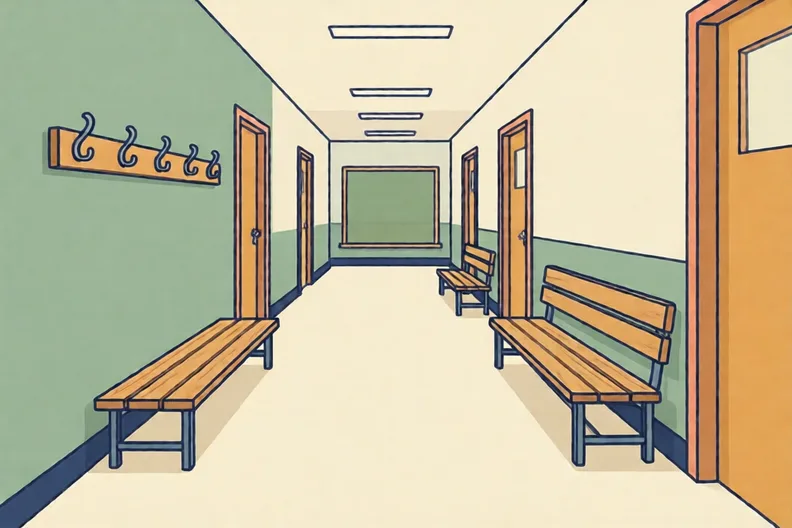
An empty school corridor with coat pegs and a wooden bench
  1. 1.

    Priya’s school has PE before lunch. Leo’s school has PE after lunch. Can both be right? Explain why.

How did it feel?

I can do it Nearly Not yet
StudyDen · Year 1 · Maths · Time - sequencing events and telling the time to the hour and half hourAnswers are on the grown-up page

For the grown-up

Put the school day in order · 2 minutes to read

Answers, and what a wrong one tells you

A

1. 15 If your child writes 16, they may have jumped over the gap. Count on one from 14.

2. 8 If your child writes 2, they took 3 from 5. Here the two parts join together, so add them.

3. 4 If your child writes 16, they added 10 and 6. Count the empty spaces in the ten frame instead.

B

1. Register If your child circles Home time, ask what happens at the start of the day. Then ask what comes last.

C

1. Home time If your child circles Lunch, ask what happens at the very end of the school day.

2. Lunch If your child circles Story time, read the clue again. Children eat lunch in the middle of the day.

3. Story time If your child circles Register, read the clue again. Jun’s day starts with a book, so story time comes first.

4. Play time If your child circles Home time, read the clue again. Running in the yard after lunch is play time.

D

1. Coming into school If your child circles Going home, ask what must happen before the children can go home. Coming in is first.

E

1. Look for: Each school has its own timetable, so both orders can be right. If your child says only one can be right, remind them that each school makes its own timetable.

Words to use

Say“Which thing happens first? What comes next?”
Instead of“Tell them the right order straight away.”

After the sheet

At tea time, ask your child to tell you the day in order, using first, next and last.

Tick what your child got right in StudyDen. Anything missed comes back in a later Look back box, so there's no need to redo the sheet.

The rest of this unit

9 more sheets come with a StudyDen plan, in teaching order:

  1. Put the day in order(with a plan)
  2. Days in Order(with a plan)
  3. Yesterday, today, tomorrow(with a plan)
  4. The Months Go Round(with a plan)
  5. Weeks, months and years(with a plan)
  6. Clock faces go round(with a plan)
  7. Reading the short hand(with a plan)
  8. Half past with the hour hand(with a plan)
  9. Telling the Time(with a plan)

Every Year 1 maths worksheet

The worksheets plan opens a printable sheet for every lesson in Years 1 to 6, each with its answers on a separate page for you. It costs £6.99 a month or £59 a year for the whole family, with no free trial.

The full StudyDen plan adds the lessons themselves, marked as your child works, with the worksheets included. It is 7 days free, then £29.99 a month.

Both start with a free account; you choose the plan when you sign up.