← Year 4 English worksheets

Year 4 Anglo-Saxons: non-chronological report worksheet

“Words that shape a report” is free to print, with no account. It is the first sheet in the Year 4 English unit “Anglo-Saxons: non-chronological report”, for children aged 8 to 9, and takes about 20 minutes.

Print it on A4. The child's pages come first; the answers, and what each wrong answer tells you, are on the grown-up page that follows. Weeks 30 to 32 of the year, 10 sheets in the unit.

Free sample · answers on the last page

Words that shape a report

Name: ____________ · Date: ____________
Year 4 · English · about 20 minutes
Answers are on the grown-up page

Today I can choose topic words, fronted adverbials and pronouns to link my report ideas.

A Look back3 min

  1. 1.

    Ola is a girl. Ola fed the hens. Ola fed the pigs. Which sentence uses the right pronoun in place of the last Ola?

    Ola fedthe hens.Ola fedthe pigs.
    She fed the pigs.Ola fed the pigs too.It fed the pigs.
  2. 2.

    Which sentence puts the comma in the right place after the fronted adverbial?

    After theharvestfarmersstored grain
    After the harvest, the farmers stored grain.After the harvest the farmers, stored grain.After, the harvest the farmers stored grain.
  3. 3.

    Which word is a fronted adverbial of time?

    Time wordcommamain clause
    Later,undertall

B Watch me, then you4 min

A report about Anglo-Saxon farmers needs sentences that link together. Watch how the starter words help.
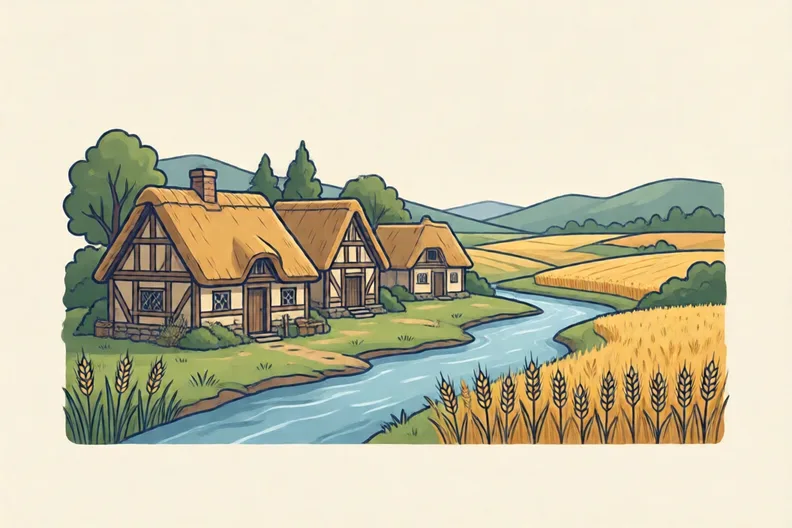
A small Anglo-Saxon village with thatched huts, a river and open fields
Watch me
Farmersgrew barleyGrain tostore

Cause: Farmers grew barley in open fields.

Effect: As a result, they had grain to store.

Viewpoint: Significantly, this helped whole villages through winter.

Now you
  1. 1.

    Villages were built near rivers. Write the effect sentence. Start it with 'As a result,'.

    Villagesby rivers
  2. 2.

    Pick the best starter for a surprising fact. ___ the Anglo-Saxons buried a ship in a field.

    Ship ina fieldA surprisingfact
    Intriguingly,As a result,Next,

C Your turn7 min

Fill each gap with one word, then write the starter sentence.
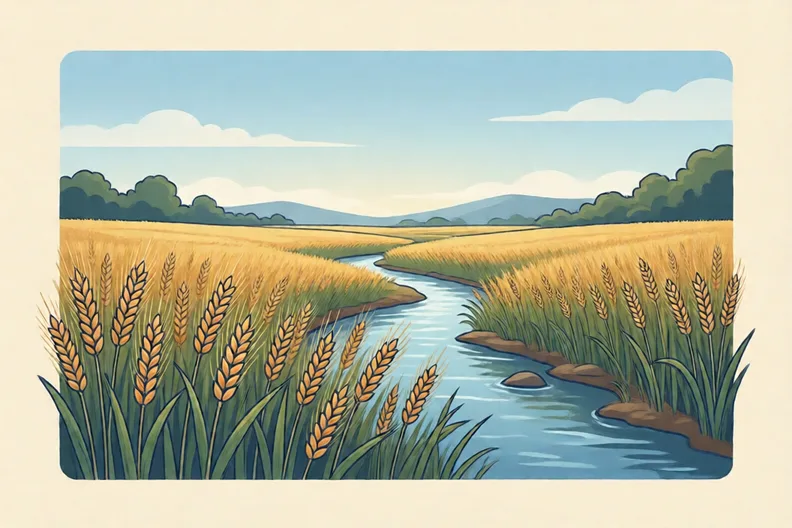
Open fields of barley beside a small river
  1. 1.

    Anglo-Saxon farmers grew barley. ___ also grew oats. Pick the word for the gap.

    Farmers grewbarley.... alsogrew oats.
    TheyItThem
  2. 2.

    The village had a great hall. ___ was made of wood. Pick the word for the gap.

    A villagehall...madeof wood.
    ItTheyThem
  3. 3.

    Ali is a boy. Ali dug the mound. ___ found a ship. Pick the word for the gap.

    Ali dugthe mound.... founda ship.
    HeItThey
  4. 4.

    Anglo-Saxons built thatched huts. Write the next sentence. Start it with 'As a result,'. Use one topic word, such as thatched or settlement.

    Thatchedhuts

Say it out loud: What changed from one row to the next? Did the word stand for a thing, a group or a person?

D Spot the mistake3 min
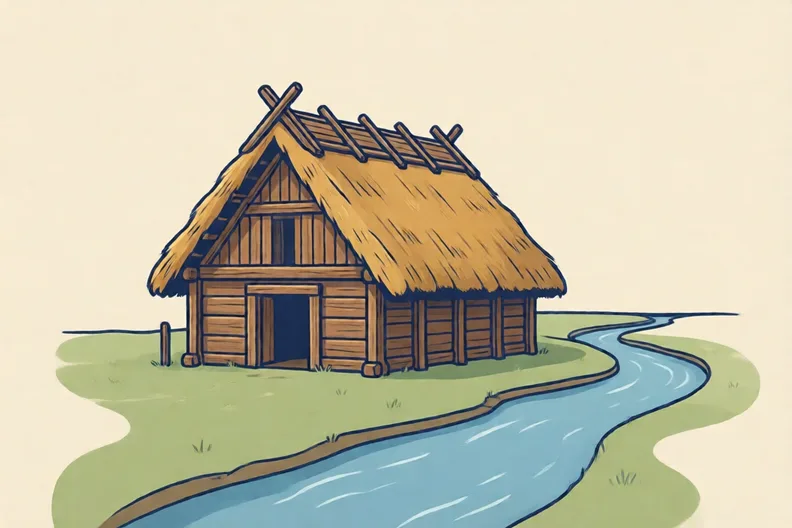
A wooden hall with a thatched roof beside a river
Sam says: “My report can use I and we, because I am the one writing about the Anglo-Saxons.”
  1. 1.

    Explain why Sam is wrong and write the correction in your own words.

E Think deeper4 min

  1. 1.

    Anglo-Saxon villages kept animals such as pigs. Write one sentence starting 'Intriguingly,' and one starting 'As a consequence,'. Which starter shows the writer's view? Explain why.

    Villageskept pigs

How did it feel?

I can do it Nearly Not yet
StudyDen · Year 4 · English · Anglo-Saxons: non-chronological reportAnswers are on the grown-up page

For the grown-up

Words that shape a report · 2 minutes to read

Answers, and what a wrong one tells you

A

1. She fed the pigs.

2. After the harvest, the farmers stored grain.

3. Later,

B

1. Look for: Starts with As a result, and gives an effect of living near a river, such as water or travel.

2. Intriguingly,

C

1. They

2. It

3. He

4. Look for: Starts with As a result, has a comma after it, and uses a topic word such as thatched, settlement, hall or artefact.

D

1. Look for: Says the report is third person, using they or the Anglo-Saxons, not I or we. If your child says first person is fine, ask who the report is about. Ask your child to write one sentence using they or the Anglo-Saxons instead.

E

1. Look for: Two sentences about animals, one starting Intriguingly, and one starting As a consequence, plus a reason why Intriguingly shows the writer's view.

Words to use

Say“Which word tells the reader how you feel about this fact?”
Instead of“Just tell them the fact is good and move on.”

After the sheet

Read a page of a non-fiction book at home. Ask your child to find one starter word and one pronoun, then say why the writer chose each one.

Tick what your child got right in StudyDen. Anything missed comes back in a later Look back box, so there's no need to redo the sheet.

The rest of this unit

9 more sheets come with a StudyDen plan, in teaching order:

  1. Writing a strong introduction(with a plan)
  2. Planning Our Housing Notes(with a plan)
  3. Writing with full sentences(with a plan)
  4. Planning with short notes(with a plan)
  5. Full sentences about farming(with a plan)
  6. Ending a report well(with a plan)
  7. Editing the first half(with a plan)
  8. Editing the second half(with a plan)
  9. Presenting with confidence(with a plan)

Every Year 4 English worksheet

The worksheets plan opens a printable sheet for every lesson in Years 1 to 6, each with its answers on a separate page for you. It costs £6.99 a month or £59 a year for the whole family, with no free trial.

The full StudyDen plan adds the lessons themselves, marked as your child works, with the worksheets included. It is 7 days free, then £29.99 a month.

Both start with a free account; you choose the plan when you sign up.