← Year 4 English worksheets

Year 4 'Escape from Pompeii': reading worksheet

“Real or made up?” is free to print, with no account. It is the first sheet in the Year 4 English unit “'Escape from Pompeii': reading”, for children aged 8 to 9, and takes about 20 minutes.

Print it on A4. The child's pages come first; the answers, and what each wrong answer tells you, are on the grown-up page that follows. Weeks 27 to 28 of the year, 5 sheets in the unit.

Free sample · answers on the last page

Real or made up?

Name: ____________ · Date: ____________
Year 4 · English · about 20 minutes
Answers are on the grown-up page

Today I can tell apart real history and invented details in a historical fiction story.

A Look back3 min

  1. 1.

    Ravi hears a loud bang and jumps. Which feeling word fits best? Circle one.

    calmfrightenedboredproud
  2. 2.

    Look at the chain. Which part of a story comes between the beginning and the end? Circle one.

    BeginningEnd
    BeginningMiddleEndTitle
  3. 3.

    Writers go round this cycle. Which step comes after Plan? Circle one.

    PlanCheckPublish
    DraftPlanCheckPublish

B Watch me, then you4 min

Kit reads a made-up story about a boy called Ola in Pompeii. Which parts of the story are real history?

Watch me
AD 1AD 200AD 400AD 600AD 80010001200140016001800Vesuvius eruptsDigging begins

Kit reads a made-up story about Ola, a boy in Pompeii.

The eruption and the digging are real dates.

Ola and his family are invented, so they are not on the timeline.

Now you
  1. 1.

    In the story, Ola's mum sells fish at the market. Should she go on the timeline? Write yes or no and say why.

    AD 1AD 200AD 400AD 600AD 80010001200140016001800Vesuvius eruptsDigging begins

C Your turn7 min

Match, choose and sort. Keep asking: is this real history, or made up for the story?
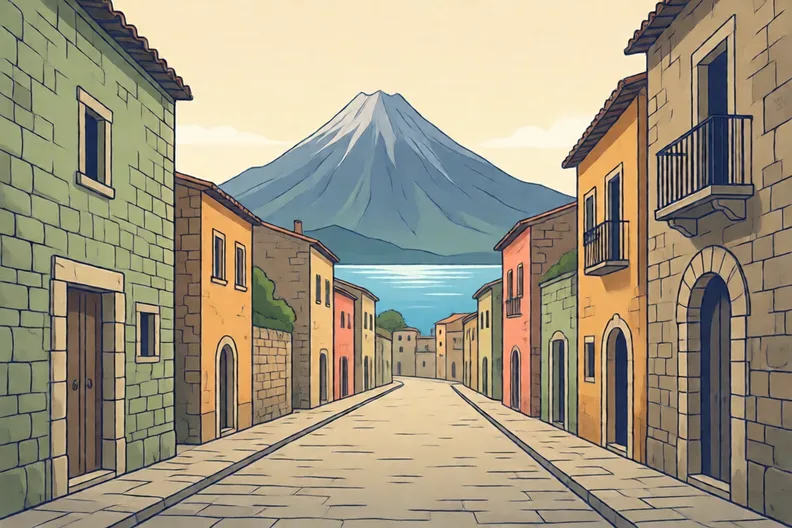
A quiet street in a Roman town by the sea, with a tall volcano far behind
  1. 1.

    Join each word to its meaning. Draw a line.

    historical fictioncontextafterwordarchaeologist
    a person who digs up and studies the pastextra facts at the back of a booka made-up story set in real eventsthe surrounding details that help you understand
  2. 2.

    Look at the chain. Which word goes in the blank at the end of the book? Circle one.

    Front coverMain story
    AfterwordContextArchaeologist
  3. 3.

    The afterword says Pompeii had about 15,000 people. Sort these four sentences. Write each one under Real or Invented.

    Mount Vesuvius erupted in AD 79.Pompeii had about 15,000 people.Ola finds a lost necklace.Ola's brother runs to the harbour.
    RealInvented
  4. 4.

    Which one is historical fiction? Circle one.

    a true report of the eruptiona made-up story set in Pompeii in AD 79a list of Roman godsa map of Italy

Say it out loud: Which sentences were real history, and which were made up? What helped you tell?

D Spot the mistake3 min
A closed old book with a plain cover lying on a wooden table
Kit says: “The afterword is at the start of the book, so it is part of the made-up story.”
  1. 1.

    Where is the afterword, and is it true or made up? Write one sentence.

E Think deeper4 min

AD 1AD 200AD 400AD 600AD 80010001200140016001800Vesuvius eruptsDigging begins
  1. 1.

    In the story, a baker called Felix gives Ola a free loaf on the morning of the eruption. Is this real or invented? Explain how you know.

How did it feel?

I can do it Nearly Not yet
StudyDen · Year 4 · English · 'Escape from Pompeii': readingAnswers are on the grown-up page

For the grown-up

Real or made up? · 2 minutes to read

Answers, and what a wrong one tells you

A

1. frightened If they chose calm or bored, ask what Ravi's body is doing. A jump and a loud bang usually show fear. Name the feeling together.

2. Middle If they chose Beginning or End, ask which part comes between the two. Point to the blank box together.

3. Draft

B

1. Look for: Says no, because Ola's mum is a made-up character and the timeline only shows real history. If they said yes, point to the two dates. Ask: did these really happen? Is Ola's mum real, or made up for the story?

C

1. historical fiction → a made-up story set in real events; context → the surrounding details that help you understand; afterword → extra facts at the back of a book; archaeologist → a person who digs up and studies the past If afterword is joined to the made-up story, they think the back pages are part of the plot. Point to the back of a real book and ask what it is for.

2. Afterword

3. Real: Mount Vesuvius erupted in AD 79., Pompeii had about 15,000 people. · Invented: Ola finds a lost necklace., Ola's brother runs to the harbour.

4. a made-up story set in Pompeii in AD 79

D

1. Look for: Says the afterword is at the back of the book and gives true facts, not made-up story. Kit has mixed up the afterword with the story. Ask: where does it sit in the book, and does it tell true facts or invented ones?

E

1. Look for: Says it is invented because Ola is a made-up character, and may mention that real bakers worked in Pompeii.

Words to use

Say“Which part of this story is real, and how do you know?”
Instead of“Just enjoy the story, the facts don't matter yet.”

After the sheet

Find a book at home with an author's note or a section at the back. Read one true fact and one invented thing, then tell someone which is which.

Tick what your child got right in StudyDen. Anything missed comes back in a later Look back box, so there's no need to redo the sheet.

The rest of this unit

4 more sheets come with a StudyDen plan, in teaching order:

  1. Reading Tranio's traits(with a plan)
  2. Reading clues like a detective(with a plan)
  3. Building tension and turning points(with a plan)
  4. Finding big ideas(with a plan)

Every Year 4 English worksheet

The worksheets plan opens a printable sheet for every lesson in Years 1 to 6, each with its answers on a separate page for you. It costs £6.99 a month or £59 a year for the whole family, with no free trial.

The full StudyDen plan adds the lessons themselves, marked as your child works, with the worksheets included. It is 7 days free, then £29.99 a month.

Both start with a free account; you choose the plan when you sign up.