← Year 4 English worksheets

Year 4 Healthy eating adverts: persuasive writing worksheet

“What makes an advert work” is free to print, with no account. It is the first sheet in the Year 4 English unit “Healthy eating adverts: persuasive writing”, for children aged 8 to 9, and takes about 20 minutes.

Print it on A4. The child's pages come first; the answers, and what each wrong answer tells you, are on the grown-up page that follows. Weeks 21 to 23 of the year, 8 sheets in the unit.

Free sample · answers on the last page

What makes an advert work

Name: ____________ · Date: ____________
Year 4 · English · about 20 minutes
Answers are on the grown-up page

Today I can explain the purpose and features that make a persuasive advert work.

A Look back3 min

  1. 1.

    Which mark shows the end of a sentence? Circle one.

    Capital letterWords
    full stopcommaapostrophe
  2. 2.

    Writers plan, then draft, then do what last? Circle one.

    PlanDraft
    checkplandraft
  3. 3.

    Which book helps you find what a word means? Circle one.

    Read the sentenceTry the word
    dictionarycalendarmap

B Watch me, then you4 min

Ola sees a poster in the school hall. It says: “Wash your hands before you eat!” It is not selling anything. What is its purpose?

Watch me
Sell a productVisit a placeChange behaviour

The poster does not sell anything.

It asks people to change what they do.

So its purpose is to change behaviour.

Now you
  1. 1.

    A sign on a bus says: “Visit Hollow Lake this summer!” What is its purpose? Circle one.

    Read the signWhat does it ask?Purpose
    sell a productvisit a placechange behaviour
  2. 2.

    Which technique is in “Bright, bold, brilliant bread!”? Circle one.

    Brightboldbrilliantbread
    alliterationexaggerationrhetorical question

C Your turn7 min

Read each advert line, then sort or circle.

  1. 1.

    Sort each card into the right column.

    Sell a productVisit a placeChange behaviour
    Buy the crunchiest crispsCome and see Mossford CastleWash your hands for 20 secondsRecycle your cans
    Sells a productVisit a placeChanges behaviour
  2. 2.

    Which line asks the reader a question to make them think? Circle one.

    StatementCommand
    Our beach is in the south.Do you dream of a sunny beach?The beach has soft sand.
  3. 3.

    Which part of an advert does the reader notice first? Circle one.

    PictureInformation
    headlinesmall printinformation
  4. 4.

    Which line is an exaggeration? Circle one.

    Plain fact
    Our juice has fruit in it.The tastiest juice in the whole world!Our juice comes in a bottle.

Say it out loud: What clue told you the purpose or technique each time?

D Spot the mistake3 min
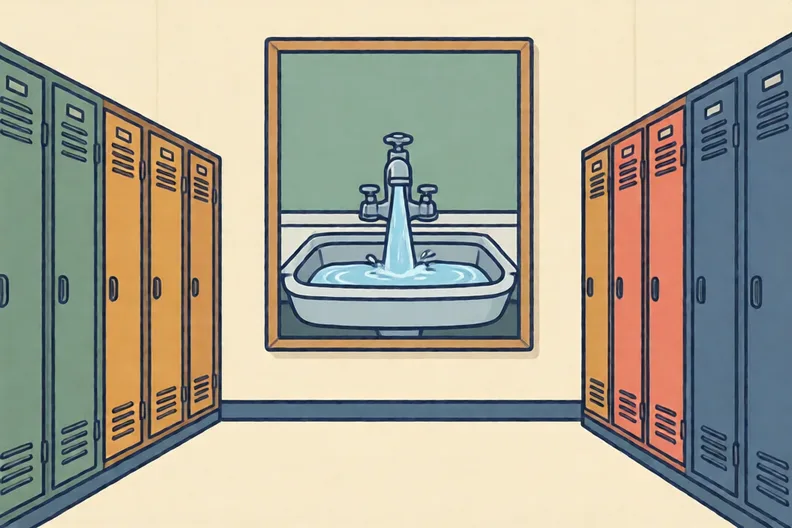
A school corridor with lockers and a large poster of a sink on the wall
Priya says: “That washing-hands poster is not an advert, because it does not sell anything.”
  1. 1.

    Priya is wrong. Why? Write one or two sentences.

E Think deeper4 min

  1. 1.

    Write a headline and a slogan for a poster asking people to walk to school. Use alliteration or a rhetorical question.

    Notice itRemember itAct on it

How did it feel?

I can do it Nearly Not yet
StudyDen · Year 4 · English · Healthy eating adverts: persuasive writingAnswers are on the grown-up page

For the grown-up

What makes an advert work · 2 minutes to read

Answers, and what a wrong one tells you

A

1. full stop A comma shows a short pause inside a sentence. Ask your child where the thought finishes, then find the mark there.

2. check Plan and draft come first, so they cannot be last. Ask your child which step comes after the first draft.

3. dictionary A calendar shows dates and a map shows places. Show your child the book with words in A to Z order.

B

1. visit a place The sign does not ask for money. It asks people to go somewhere. Ask your child what the reader is told to do.

2. alliteration Exaggeration makes something sound bigger than it is. Ask your child whether the words in the line start with the same sound.

C

1. Visit a place: Come and see Mossford Castle · Sells a product: Buy the crunchiest crisps · Changes behaviour: Wash your hands for 20 seconds, Recycle your cans If your child puts the handwashing card under selling, ask what the reader is asked to do. Washing hands is an action, not a purchase.

2. Do you dream of a sunny beach? The other two lines tell the reader something. Ask your child which line has a question mark and does not need an answer.

3. headline Small print is read last. Ask your child which words are big and bold at the top of the advert.

4. The tastiest juice in the whole world! The bottle and the fruit lines can be checked as true. Ask your child whether the line claims more than anyone could prove.

D

1. Look for: Says the poster is an advert because adverts can persuade people to change what they do, not only sell things. If your child agrees with Priya, they think adverts always sell. Ask: what does this poster want people to do?

E

1. Look for: A headline and slogan about walking to school, using alliteration or a rhetorical question.

Words to use

Say“What does this advert want people to do? Does it need to sell anything?”
Instead of“Adverts always try to sell something, so just look for the price.”

After the sheet

Find a leaflet, sign or poster at home. Ask what it wants you to do, then find its headline and one exaggerated line.

Tick what your child got right in StudyDen. Anything missed comes back in a later Look back box, so there's no need to redo the sheet.

The rest of this unit

7 more sheets come with a StudyDen plan, in teaching order:

  1. Choosing tempting words(with a plan)
  2. Comparing snacks in adverts(with a plan)
  3. Headlines that grab attention(with a plan)
  4. Sentences that sell energy balls(with a plan)
  5. Taste and health together(with a plan)
  6. Publishing my advert(with a plan)
  7. Presenting your advert(with a plan)

Every Year 4 English worksheet

The worksheets plan opens a printable sheet for every lesson in Years 1 to 6, each with its answers on a separate page for you. It costs £6.99 a month or £59 a year for the whole family, with no free trial.

The full StudyDen plan adds the lessons themselves, marked as your child works, with the worksheets included. It is 7 days free, then £29.99 a month.

Both start with a free account; you choose the plan when you sign up.