← Year 4 PE worksheets

Year 4 Gymnastics: symmetry and asymmetry worksheet

“Matching sides in balances” is free to print, with no account. It is the first sheet in the Year 4 PE unit “Gymnastics: symmetry and asymmetry”, for children aged 8 to 9, and takes about 20 minutes.

Print it on A4. The child's pages come first; the answers, and what each wrong answer tells you, are on the grown-up page that follows. Weeks 19 to 24 of the year, 12 sheets in the unit.

Free sample · answers on the last page

Matching sides in balances

Name: ____________ · Date: ____________
Year 4 · PE · about 20 minutes
Answers are on the grown-up page

Today I can make a balance that matches across a line of symmetry.

A Look back3 min

  1. 1.

    A square matches on both sides of its middle line. Name one body shape you can make that matches on both sides.

  2. 2.

    Picture a line down the middle of this rectangle. Name one balance where your arms match across a middle line like this.

  3. 3.

    Both halves of this hexagon match across a line. Name one part of your body that has a matching part on the other side.

B Watch me, then you4 min

Ola and her dad want a balance that looks the same on both sides. They use four steps. Look at the chain.

Watch me
Stand tallArms out wideCheck arms matchHold and count five

Step 1: both of you stand tall.

Step 2: both arms stretch out to the sides.

Step 3: check the arms are the same height.

Step 4: hold still. The middle line is now clear.

Now you
  1. 1.

    The empty box is one step in the chain. Pick the step that fits.

    Partner stands tallPartner kneels lowCheck halves match
    Find the shared middle lineWatch your feet onlyHold your breath
  2. 2.

    Join each balance idea to the coaching point it teaches.

    Arms the same heightPartner kneels lowShared middle lineHold still
    Stay steady until the shape is clearBoth halves meet at one lineLift the same amount on both sidesShow the balance can change level

C Your turn6 min

Safety first: clear space, a soft mat or rug, and a grown-up watching. Each row changes one thing.

  1. 1.

    Put these four steps for a symmetrical balance in order. Write 1 to 4 next to each.

    1. Hold still and keep both sides steady.
    2. Stretch both arms out at the same height.
    3. Stand face to face and stand tall.
    4. Check the middle line is shared by both of you.
  2. 2.

    Ola stretches one arm high and keeps the other arm low. Is the balance symmetrical?

    symmetricalnot symmetrical
  3. 3.

    Ali stands tall. His partner kneels low in front of him. Both keep their arms the same on each side, along one shared middle line. Is it symmetrical?

    symmetricalnot symmetrical
  4. 4.

    Make your own symmetrical balance and try it three times. Make one tally mark each time you hold it still for five seconds.

    Try 1Try 2Try 3

Say it out loud: What did you change between row two and row three, and did the balance stay symmetrical?

D Spot the mistake3 min
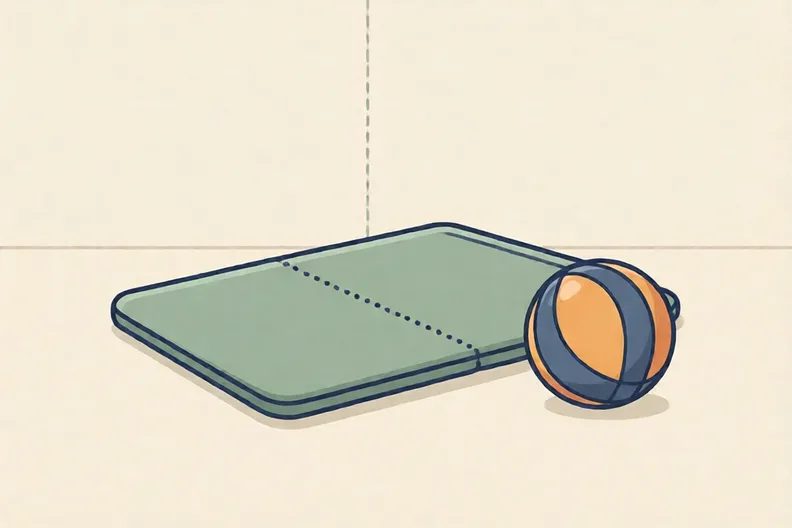
A soft mat with a dotted line down its middle
Kit says: “We must copy each other’s pose exactly, so we always stand face to face with the same shape.”
  1. 1.

    Why is Kit wrong? Write one sentence.

E Think deeper4 min
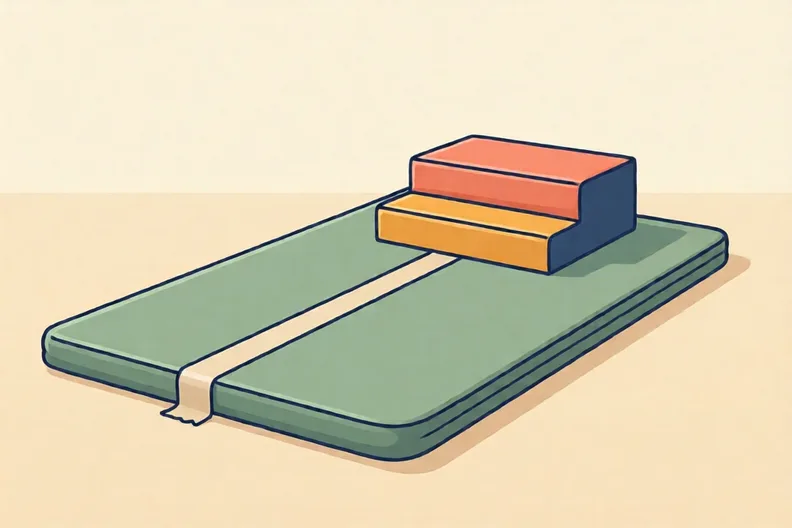
A soft mat with a tape line down its middle and a low step at one end of the line
  1. 1.

    Name two ways you and a partner can make a symmetrical balance without matching exactly. Explain how you know both sides match.

How did it feel?

I can do it Nearly Not yet
StudyDen · Year 4 · PE · Gymnastics: symmetry and asymmetryAnswers are on the grown-up page

For the grown-up

Matching sides in balances · 2 minutes to read

Answers, and what a wrong one tells you

A

1. Look for: A body shape where the left and right sides match, such as a star shape.

2. Look for: A balance where both arms match across a middle line.

3. Look for: Names a body part with a matching partner on the other side, such as an arm or a leg.

B

1. Find the shared middle line your child picked a step that is not about the shape. Ask what both partners should look at to check the two halves match.

2. Arms the same height → Lift the same amount on both sides; Partner kneels low → Show the balance can change level; Shared middle line → Both halves meet at one line; Hold still → Stay steady until the shape is clear

C

1. 1 Stand face to face and stand tall. · 2 Stretch both arms out at the same height. · 3 Check the middle line is shared by both of you. · 4 Hold still and keep both sides steady. your child put holding still first. The shape has to be built before it can be held. Ask what must happen before the hold.

2. not symmetrical your child said symmetrical. Ask them to draw the line down the middle and check whether both arms match it.

3. symmetrical your child said not symmetrical. They may think partners must stand the same height. Ask what the shared middle line looks like.

4. Look for: Up to three tally marks, one for each try held still for five seconds, for a balance that matches on both sides.

D

1. Look for: Partners can change level or connection point and still be symmetrical; the line matters more than the copy. your child agrees with Kit. Ask them to try one partner kneeling low. Ask: does the middle line still match?

E

1. Look for: Two ways such as different levels or a different connection point, with a reason about the matching line.

Words to use

Say“Where is your line of symmetry, and do both sides match it? Show me.”
Instead of“Just copy your partner exactly, that is how it works.”

After the sheet

Lay a tea towel flat on the floor as the line. Stand on the towel, one in front of the other, one of you high and one low. Make both sides of the towel match. Keep the space clear.

Tick what your child got right in StudyDen. Anything missed comes back in a later Look back box, so there's no need to redo the sheet.

The rest of this unit

11 more sheets come with a StudyDen plan, in teaching order:

  1. Different Sides, Strong Balance(with a plan)
  2. Still and steady balances(with a plan)
  3. Joining moves together(with a plan)
  4. Moving as one(with a plan)
  5. Canon: keep it moving(with a plan)
  6. Moving together on apparatus(with a plan)
  7. Canon sequences with a partner(with a plan)
  8. Plan a balanced sequence(with a plan)
  9. Choosing Moves Together(with a plan)
  10. Quality over quantity(with a plan)
  11. Keep it to the task(with a plan)

Every Year 4 PE worksheet

The worksheets plan opens a printable sheet for every lesson in Years 1 to 6, each with its answers on a separate page for you. It costs £6.99 a month or £59 a year for the whole family, with no free trial.

The full StudyDen plan adds the lessons themselves, marked as your child works, with the worksheets included. It is 7 days free, then £29.99 a month.

Both start with a free account; you choose the plan when you sign up.