← Year 4 PE worksheets

Year 4 Striking and fielding games: tactics and strategies through racing rounders worksheet

“Racing rounders teamwork” is free to print, with no account. It is the first sheet in the Year 4 PE unit “Striking and fielding games: tactics and strategies through racing rounders”, for children aged 8 to 9, and takes about 21 minutes.

Print it on A4. The child's pages come first; the answers, and what each wrong answer tells you, are on the grown-up page that follows. Weeks 31 to 36 of the year, 6 sheets in the unit.

Free sample · answers on the last page

Racing rounders teamwork

Name: ____________ · Date: ____________
Year 4 · PE · about 21 minutes
Answers are on the grown-up page

Today I can explain how batting and fielding work together in racing rounders.

A Look back3 min

  1. 1.

    In racing rounders, the batter sends the ball into space with their hands. Which action fills the gap in this chain? Circle one.

    Get readyRun
    throwkicksit down
  2. 2.

    In a catch and pass game, what happens to the ball after it is caught? Circle one.

    Ball thrownBall caught
    passed back to a teammaterun away with itkeep it for yourself
  3. 3.

    What should you do first when you want to catch a ball? Circle one.

    Hold arms outCatch
    watch the ballrun awayclose your eyes

B Watch me, then you4 min

Ola’s team is batting. Ola hits the ball into space and then runs. Watch how the steps go in order.

Watch me
Hit ball into spaceRun round the basesScore a rounder

First, the ball goes into space.

Then the runner runs round all four bases.

Getting round all four bases scores a rounder.

Now you
  1. 1.

    Mia’s team hits the ball into space. What goes in the gap? Circle one.

    Hit ball into spaceScore a rounder
    Run round the basesSit downLeave the ball

C Your turn6 min

Safety first: use a clear space, a soft ball, keep away from windows, and have a grown-up watching. Read each one, then circle or write.
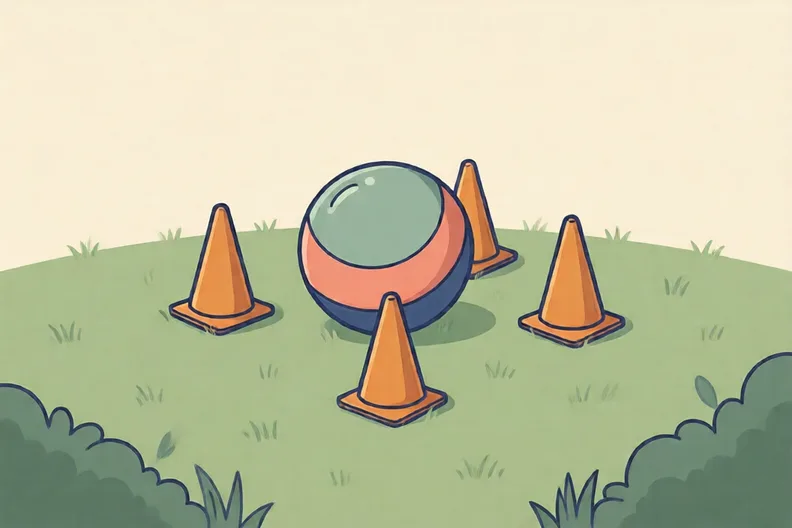
A soft ball on short grass in a garden, with four orange cones set out in a diamond shape
  1. 1.

    Priya is fielding far from the base. The ball rolls to her. A teammate stands close by, between Priya and the base. What is the quickest way to get the ball back? Circle one.

    Pass to the teammate close byRun all the way with itWait for the batter to come
  2. 2.

    Ali wants his throw to go far into space. Which action helps most? Circle one.

    Step forward and swing the arm throughThrow with eyes shutStand still and push with one finger
  3. 3.

    Timed challenge: in 30 seconds, throw 5 soft balls underarm into a hoop or towel on the floor. Colour one bar for each try: how many land in the hoop? Do it three times.

    My three tries012345Try 1Try 2Try 3
  4. 4.

    Number the boxes 1 to 4 to put the steps of a batting run in order.

    1. Score a rounder back at the start
    2. Hit or throw the ball into space
    3. Run round the first base
    4. Run round the other bases to the start

Say it out loud: Say it out loud: what is the same about the fielding question and the batting question?

D Spot the mistake3 min

Kit says: “I always run the ball all the way back to the base, even from far away.”
Catch the ballRun with itBall reaches base
  1. 1.

    What should Kit do instead? Write one sentence.

E Think deeper3 min

  1. 1.

    Explain why passing the ball along a team often gets it back faster than one fielder running. Give one reason.

    Fielder catchesPasses to teammateTeammate passes onBall reaches base

How did it feel?2 min

Did passing the ball feel different from running with it? Tell a grown-up one thing that felt good and one thing that felt hard.

I can do it Nearly Not yet
StudyDen · Year 4 · PE · Striking and fielding games: tactics and strategies through racing roundersAnswers are on the grown-up page

For the grown-up

Racing rounders teamwork · 2 minutes to read

Answers, and what a wrong one tells you

A

1. throw

2. passed back to a teammate

3. watch the ball

B

1. Run round the bases If your child circles sit down or leave the ball, the batting team cannot score. Point to the chain and ask what must happen before a rounder counts.

C

1. Pass to the teammate close by If your child circles running all the way, ask which team gets the ball back sooner: one runner, or a short pass to a teammate.

2. Step forward and swing the arm through If your child circles eyes shut, ask what helps them see where the ball should go. Then talk about stepping into the throw.

3. Look for: Three bars, one per try, each coloured to show a count from 0 to 5 of throws that landed in the hoop.

4. 1 Hit or throw the ball into space · 2 Run round the first base · 3 Run round the other bases to the start · 4 Score a rounder back at the start If the order is wrong, your child may think the score comes first. Ask: what must happen before a rounder counts?

D

1. Look for: Mentions passing the ball quickly to a close teammate, and that passing is quicker than running with it. If your child writes run faster, ask: who gets the ball back to the base sooner, one runner or a short pass along the team?

E

1. Look for: Gives one sensible reason, such as a thrown ball flies faster than a person can run, or each player only has to move a short way.

Words to use

Say“Which way gets the ball back faster, and how do you know?”
Instead of“Tell them the right answer straight away.”

After the sheet

Use four jumpers or cushions in a diamond in the garden. One player throws a soft ball into space and runs round the bases. The others pass the ball back. Swap roles, while a grown-up watches from a safe spot away from windows.

Tick what your child got right in StudyDen. Anything missed comes back in a later Look back box, so there's no need to redo the sheet.

The rest of this unit

5 more sheets come with a StudyDen plan, in teaching order:

  1. Bowling and backstop skills(with a plan)
  2. Hitting with control(with a plan)
  3. Batting: where to aim(with a plan)
  4. Getting behind the ball(with a plan)
  5. Quick throws in rounders(with a plan)

Every Year 4 PE worksheet

The worksheets plan opens a printable sheet for every lesson in Years 1 to 6, each with its answers on a separate page for you. It costs £6.99 a month or £59 a year for the whole family, with no free trial.

The full StudyDen plan adds the lessons themselves, marked as your child works, with the worksheets included. It is 7 days free, then £29.99 a month.

Both start with a free account; you choose the plan when you sign up.