← Year 4 PE worksheets

Year 4 Health and wellbeing: mindfulness, meditative balances and relaxation techniques worksheet

“Moving to the Sounds” is free to print, with no account. It is the first sheet in the Year 4 PE unit “Health and wellbeing: mindfulness, meditative balances and relaxation techniques”, for children aged 8 to 9, and takes about 22 minutes.

Print it on A4. The child's pages come first; the answers, and what each wrong answer tells you, are on the grown-up page that follows. Weeks 25 to 27 of the year, 6 sheets in the unit.

Free sample · answers on the last page

Moving to the Sounds

Name: ____________ · Date: ____________
Year 4 · PE · about 22 minutes
Answers are on the grown-up page

Today I can show a feeling in my movement, not just the speed of a sound.

A Look back3 min

Before you start, clear a space away from windows. Stand near a wall. Have a grown-up watching.

  1. 1.

    Which word goes in the empty box? Circle one.

    lowmedium
    highwidetwist
  2. 2.

    Which step comes first in a balance? Circle one.

    Lift armHold still
    Stand tallLie downRun fast
  3. 3.

    Which breath helps the body relax? Circle one.

    Breathe inRelax
    breathe outhold your breathshout

B Watch me, then you4 min

Ola hears gentle rain on a quiet afternoon. She does not run. She listens, finds the feeling, and then moves.
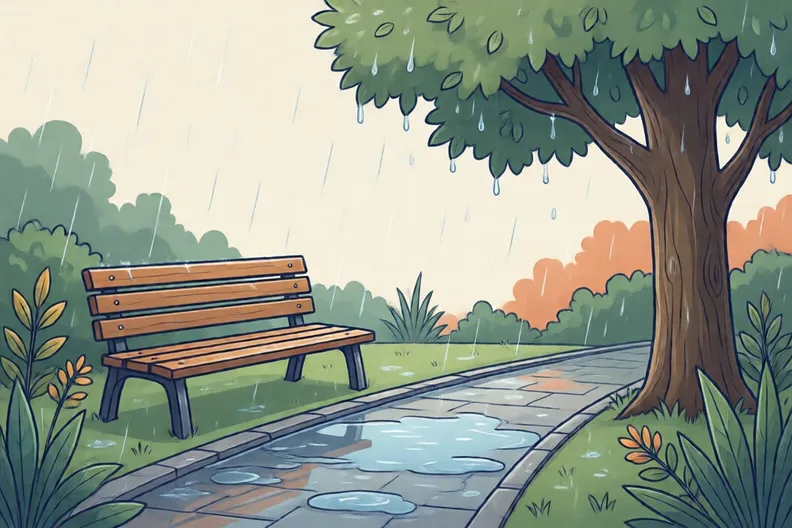
A quiet garden after rain, with a wooden bench and shiny puddles
Watch me
ListenNotice the feelingMove calmly

Listen first and notice the feeling.

The feeling is calm, so Ola moves slowly.

Her face stays soft while she moves.

Now you
  1. 1.

    Kit hears a loud thunder crash. Put these steps in order. Write 1, 2 and 3 in the boxes.

    1. Move big and strong
    2. Listen to the thunder
    3. Notice the feeling of excitement

C Your turn8 min

Clear space, soft ball, away from windows, a grown-up watching. Work slowly. Think about the feeling first.

  1. 1.

    Put these steps for a slow rain movement in order. Write 1, 2 and 3 in the boxes.

    1. Sink down slowly
    2. Listen to the soft rain
    3. Notice the calm feeling
  2. 2.

    Join each skill to its coaching point. Draw a line from each skill to the right card.

    lowmediumhigh
    Sink lowReach highTwist slowly
    Keep your breath steady as you turnLet your knees bend and your face softenStretch tall and look up
  3. 3.

    A slow, gentle sound is playing. Which face fits it? Circle one.

    soft and relaxedwide eyes and open mouthfrown and tight jaw
  4. 4.

    Play a slow, gentle sound, such as a hum. Hold a balance that shows the feeling it gives you. Do it three times. Draw a bar from 1 to 10 for how clearly each try showed it.

    How clearly I showed the feeling012345678910Try 1Try 2Try 3

Say it out loud: What did you notice first each time, the speed or the feeling?

D Spot the mistake3 min

Kit says: “A fast drum means I should run as fast as I can. That is all I need to do.”
  1. 1.

    What should Kit do instead? Write one or two sentences.

E Think deeper3 min

Hear the soundNotice the feelingShow it with faceShow it with body
  1. 1.

    Tell your grown-up how your face and body showed a feeling, not only the speed of a sound. Use one example.

How did it feel?

Think about your moves. Which one felt calm? Which one felt strong? Tell a grown-up.

I can do it Nearly Not yet
StudyDen · Year 4 · PE · Health and wellbeing: mindfulness, meditative balances and relaxation techniquesAnswers are on the grown-up page

For the grown-up

Moving to the Sounds · 2 minutes to read

Answers, and what a wrong one tells you

A

1. high your child may be thinking of a movement, not a level. Point to the highest box and say the level word.

2. Stand tall

3. breathe out Holding the breath makes the body tense. Ask your child to breathe out slowly and feel the shoulders drop.

B

1. 1 Listen to the thunder · 2 Notice the feeling of excitement · 3 Move big and strong your child moved first and matched the noise. Fix it by asking what feeling the thunder gives, then moving to show that feeling.

C

1. 1 Listen to the soft rain · 2 Notice the calm feeling · 3 Sink down slowly your child sank first. Ask them to listen to the rain and find the calm feeling before they move.

2. Sink low → Let your knees bend and your face soften; Reach high → Stretch tall and look up; Twist slowly → Keep your breath steady as you turn If your child joins Sink low to Stretch tall, ask them to try both. Which one takes the body down, and which takes it up?

3. soft and relaxed your child chose a face for surprise or anger. Ask: is this sound sudden and loud, or slow and calm?

4. Look for: Three bars, one for each try, each scoring from 1 to 10 how clearly the balance showed the feeling of the sound.

D

1. Look for: Says to listen for the feeling first, then show it with the face and whole body, not only the speed. your child may write only about running faster. Ask: what feeling does the drum give you, and how does your face show it?

E

1. Look for: Explains how the face and whole body showed a feeling, with one clear example from a sound.

Words to use

Say“What feeling did that sound give you? Show it with your face first, then your body.”
Instead of“Just move faster when the sound gets louder.”

After the sheet

Tap a wooden spoon on a saucepan slowly, then quickly. After each, ask: what feeling was that? Move and show it with your face, away from windows.

Tick what your child got right in StudyDen. Anything missed comes back in a later Look back box, so there's no need to redo the sheet.

The rest of this unit

5 more sheets come with a StudyDen plan, in teaching order:

  1. Moving Our Feelings(with a plan)
  2. Mime for feelings(with a plan)
  3. Slow breaths, still balances(with a plan)
  4. From feeling to stillness(with a plan)
  5. Still balance, big feelings(with a plan)

Every Year 4 PE worksheet

The worksheets plan opens a printable sheet for every lesson in Years 1 to 6, each with its answers on a separate page for you. It costs £6.99 a month or £59 a year for the whole family, with no free trial.

The full StudyDen plan adds the lessons themselves, marked as your child works, with the worksheets included. It is 7 days free, then £29.99 a month.

Both start with a free account; you choose the plan when you sign up.