← Year 4 PE worksheets

Year 4 Invasion games: maintaining possession and stopping an attack through basketball worksheet

“Low, close and looking up” is free to print, with no account. It is the first sheet in the Year 4 PE unit “Invasion games: maintaining possession and stopping an attack through basketball”, for children aged 8 to 9, and takes about 20 minutes.

Print it on A4. The child's pages come first; the answers, and what each wrong answer tells you, are on the grown-up page that follows. Weeks 13 to 15 of the year, 6 sheets in the unit.

Free sample · answers on the last page

Low, close and looking up

Name: ____________ · Date: ____________
Year 4 · PE · about 20 minutes
Answers are on the grown-up page

Today I can keep the ball low and close while I look up for space.

A Look back3 min

  1. 1.

    Before a ball reaches you, what should your hands do? Circle one.

    Eyes on ballHands readyCatch
    Stay flat and stillGet ready with bent elbowsCover your eyes
  2. 2.

    Number these throwing steps 1 to 3 in the order you do them. The other foot is the one opposite your throwing arm.

    1. Swing your arm through
    2. Look at your target
    3. Step forward on the other foot
  3. 3.

    Before a game, which warm up is best? Circle one.

    Warm upPlay the gameCool down
    Sit down and restJog on the spot and stretchLie on the floor

B Watch me, then you4 min

Ali wants to dribble past a friend without losing the ball. Use a clear space, a soft ball, stay away from windows, and have a grown-up watching.
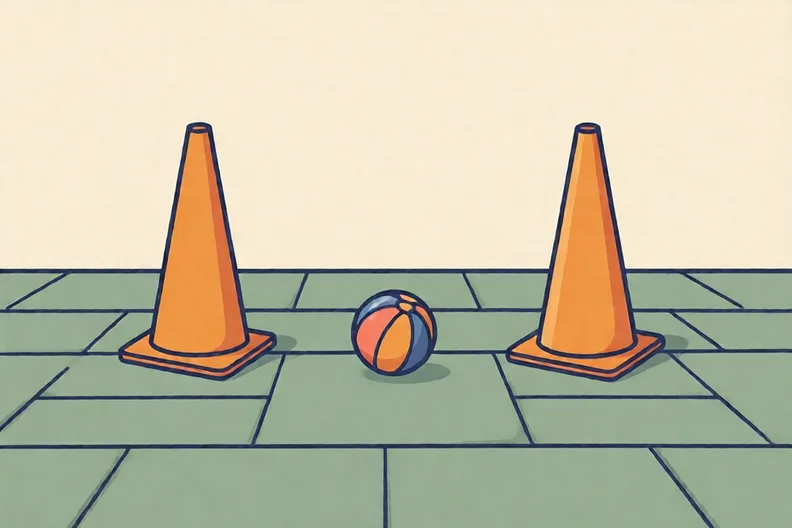
Two cones set four metres apart on a flat garden patio with a small ball
Watch me
Bend kneesGentle pushHead up

Ali bends his knees and keeps his hand relaxed.

He pushes the ball down gently with his finger pads.

He keeps his head up to spot the space.

Now you
  1. 1.

    Number these dribbling steps 1 to 4 in the order Ali did them.

    StartFinish
    1. Look up to find space
    2. Bend your knees
    3. Push the ball down gently
    4. Move towards the space

C Your turn6 min

Stand in a clear space. Keep the ball away from windows. A grown-up watches.
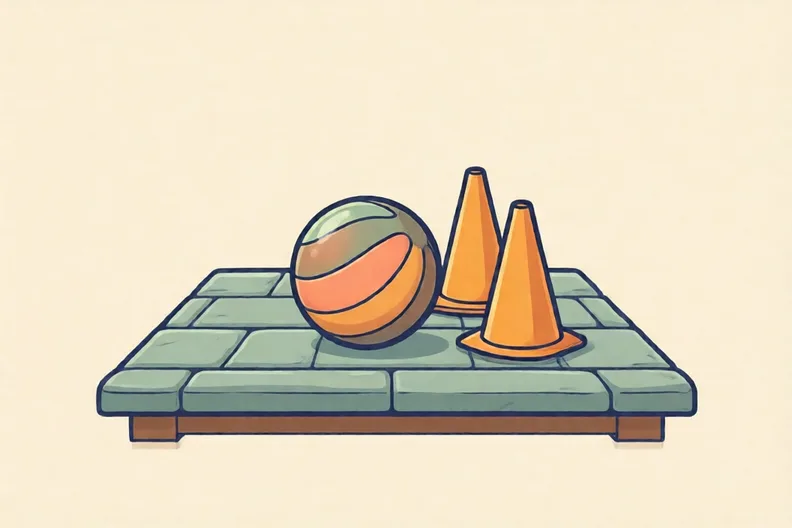
A small bouncy ball and two cones on a flat garden patio with clear space around them
  1. 1.

    A defender is close. Which bounce keeps the ball safe? Circle one.

    Bend kneesRelaxed handGentle push
    A high, hard bounceA low, gentle bounceA bounce while staring down
  2. 2.

    Use Ali's steps from Watch me. Number these steps 1 to 4 in that order.

    StartFinish
    1. Move towards the space
    2. Look up
    3. Push the ball down gently
    4. Bend your knees
  3. 3.

    Draw a line from each skill to what it helps you do.

    SkillHelps you
    Bend your kneesUse finger padsKeep your head up
    Find space and teammatesSoft, low controlQuick change of direction
  4. 4.

    Dribble for 30 seconds, keeping the ball low. Count how many times the ball gets away from you. Colour that many squares in the bar. Do three tries.

    Times the ball got away in 30 seconds012345678910Try 1Try 2Try 3

Say it out loud: Which change helped most: bounce height, step order, or where your eyes go?

D Spot the mistake3 min
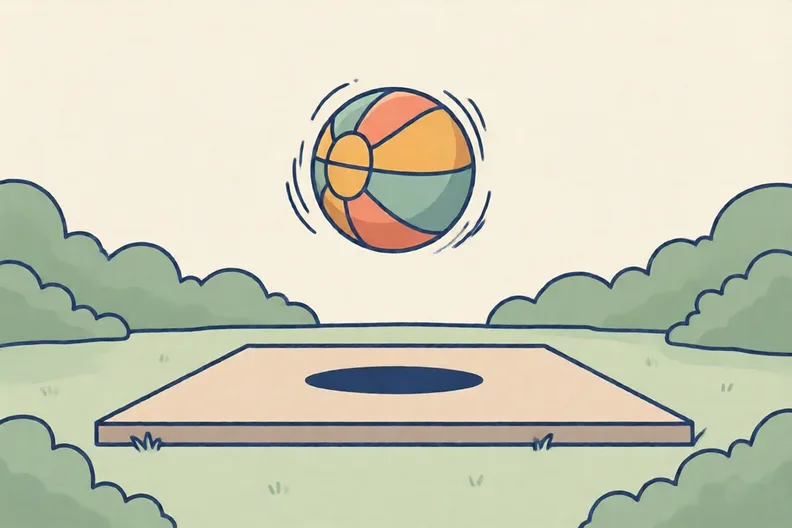
A ball bouncing high above a garden patio with its shadow below
Kit says: “The harder I bounce the ball, the better I dribble.”
  1. 1.

    What is wrong with Kit's idea? Write one reason.

E Think deeper3 min

  1. 1.

    Ali says: “I can only dribble with one hand.” Explain why he is wrong and how switching hands helps.

    Right handLeft hand

How did it feel?

I can do it Nearly Not yet
StudyDen · Year 4 · PE · Invasion games: maintaining possession and stopping an attack through basketballAnswers are on the grown-up page

For the grown-up

Low, close and looking up · 2 minutes to read

Answers, and what a wrong one tells you

A

1. Get ready with bent elbows your child may think hands should stay still. Ask what the hands need to do to hold a ball softly. Practise a gentle catch with a soft ball.

2. 1 Look at your target · 2 Step forward on the other foot · 3 Swing your arm through your child may have swung first. Ask what the eyes do before the throw starts, then ask which foot moves first.

3. Jog on the spot and stretch your child may think resting warms the body. Ask what happens to your breathing and legs after a jog.

B

1. 1 Bend your knees · 2 Push the ball down gently · 3 Look up to find space · 4 Move towards the space If your child puts the steps in a different order, read Ali's three lines again together. Ask what Ali did first, next and last.

C

1. A low, gentle bounce your child may think a hard bounce is safer. Ask how high the ball goes after a hard bounce and whether a defender can reach it.

2. 1 Bend your knees · 2 Push the ball down gently · 3 Look up · 4 Move towards the space If your child puts the steps in a different order, read Ali's lines again. Ask which step Ali did first and which came last.

3. Bend your knees → Quick change of direction; Use finger pads → Soft, low control; Keep your head up → Find space and teammates your child may have joined head up to control. Ask what the eyes can see when the head is up.

4. Look for: Three bars coloured, each showing how many times the ball got away in one 30-second try. If your child loses the ball often, ask them to bounce it lower and softer on the next try. Then compare the bars.

D

1. Look for: Bouncing hard makes the ball fly high, so a defender can steal it. your child may only repeat that hard is wrong. Ask where the ball goes after a hard bounce and who can reach it.

E

1. Look for: Says you can dribble with either hand, one at a time, and that switching helps change direction and keep control.

Words to use

Say“Show me where your eyes went. Was the ball low and close, or did it fly high?”
Instead of“Bounce it harder and faster, you'll get the hang of it.”

After the sheet

Use a soft bouncy ball in a clear room, away from windows. Mark two spots with cushions about four metres apart. Dribble between them, low and close, with your head up. Time 30 seconds and count how many times the ball gets away.

Tick what your child got right in StudyDen. Anything missed comes back in a later Look back box, so there's no need to redo the sheet.

The rest of this unit

5 more sheets come with a StudyDen plan, in teaching order:

  1. Soft and Accurate Passes(with a plan)
  2. Dribble, pass, make space(with a plan)
  3. Shooting Power and Chances(with a plan)
  4. Marking to Stop an Attack(with a plan)
  5. Pass, move and switch fast(with a plan)

Every Year 4 PE worksheet

The worksheets plan opens a printable sheet for every lesson in Years 1 to 6, each with its answers on a separate page for you. It costs £6.99 a month or £59 a year for the whole family, with no free trial.

The full StudyDen plan adds the lessons themselves, marked as your child works, with the worksheets included. It is 7 days free, then £29.99 a month.

Both start with a free account; you choose the plan when you sign up.