← Year 2 English worksheets

Year 2 Alternative GPCS for consonants and homophones worksheet

“Sneaky word pairs” is free to print, with no account. It is the first sheet in the Year 2 English unit “Alternative GPCS for consonants and homophones”, for children aged 6 to 7, and takes about 22 minutes.

Print it on A4. The child's pages come first; the answers, and what each wrong answer tells you, are on the grown-up page that follows. Weeks 8 to 12 of the year, 18 sheets in the unit.

Free sample · answers on the last page

Sneaky word pairs

Name: ____________ · Date: ____________
Year 2 · English · about 22 minutes
Answers are on the grown-up page

Today I can choose the right homophone or near-homophone by thinking about what the sentence means.

A Look back3 min

  1. 1.

    Circle the right spelling. hop + ing

    hop+ ing
    hoppinghopinghopeing
  2. 2.

    Circle the sentence that is written correctly.

    capital letterwordsfull stop
    sam ran home.Sam ran home.Sam ran home
  3. 3.

    Circle the plural of cat, meaning more than one cat.

    one catmorethan one
    catscat's

B Watch me, then you4 min

Some words sound the same but mean different things. Read the sentence, ask what it means, then pick the word.

Watch me

Read: I have ___ hands.

It means the number 2, so I need the number word.

The number 2 is spelt t-w-o, so the word is two.

Now you
  1. 1.

    Circle the right word. The dog ran ___ the park.

    ABC123N
    totootwo

C Your turn8 min

Read each sentence out loud. Pick the word that fits what the sentence means.
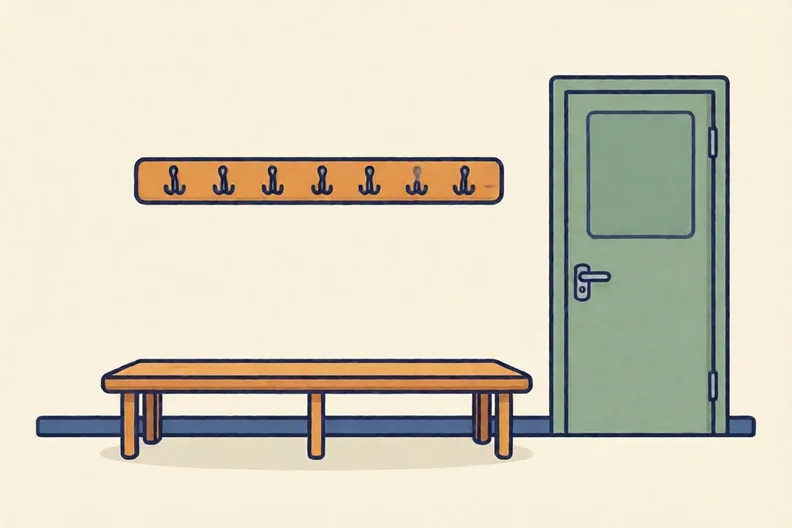
A school cloakroom with a row of empty coat hooks above a bench
  1. 1.

    Circle the right word. The tree is over ___ by the house.

    ABC123N
    theretheirthey're
  2. 2.

    Circle the right word. The children hung up ___ coats.

    the children
    theretheirthey're
  3. 3.

    Circle the right word. ___ going to be late.

    theyare
    theretheirThey're
  4. 4.

    Circle the right word. We will be there in one ___.

    60 minutes
    ourhourare

Say it out loud: Which word is about a place, which shows belonging, and which means they are?

D Spot the mistake3 min
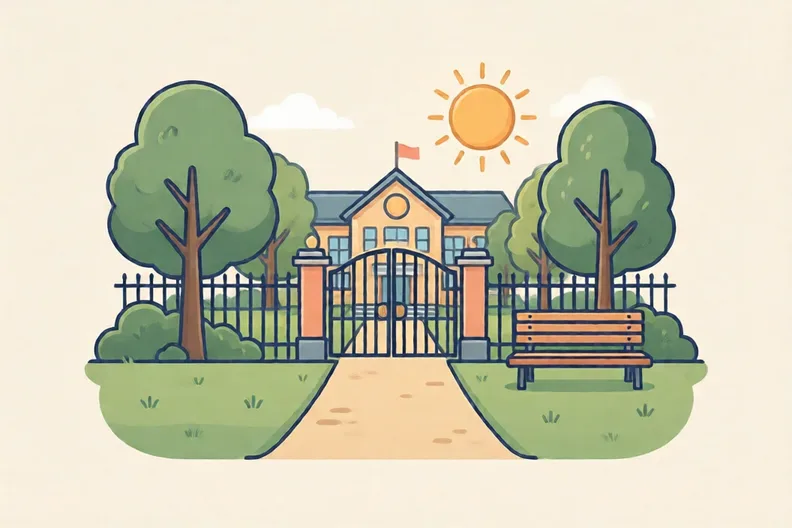
A path from a school gate to a small park with a bench, sunny day
Lena writes: “Their going to the park after school.”
  1. 1.

    Circle the right word to fix Lena's sentence. ___ going to the park after school.

    theirThey'rethere

E Think deeper4 min

  1. 1.

    Write two sentences. In one, use hour. In the other, use our. Tell your grown-up what each word means.

    123456789101112

How did it feel?

I can do it Nearly Not yet
StudyDen · Year 2 · English · Alternative GPCS for consonants and homophonesAnswers are on the grown-up page

For the grown-up

Sneaky word pairs · 2 minutes to read

Answers, and what a wrong one tells you

A

1. hopping If your child picked 'hoping', the p was missed. With a short word like hop, double the last letter before -ing.

2. Sam ran home. If your child picked a sentence with no full stop, remind them that every sentence ends with a full stop, and a name starts with a capital.

3. cats 'Cat's' shows that something belongs to a cat. For more than one cat, just add s. Ask: is it one cat or lots?

B

1. to If your child picked 'too', remind them that 'too' means also. 'To' shows where someone goes, from the house to the park.

C

1. there If your child picked 'their', ask whether the word is about a place or about belonging to a group. Here it points to a place.

2. their If your child picked 'they're', read it back as 'they are coats'. That does not fit. The coats belong to the children, so use their.

3. They're If your child picked 'there', ask whether it is a place. Try 'they are' in the gap. If it fits, the word is they're.

4. hour If your child picked 'our' or 'are', ask: is this about time? An hour is 60 minutes and starts with a silent h.

D

1. They're 'Their' belongs to a group. Lena means 'they are going', so the contraction they're fits. The apostrophe stands in for the missing a.

E

1. Look for: Two sentences, one using hour to mean 60 minutes and one using our to mean belonging to us, both spelt correctly.

Words to use

Say“Read the sentence aloud. Which word fits what it means?”
Instead of“Tell them it is spelt wrong, or say 'you should know that one by now'.”

After the sheet

Hunt for sneaky pairs: read a few pages of a favourite book together. Find there, their or they're, and say what each one means.

Tick what your child got right in StudyDen. Anything missed comes back in a later Look back box, so there's no need to redo the sheet.

The rest of this unit

17 more sheets come with a StudyDen plan, in teaching order:

  1. Same sound, different spelling(with a plan)
  2. The silent b hunt(with a plan)
  3. Silent K at the Start(with a plan)
  4. The silent G hunt(with a plan)
  5. The sneaky silent W(with a plan)
  6. Three ways to spell s(with a plan)
  7. The s sound: se and ce(with a plan)
  8. The j sound: ge and dge(with a plan)
  9. Choosing the j ending(with a plan)
  10. The 'l' endings: le and el(with a plan)
  11. The 'l' sound: il and al(with a plan)
  12. The sneaky a(with a plan)
  13. Tricky ea and tch words(with a plan)
  14. Four disguises for 'or'(with a plan)
  15. Four ways to spell or(with a plan)
  16. New 'or' spellings: ore, ough, a(with a plan)
  17. Three ways to spell 'or'(with a plan)

Every Year 2 English worksheet

The worksheets plan opens a printable sheet for every lesson in Years 1 to 6, each with its answers on a separate page for you. It costs £6.99 a month or £59 a year for the whole family, with no free trial.

The full StudyDen plan adds the lessons themselves, marked as your child works, with the worksheets included. It is 7 days free, then £29.99 a month.

Both start with a free account; you choose the plan when you sign up.