← Year 2 English worksheets

Year 2 The Great Fire of London: non-chronological report worksheet

“Spotting report features” is free to print, with no account. It is the first sheet in the Year 2 English unit “The Great Fire of London: non-chronological report”, for children aged 6 to 7, and takes about 20 minutes.

Print it on A4. The child's pages come first; the answers, and what each wrong answer tells you, are on the grown-up page that follows. Weeks 23 to 25 of the year, 9 sheets in the unit.

Free sample · answers on the last page

Spotting report features

Name: ____________ · Date: ____________
Year 2 · English · about 20 minutes
Answers are on the grown-up page

Today I can tell a report from a story by its features.

A Look back3 min

  1. 1.

    Which mark ends this sentence? Where is the park

    Where isthe park
    full stopquestion markexclamation mark
  2. 2.

    Join these two sentences with the word and. Ali likes cats. Ali likes dogs.

    Ali likescatsAli likesdogs
  3. 3.

    Rewrite this with a capital letter and a full stop. the bus is late

    the busis late

B Watch me, then you4 min

A report about a topic has a title, then an introduction, then subheadings with sections. Each part tells you something different about the topic.
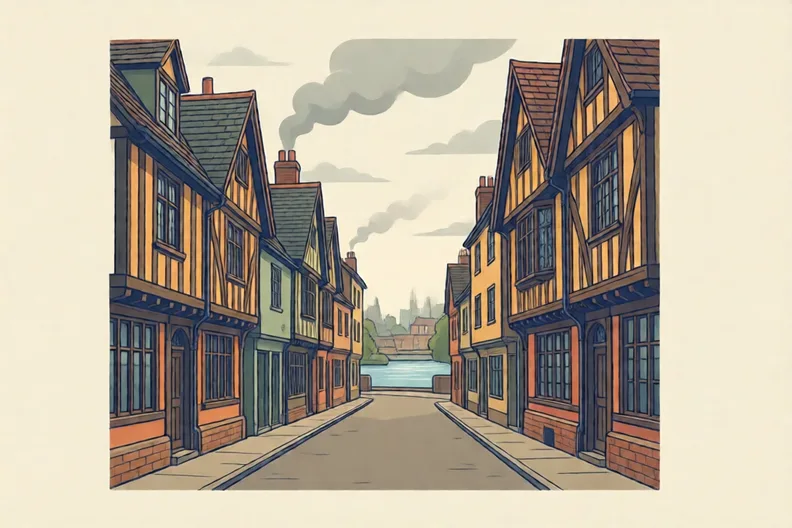
An old London street with tall timber houses and smoke in the sky
Watch me
TitleIntroductionSubheadingSection

The title tells you what the whole report is about.

The introduction gives a little general information.

A subheading tells you what the next part is about.

Now you
  1. 1.

    A line at the top of a report says: Castles in Britain. Which feature is this? Circle one.

    IntroductionSubheadingSection
    titlesectionsubheading

C Your turn7 min

Look at each feature, then answer.
An owl perched on a low oak branch against a plain background.
  1. 1.

    A line at the top of a report says: Animals of the Farm. Which feature is this? Circle one.

    Animals ofthe Farm
    titleintroductionsection
  2. 2.

    A line before a part of a report says: How Owls Hunt. Which feature is this? Circle one.

    How OwlsHunt
    titlesubheadingintroduction
  3. 3.

    Put each sentence in the right column. Real facts are true. Made-up sentences are not.

    Owls hunt mice at night.Bees make honey in hives.The owl sang a song to the moon.The bee flew to the Moon.
    Real factMade up
  4. 4.

    Which card could go under the subheading What Owls Are Like?

    First, the owl hatched. Then it grew. Last, it flew away.Owls have round faces and soft feathers. They hunt at night.Once upon a time, an owl wore a hat.

Say it out loud: What changed between the first and last questions? Which feature helped you each time?

D Spot the mistake3 min

Kit says: “Reports always tell things in time order, from start to finish.”
How Owls LookWhat Owls EatWhere Owls Live
  1. 1.

    Explain what Kit has got wrong, in one or two sentences.

E Think deeper4 min

  1. 1.

    Write a title and one subheading for a report about a place you know. Tell your grown-up which line tells the whole topic and which tells the next part.

    TitleSubheadingSection

How did it feel?

I can do it Nearly Not yet
StudyDen · Year 2 · English · The Great Fire of London: non-chronological reportAnswers are on the grown-up page

For the grown-up

Spotting report features · 2 minutes to read

Answers, and what a wrong one tells you

A

1. question mark your child may have picked the full stop, which ends telling sentences. Read the words aloud and ask: is this a question?

2. Look for: One sentence that joins cats and dogs with the word and, starts with a capital A and ends with a full stop.

3. Look for: The bus is late. with a capital T at the start and a full stop at the end.

B

1. title your child may have picked subheading because it is a line of big words. A subheading comes above a section, not at the top. Ask: is it the first line of the whole report?

C

1. title your child may have picked introduction, which is a few sentences of general information. A title is the short line at the very top.

2. subheading your child may have picked title. The title is at the top of the whole report. A subheading comes before one part of it.

3. Made up: The owl sang a song to the moon., The bee flew to the Moon. · Real fact: Owls hunt mice at night., Bees make honey in hives. your child may have put a made-up sentence in the fact column because it sounds nice. Ask: could a person check this in a book?

4. Owls have round faces and soft feathers. They hunt at night. your child may have picked the card that tells what happened in order. Ask: which card tells us what owls are like?

D

1. Look for: Says that reports do not have to go in time order and that many group facts by topic, so the claim is false. your child may have agreed with Kit. Point to the picture. Ask: do these parts tell what happened first, next and last?

E

1. Look for: A title naming a place, and a subheading naming one part of that place, with the grown-up told which line is which.

Words to use

Say“Which line tells you what the whole report is about? Which line tells you what the next part is about?”
Instead of“Read it from the start and see if it makes sense as a story.”

After the sheet

Find a bedtime story and an information book about animals or space. Ask your child to find the title and subheadings. Then ask which book is the report, and why.

Tick what your child got right in StudyDen. Anything missed comes back in a later Look back box, so there's no need to redo the sheet.

The rest of this unit

8 more sheets come with a StudyDen plan, in teaching order:

  1. Sentences About the Great Fire(with a plan)
  2. Writing Like a Reporter(with a plan)
  3. Getting ready to write(with a plan)
  4. Hooking the reader(with a plan)
  5. Planning with short notes(with a plan)
  6. Starting the fire report(with a plan)
  7. Notes for the fire plan(with a plan)
  8. Linking words for the fire(with a plan)

Every Year 2 English worksheet

The worksheets plan opens a printable sheet for every lesson in Years 1 to 6, each with its answers on a separate page for you. It costs £6.99 a month or £59 a year for the whole family, with no free trial.

The full StudyDen plan adds the lessons themselves, marked as your child works, with the worksheets included. It is 7 days free, then £29.99 a month.

Both start with a free account; you choose the plan when you sign up.