← Year 2 maths worksheets

Year 2 Calculating within 20 worksheet

“Three numbers together” is free to print, with no account. It is the first sheet in the Year 2 maths unit “Calculating within 20”, for children aged 6 to 7, and takes about 20 minutes.

Print it on A4. The child's pages come first; the answers, and what each wrong answer tells you, are on the grown-up page that follows. Weeks 6 to 8 of the year, 15 sheets in the unit.

Free sample · answers on the last page

Three numbers together

Name: ____________ · Date: ____________
Year 2 · Maths · about 20 minutes
Answers are on the grown-up page

Today I can add three numbers together and show the total in more than one way.

A Look back3 min

  1. 1.

    4 + 5 =

    45
  2. 2.

    10 + = 16

    1610
  3. 3.

    14 9. Write < or > in the box.

    149

B Watch me, then you4 min

Three children each take pencils from the bowls on the table. Ali takes 2, Bea takes 3 and Kit takes 1. How many pencils altogether?
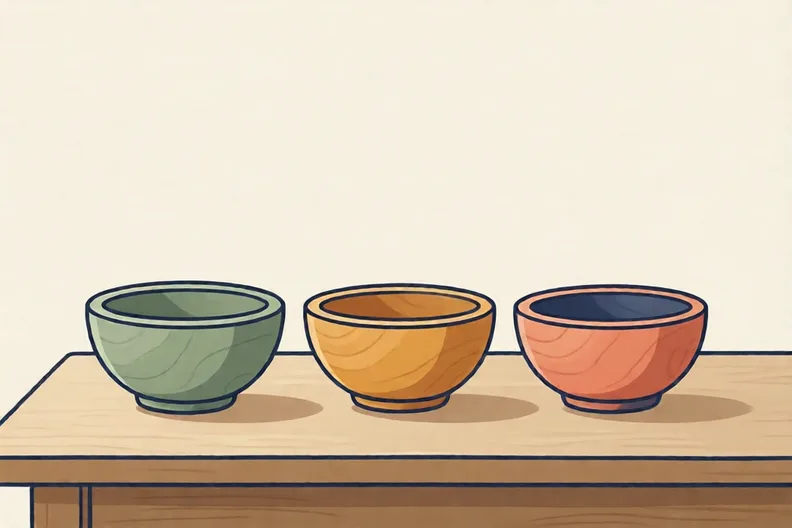
Three small wooden bowls in a row on a plain kitchen table
Watch me
6231

The three parts are 2, 3 and 1.

2 + 3 + 1 = 6

The whole is 6, so there are 6 pencils altogether.

Now you
  1. 1.

    Ali has 4 stickers, Bea has 3, and Kit has 2. How many stickers altogether?

    432

C Your turn6 min

  1. 1.

    3 + 4 + 2 =

    342
  2. 2.

    2 + 4 + 3 =

    243
  3. 3.

    2 + 4 + 5 =

    245
  4. 4.

    6 + 6 + 5 =

    665

Say it out loud: Did changing the order of the three numbers change the total? What stayed the same?

D Spot the mistake3 min

Kit says: “2 + 3 + 1 = 7.”
231
  1. 1.

    Use the three parts in the picture. How many in all?

E Think deeper3 min

34
  1. 1.

    Sam says: 3 + 4 + is less than 10. Which numbers from 0 to 10 could go in the box? Write them all.

How did it feel?

I can do it Nearly Not yet
StudyDen · Year 2 · Maths · Calculating within 20Answers are on the grown-up page

For the grown-up

Three numbers together · 2 minutes to read

Answers, and what a wrong one tells you

A

1. 9 If your child writes 8, they have probably counted 4 + 4. Ask them to say the second number out loud and count on from 4.

2. 6

3. >

B

1. 9 If your child writes 7, they have probably added 4 + 3 and stopped. Ask them to add the 2 as well.

C

1. 9

2. 9

3. 11 If your child writes 6, they have added only the first two numbers. Ask them to add the 5 on at the end.

4. 17

D

1. 6 If your child writes 7, they have probably added the 2 twice (2 + 3 + 2). Point to each part, say its number once, and add them in turn.

E

1. 0, 1 and 2 If your child writes only 0, ask them to try 1 and 2 and check each total against 10.

Words to use

Say“Point to each part and say its number before you add them.”
Instead of“Tell them the answer straight away.”

After the sheet

Put three small piles of coins or buttons on a table. Count each pile, then add the three numbers and write the total.

Tick what your child got right in StudyDen. Anything missed comes back in a later Look back box, so there's no need to redo the sheet.

The rest of this unit

14 more sheets come with a StudyDen plan, in teaching order:

  1. First, then, then, now(with a plan)
  2. Add in any order(with a plan)
  3. Smart pairs first(with a plan)
  4. Find the pair to 10(with a plan)
  5. Bridge through 10(with a plan)
  6. Jumping over 10(with a plan)
  7. Comparing two groups(with a plan)
  8. Find the difference(with a plan)
  9. Finding the difference(with a plan)
  10. Next-Door Numbers(with a plan)
  11. Pictograms and differences(with a plan)
  12. Bars and differences(with a plan)
  13. Solving problems with what you know(with a plan)
  14. Reading charts and sums(with a plan)

Every Year 2 maths worksheet

The worksheets plan opens a printable sheet for every lesson in Years 1 to 6, each with its answers on a separate page for you. It costs £6.99 a month or £59 a year for the whole family, with no free trial.

The full StudyDen plan adds the lessons themselves, marked as your child works, with the worksheets included. It is 7 days free, then £29.99 a month.

Both start with a free account; you choose the plan when you sign up.