← Year 3 maths worksheets

Year 3 Unit fractions as part of a whole worksheet

“Whole and Parts” is free to print, with no account. It is the first sheet in the Year 3 maths unit “Unit fractions as part of a whole”, for children aged 7 to 8, and takes about 20 minutes.

Print it on A4. The child's pages come first; the answers, and what each wrong answer tells you, are on the grown-up page that follows. Weeks 24 to 26 of the year, 10 sheets in the unit.

Free sample · answers on the last page

Whole and Parts

Name: ____________ · Date: ____________
Year 3 · Maths · about 20 minutes
Answers are on the grown-up page

Today I can name the whole and the parts that make it up.

A Look back3 min

  1. 1.

    This circle is cut into equal parts. How many equal parts make the whole circle?

  2. 2.

    10 is split into two equal parts. How many are in each part?

    10
  3. 3.

    48 84. Write < or >.

    4884

B Watch me, then you4 min

A box holds 12 cubes. Some are blue and some are red. All 12 cubes together are the whole.

Watch me
1284

The whole is all 12 cubes in the box.

8 blue and 4 red make the 12.

So blue and red are the parts of the whole.

Now you
  1. 1.

    A box has 15 buttons. 9 are white. How many are not white?

    159

C Your turn6 min

Each bar model has the whole and one part. Find the other part.

  1. 1.

    A pack has 10 crayons. 6 are red. How many are not red?

    106
  2. 2.

    A pack has 12 crayons. 6 are red. How many are not red?

    126
  3. 3.

    A pack has 12 crayons. 7 are red. How many are not red?

    127
  4. 4.

    A pack has 20 crayons. 7 are red. How many are not red?

    207

Say it out loud: What stayed the same in each question, and what changed?

D Spot the mistake3 min

Ola says: “England is much too big to be a part of the UK, so it can’t be one.”
413
  1. 1.

    The UK has 4 nations: England, Scotland, Wales and Northern Ireland. Is England a part of the UK? Circle yes or no.

    yesno

E Think deeper3 min

Look at the picture of the town. Pick the whole and name a big part of it.
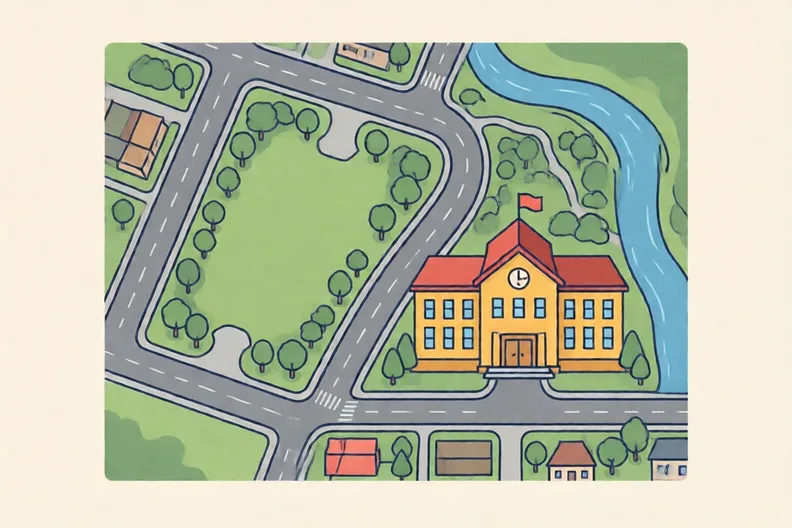
Simple map of a small town with roads, a park and a school
  1. 1.

    Name the whole and one big part. Explain why the part belongs inside the whole.

How did it feel?

I can do it Nearly Not yet
StudyDen · Year 3 · Maths · Unit fractions as part of a wholeAnswers are on the grown-up page

For the grown-up

Whole and Parts · 2 minutes to read

Answers, and what a wrong one tells you

A

1. 4

2. 5

3. <

B

1. 6

C

1. 4 If your child writes 16, they added 10 and 6. The part is taken away from the whole, so the answer is smaller than 10.

2. 6

3. 5 If your child writes 19, they added 12 and 7. Ask whether the not-red part can be bigger than the whole.

4. 13 If your child writes 27, they added 20 and 7. The not-red crayons are the rest of the 20 after the red ones are removed.

D

1. yes If your child circles no, they think size decides what is a part. England lies inside the UK, so it is a part, however big it is.

E

1. Look for: Names a whole and a part inside it, and says why the part belongs inside, not just that it is smaller.

Words to use

Say“Which thing is the whole? Now name the parts that make it up.”
Instead of“Just tell them the answer.”

After the sheet

Tip a pile of buttons or dried pasta onto a plate. Call the pile the whole, then split it into two groups and say each group is a part.

Tick what your child got right in StudyDen. Anything missed comes back in a later Look back box, so there's no need to redo the sheet.

The rest of this unit

9 more sheets come with a StudyDen plan, in teaching order:

  1. Parts Need a Whole(with a plan)
  2. Equal or unequal parts?(with a plan)
  3. Equal parts, different looks(with a plan)
  4. Part size and the whole(with a plan)
  5. Build a whole from parts(with a plan)
  6. How many equal parts?(with a plan)
  7. Writing fractions with notation(with a plan)
  8. Unit fractions in different ways(with a plan)
  9. Equal parts and the whole(with a plan)

Every Year 3 maths worksheet

The worksheets plan opens a printable sheet for every lesson in Years 1 to 6, each with its answers on a separate page for you. It costs £6.99 a month or £59 a year for the whole family, with no free trial.

The full StudyDen plan adds the lessons themselves, marked as your child works, with the worksheets included. It is 7 days free, then £29.99 a month.

Both start with a free account; you choose the plan when you sign up.