← Year 3 English worksheets

Year 3 Oral storytelling worksheet

“Retelling Goldilocks in order” is free to print, with no account. It is the first sheet in the Year 3 English unit “Oral storytelling”, for children aged 7 to 8, and takes about 21 minutes.

Print it on A4. The child's pages come first; the answers, and what each wrong answer tells you, are on the grown-up page that follows. Weeks 23 to 24 of the year, 4 sheets in the unit.

Free sample · answers on the last page

Retelling Goldilocks in order

Name: ____________ · Date: ____________
Year 3 · English · about 21 minutes
Answers are on the grown-up page

Today I can retell a story in the right order, from opening to resolution.

A Look back3 min

  1. 1.

    A story has a beginning, a middle and an ____. Circle the word that completes the sentence.

    BeginningMiddle
    endtitlechapter
  2. 2.

    Where and when a story happens is called the ____. Circle the word that completes the sentence.

    CharactersPlot
    settingauthorrhyme
  3. 3.

    Goldilocks screams and runs away. Which feeling word fits her best? Circle one.

    scaredsleepybored

B Watch me, then you4 min

Goldilocks' story has four parts: opening, build-up, climax and resolution. Read the lines, then say them in order out loud.
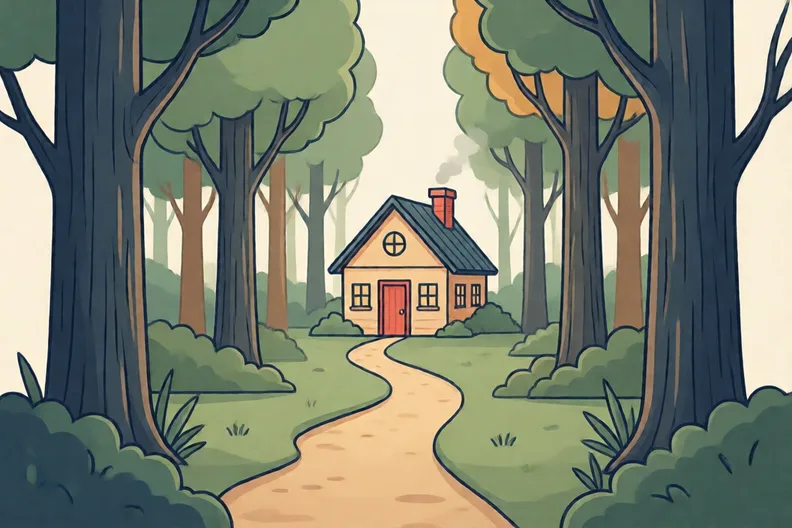
A narrow path winding through green woods to a small cottage with a red door
Watch me
OpeningBuild-upClimaxResolution

Opening: we meet Goldilocks and the place where the story starts.

Build-up: she does more and more things, and the story grows.

Climax: the most exciting or scary moment comes.

Resolution: the problem is sorted out and the story ends.

Now you
  1. 1.

    Number these four parts in story order, from 1 to 4.

    1. The bears come home and find her asleep.
    2. Goldilocks runs off, and the bears are safe.
    3. Goldilocks walks into the forest and finds a cottage.
    4. She tries the porridge, the chairs and the beds.

C Your turn6 min

Read each sentence from the story. Circle the part of the story it belongs to.
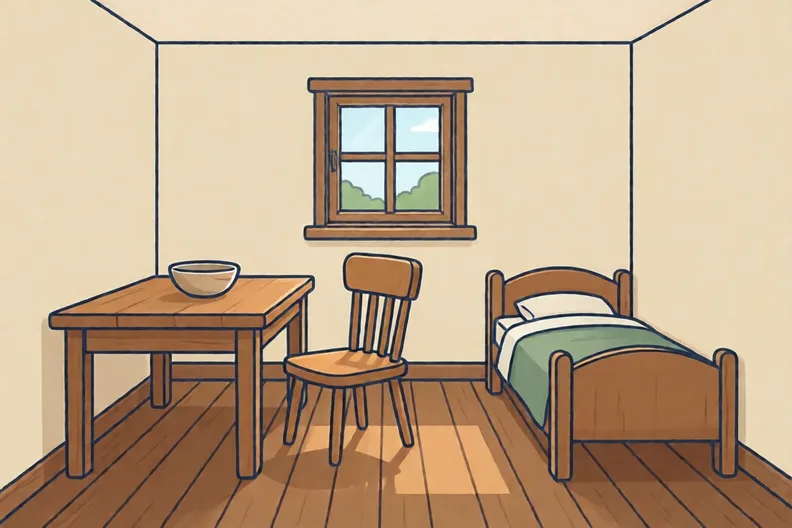
A cosy cottage room with a window, showing a table with a bowl, a chair and a bed.
  1. 1.

    Once upon a time, Goldilocks lived at the edge of a big forest. Which part is this?

    OpeningBuild-upClimaxResolution
  2. 2.

    Goldilocks sits in Baby Bear's chair, and it breaks. Which part is this?

    OpeningBuild-upClimaxResolution
  3. 3.

    “Someone has been sleeping in my bed!” cries Baby Bear. Which part is this?

    OpeningBuild-upClimaxResolution
  4. 4.

    Goldilocks jumps out of the window and never goes back. Which part is this?

    OpeningBuild-upClimaxResolution

Say it out loud: Which word in the sentence told you which part it is? Say it out loud, then tell your grown-up the story in order.

D Spot the mistake3 min

Folklore means old stories that people pass on by telling them out loud.
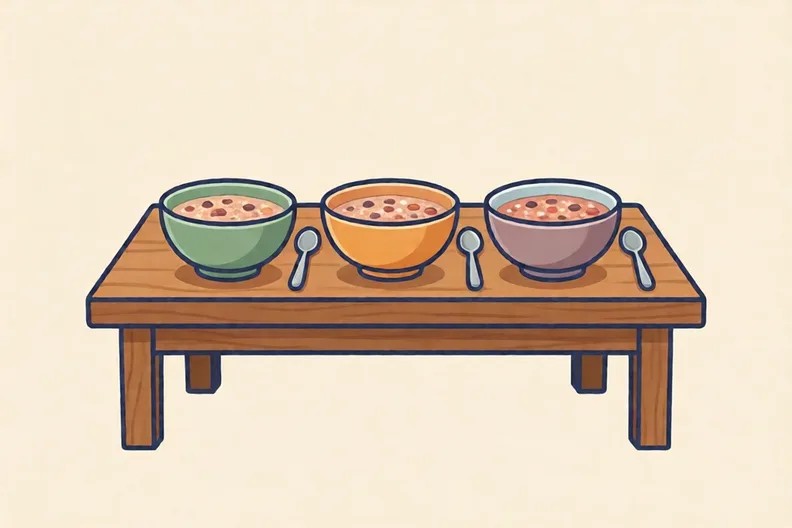
A kitchen table with three bowls of porridge set out in a row
Lou says: “Folklore has one author, so there is only one right way to tell a story.”
  1. 1.

    Why is Lou wrong? Write one or two sentences.

E Think deeper4 min

An open cottage door with the forest behind it and three empty chairs inside
  1. 1.

    Is Goldilocks a good character or a bad character? Give your view and two things from the story that show it.

    OpeningBuild-upClimaxResolution

How did it feel?

Tell your grown-up one thing you liked about telling the story, and one part you want to practise.

I can do it Nearly Not yet
StudyDen · Year 3 · English · Oral storytellingAnswers are on the grown-up page

For the grown-up

Retelling Goldilocks in order · 2 minutes to read

Answers, and what a wrong one tells you

A

1. end

2. setting

3. scared

B

1. 1 Goldilocks walks into the forest and finds a cottage. · 2 She tries the porridge, the chairs and the beds. · 3 The bears come home and find her asleep. · 4 Goldilocks runs off, and the bears are safe.

C

1. Opening If your child chose Build-up, ask: has anything happened yet? We only meet Goldilocks and where she lives, so it is the opening.

2. Build-up If your child chose Climax, ask: is this the most exciting moment? Breaking the chair is one more thing she does, so it is the build-up.

3. Climax If your child chose Resolution, ask whether the problem is solved yet. The bears have just found her, so this is the climax.

4. Resolution

D

1. Look for: Folklore has no single author. It is passed on by word of mouth, so tellers change it and many versions exist. If your child agrees with Lou, ask who wrote the story first. Then ask who told it to them. Folklore is passed on by word of mouth, so people change it.

E

1. Look for: Gives a clear view and backs it with two events from the story, such as going into the cottage uninvited or running off.

Words to use

Say“Show me the four parts on your fingers, then tell me the story out loud, going quiet for the scary bit.”
Instead of“Just read the story to them and ask whether they understood it.”

After the sheet

At bedtime, tell a short story about three socks or three spoons. Count the opening, build-up, climax and resolution on your fingers, then swap roles.

Tick what your child got right in StudyDen. Anything missed comes back in a later Look back box, so there's no need to redo the sheet.

The rest of this unit

3 more sheets come with a StudyDen plan, in teaching order:

  1. Storytelling word choices(with a plan)
  2. Telling with charisma(with a plan)
  3. Voices for the Story(with a plan)

Every Year 3 English worksheet

The worksheets plan opens a printable sheet for every lesson in Years 1 to 6, each with its answers on a separate page for you. It costs £6.99 a month or £59 a year for the whole family, with no free trial.

The full StudyDen plan adds the lessons themselves, marked as your child works, with the worksheets included. It is 7 days free, then £29.99 a month.

Both start with a free account; you choose the plan when you sign up.