← Year 3 English worksheets

Year 3 'The Iron Man': narrative writing worksheet

“Retelling The Iron Man” is free to print, with no account. It is the first sheet in the Year 3 English unit “'The Iron Man': narrative writing”, for children aged 7 to 8, and takes about 22 minutes.

Print it on A4. The child's pages come first; the answers, and what each wrong answer tells you, are on the grown-up page that follows. Weeks 24 to 26 of the year, 10 sheets in the unit.

Free sample · answers on the last page

Retelling The Iron Man

Name: ____________ · Date: ____________
Year 3 · English · about 22 minutes
Answers are on the grown-up page

Today I can retell the first three chapters of the story in order, using its four parts.

A Look back3 min

  1. 1.

    Circle the sentence that starts with a capital letter and ends with a full stop.

    Capital letterWordsFull stop
    the robot fell off the cliff.The robot fell off the cliffThe robot fell off the cliff.the robot fell off the cliff
  2. 2.

    Circle the word that joins two ideas: The farmers were cross because the machines were gone.

    First ideaSecond idea
    becausefarmerscrossmachines
  3. 3.

    Write this with speech marks: Come here, said Hogarth.

    Speech marksWhat was saidWho said it

B Watch me, then you4 min

Ola is sorting a story into its four parts. Watch how she does it, then try the question.
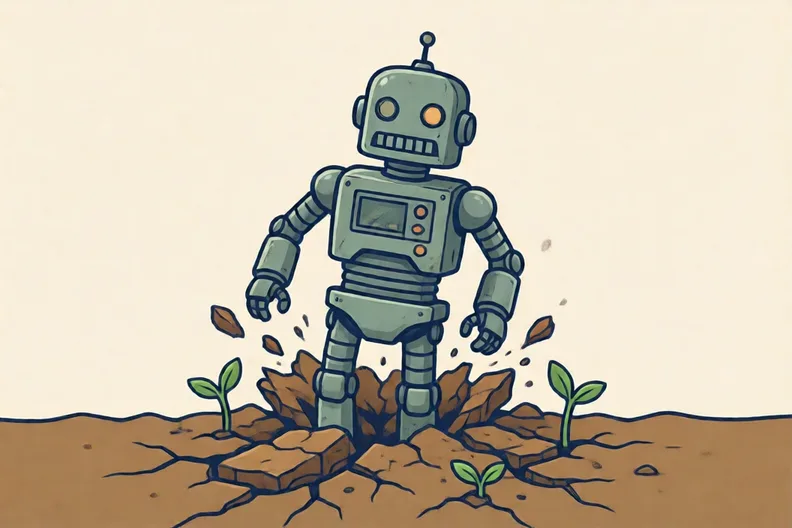
A dull metal robot bursting up out of cracked soil, with green spring shoots around it.
Watch me
OpeningBuild-upClimaxResolution

The opening sets the scene.

The build-up makes us feel tense.

The climax is the highest point of the story.

The resolution ends the problem.

Now you
  1. 1.

    The Iron Man bursts out of the ground in spring. Which part is this? Circle one.

    OpeningBuild-upClimaxResolution
    openingbuild-upclimaxresolution

C Your turn8 min

Put the events in order, sort them into story parts, then practise joining and swapping words.

  1. 1.

    Number these four events in the order they happen. Write 1 to 4 in the boxes.

    1. Hogarth brings him to a yard full of old metal.
    2. The Iron Man bursts out of the ground in spring.
    3. The Iron Man sits on a dark clifftop by the sea.
    4. The angry crowd digs a deep pit and buries him there.
  2. 2.

    Sort each sentence under the part it belongs to. Write the sentence in the right column.

    OpeningBuild-upClimax
    The Iron Man stands on a dark clifftop.The farmers bury him in a deep hole.He bursts out of the ground in spring.
    OpeningBuild-upClimax
  3. 3.

    Join these two ideas into one sentence using because. The farmers were angry. They buried him.

    Idea oneIdea two
  4. 4.

    Read the chain. Which word can replace The Iron Man in the second sentence? Circle it.

    The IronMan sat.The IronMan sighed.
    HeHogarthFarmersHill

Say it out loud: Which words told you which part of the story you were in?

D Spot the mistake3 min

Ali says: “The opening is when Hogarth takes the Iron Man to the scrapyard.”
OpeningBuild-upClimaxResolution
  1. 1.

    Which part is the scrapyard? Circle one.

    openingbuild-upclimaxresolution

E Think deeper4 min

  1. 1.

    After the burial, Hogarth feels sorry and guilty. Write one sentence that tells how he feels and why, using because.

How did it feel?

I can do it Nearly Not yet
StudyDen · Year 3 · English · 'The Iron Man': narrative writingAnswers are on the grown-up page

For the grown-up

Retelling The Iron Man · 2 minutes to read

Answers, and what a wrong one tells you

A

1. The robot fell off the cliff.

2. because

3. Look for: Opening and closing speech marks round Come here, with a comma before the closing speech mark, then said Hogarth.

B

1. climax your child picked the part where things are calm or settling. Ask: where is the most tense moment? Bursting out is the highest point.

C

1. 1 The Iron Man sits on a dark clifftop by the sea. · 2 The angry crowd digs a deep pit and buries him there. · 3 The Iron Man bursts out of the ground in spring. · 4 Hogarth brings him to a yard full of old metal. your child may have put the scrapyard first. Ask what happens at the start, and what the story has at the end.

2. Climax: He bursts out of the ground in spring. · Opening: The Iron Man stands on a dark clifftop. · Build-up: The farmers bury him in a deep hole. your child may have put the burial in the climax. The burial is the build-up. The climax is when he comes back out.

3. Look for: One sentence that joins the two ideas with because, such as: The farmers buried him because they were angry.

4. He your child may have picked Hogarth. Hogarth is a different character. Ask who the sentence is about: the Iron Man.

D

1. resolution your child may have picked opening. The scrapyard ends the problem, so it is the resolution. Ask: where does the story start?

E

1. Look for: A sentence saying Hogarth feels sorry or guilty, joined to a reason with because.

Words to use

Say“Which part of the story was that? How did the voice change there?”
Instead of“That's right, now tell me the rest of the book.”

After the sheet

At home, sort four cups or cushions into a row labelled opening, build-up, climax and resolution. Retell a favourite bedtime story by moving one cup at a time.

Tick what your child got right in StudyDen. Anything missed comes back in a later Look back box, so there's no need to redo the sheet.

The rest of this unit

9 more sheets come with a StudyDen plan, in teaching order:

  1. Planning with notes(with a plan)
  2. Writing a gripping opening(with a plan)
  3. Planning the build-up(with a plan)
  4. Building the suspense(with a plan)
  5. Feelings and the word but(with a plan)
  6. Words for the climax(with a plan)
  7. Building the climax(with a plan)
  8. Planning a Story Ending(with a plan)
  9. A happy ending for the giant(with a plan)

Every Year 3 English worksheet

The worksheets plan opens a printable sheet for every lesson in Years 1 to 6, each with its answers on a separate page for you. It costs £6.99 a month or £59 a year for the whole family, with no free trial.

The full StudyDen plan adds the lessons themselves, marked as your child works, with the worksheets included. It is 7 days free, then £29.99 a month.

Both start with a free account; you choose the plan when you sign up.