← Year 3 English worksheets

Year 3 'The BFG': reading and narrative writing worksheet

“Story shapes and summaries” is free to print, with no account. It is the first sheet in the Year 3 English unit “'The BFG': reading and narrative writing”, for children aged 7 to 8, and takes about 22 minutes.

Print it on A4. The child's pages come first; the answers, and what each wrong answer tells you, are on the grown-up page that follows. Weeks 18 to 21 of the year, 12 sheets in the unit.

Free sample · answers on the last page

Story shapes and summaries

Name: ____________ · Date: ____________
Year 3 · English · about 22 minutes
Answers are on the grown-up page

Today I can find the opening, build-up, climax and resolution of a story, and sum it up.

A Look back3 min

  1. 1.

    Circle the naming word for a thing.

    wordsentencestory
    jumptablehappyunder
  2. 2.

    Join each word to what it does.

    startmiddleend
    capital letterfull stop
    ends a sentencestarts a name or sentence
  3. 3.

    Put these lines of a short story in order. Write 1, 2 and 3 in the boxes.

    firstthenlast
    1. Ali found a shell.
    2. Ali took the shell home.
    3. Ali walked along the beach.

B Watch me, then you4 min

Read this short text. It was a warm day. Mia had a yellow spade. She built a sandcastle. A wave knocked it down. Mia laughed and built another one. A summary keeps only the key moments, in your own words.

Watch me
builtknocked downbuilt again

Pick out the key moments: built, knocked down, built again.

Say them in your own words.

Summary: Mia built a sandcastle, a wave knocked it down, and she built another.

Now you
  1. 1.

    Which sentence is a key moment for a summary? Circle one.

    startmiddleend
    Mia had a yellow spade.A wave knocked the sandcastle down.It was a warm day.

C Your turn8 min

Read the kite story. Ola's red kite slipped from her hand on a windy day. It flew over the park and stuck in a tall tree. Ola climbed the tree and untangled the string. The kite flew free, and Ola went home for tea.
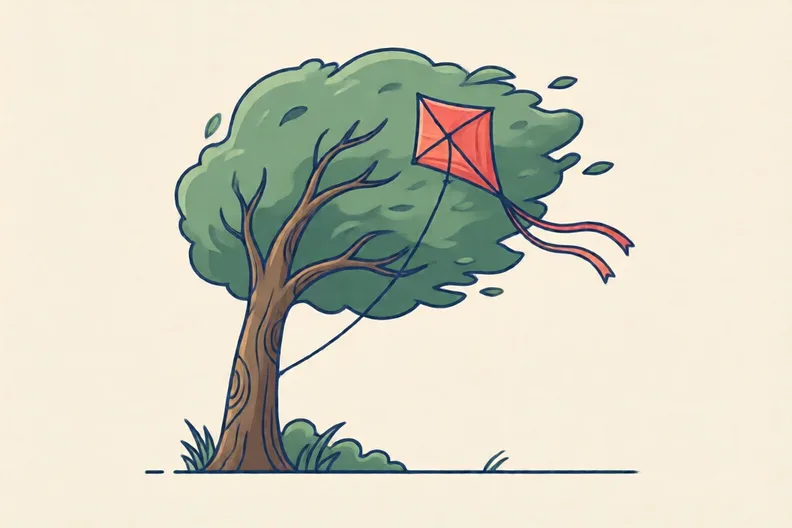
A windy park with a tall green tree and a red kite caught in its top branches
  1. 1.

    Circle the opening, the first part where the story starts.

    firstthenlast
    Ola's kite slipped from her hand.Ola went home for tea.Ola climbed the tree.
  2. 2.

    Circle the climax, the most exciting moment.

    openingbuild-upresolution
    The kite flew over the park.Ola climbed the tree to free the kite.Ola went home for tea.
  3. 3.

    Put these four events in order. Write 1 to 4 in the boxes.

    openingbuild-upclimaxresolution
    1. Ola went home for tea.
    2. The kite slipped from her hand.
    3. The kite stuck in a tall tree.
    4. Ola climbed the tree and freed the kite.
  4. 4.

    Write one sentence for the resolution of the kite story.

    climax

Say it out loud: Which part of the story was the most exciting? Why does that moment matter?

D Spot the mistake3 min

Kit says: “The resolution is always the first part of a story.”
build-upclimax
  1. 1.

    Kit is wrong. Which part really comes first in a story, and where does the resolution go?

E Think deeper4 min

  1. 1.

    Make up a short story with a beginning, a middle and an end. Name one key moment and say why it matters.

    beginningmiddleend

How did it feel?

I can do it Nearly Not yet
StudyDen · Year 3 · English · 'The BFG': reading and narrative writingAnswers are on the grown-up page

For the grown-up

Story shapes and summaries · 2 minutes to read

Answers, and what a wrong one tells you

A

1. table your child may have picked an action word or a describing word. Ask: is it a thing you could touch? A table is a thing, so it is a naming word.

2. capital letter → starts a name or sentence; full stop → ends a sentence your child may have swapped them. Ask: where does the capital letter go, at the start or the end of a sentence?

3. 1 Ali walked along the beach. · 2 Ali found a shell. · 3 Ali took the shell home.

B

1. A wave knocked the sandcastle down. your child may have picked a detail, like the weather. A summary keeps the moments that change what happens next.

C

1. Ola's kite slipped from her hand. your child may have picked the ending. The opening is where the story starts. Point to the first thing that happens to Ola's kite.

2. Ola climbed the tree to free the kite. your child may have picked the ending, because the kite is back. The climax is when the problem is at its peak, before the ending.

3. 1 The kite slipped from her hand. · 2 The kite stuck in a tall tree. · 3 Ola climbed the tree and freed the kite. · 4 Ola went home for tea. your child may have put the ending first. Ask: what had to happen before the kite could be freed?

4. Look for: one sentence saying how the kite story ends, in the child's own words, such as the kite flies free or Ola goes home

D

1. Look for: says the opening comes first and the resolution comes last, at the end of the story your child may think the ending comes first. Point to the last step: the resolution is when the problem is solved, so it comes last.

E

1. Look for: a short story with a beginning, a middle and an end, plus one key moment and a reason it matters

Words to use

Say“Which part came first? Which moment was the most exciting, and why?”
Instead of“Just tell them which part is the climax.”

After the sheet

Tell a short bedtime story with three parts. Ask your child to hold up one finger for the beginning, two for the middle and three for the end.

Tick what your child got right in StudyDen. Anything missed comes back in a later Look back box, so there's no need to redo the sheet.

The rest of this unit

11 more sheets come with a StudyDen plan, in teaching order:

  1. Reading between the lines(with a plan)
  2. Planning with power words(with a plan)
  3. Opening The BFG, Part One(with a plan)
  4. Planning a story opening(with a plan)
  5. Showing fear in a story(with a plan)
  6. Planning the build-up(with a plan)
  7. Building the tension(with a plan)
  8. Planning with notes(with a plan)
  9. Building suspense in a story(with a plan)
  10. Editing with three checks(with a plan)
  11. Publishing my BFG story(with a plan)

Every Year 3 English worksheet

The worksheets plan opens a printable sheet for every lesson in Years 1 to 6, each with its answers on a separate page for you. It costs £6.99 a month or £59 a year for the whole family, with no free trial.

The full StudyDen plan adds the lessons themselves, marked as your child works, with the worksheets included. It is 7 days free, then £29.99 a month.

Both start with a free account; you choose the plan when you sign up.