← Year 3 English worksheets

Year 3 Simple, compound and adverbial complex sentences worksheet

“Four Kinds of Simple Sentence” is free to print, with no account. It is the first sheet in the Year 3 English unit “Simple, compound and adverbial complex sentences”, for children aged 7 to 8, and takes about 20 minutes.

Print it on A4. The child's pages come first; the answers, and what each wrong answer tells you, are on the grown-up page that follows. Weeks 1 to 2 of the year, 8 sheets in the unit.

Free sample · answers on the last page

Four Kinds of Simple Sentence

Name: ____________ · Date: ____________
Year 3 · English · about 20 minutes
Answers are on the grown-up page

Today I can spot the four types of simple sentence and check that each one has a verb.

A Look back3 min

  1. 1.

    Which word is the verb in: Mia kicked the ball?

    Who or what?Doing wordExtra detail
    Miakickedballthe
  2. 2.

    Which sentence has a capital letter at the start and a full stop at the end?

    Capital letterWordsFull stop
    the bird sang.The bird sang.The bird sangthe bird sang
  3. 3.

    Which word is a noun in: The red bus stopped?

    Naming wordDescribing wordDoing word
    redbusstopped

B Watch me, then you4 min

Ali is at the seaside, watching the waves. Ali says four different things. Let us find out what kind of sentence each one is.
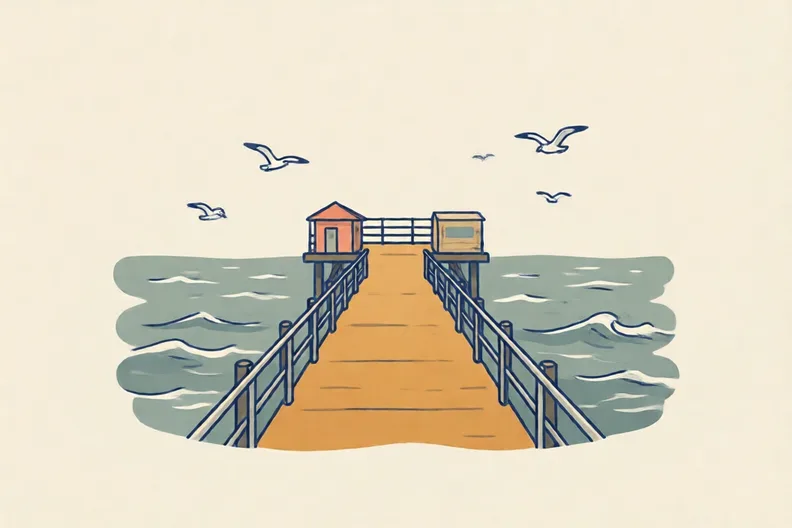
A seaside pier on a windy day with grey waves and gulls over the sea
Watch me
StatementCommandQuestionExclamation

The sea is grey today. It states a fact and has the verb is, so it is a statement.

Hold on to your hat! Hold is a bossy verb at the start, so it is a command.

Is the tide coming in? It asks something, so it is a question.

What a strong wind it is! It starts with What and has the verb is, so it is an exclamation.

Now you
  1. 1.

    Which type is this sentence: Close the gate now!

    Bossy verb firstRest of the words! or .
    statementcommandquestionexclamation
  2. 2.

    Which type is this sentence: Are the boats back yet?

    Being verb firstWords?
    statementcommandquestionexclamation

C Your turn6 min

Read each sentence. Pick its type, then check it has a verb.
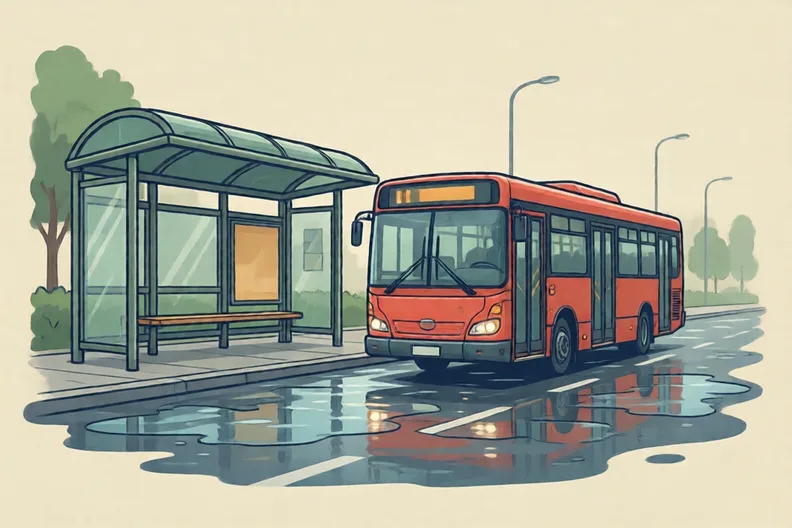
A bus stop on a wet street with a red bus pulling in
  1. 1.

    Which type is this sentence: The waves are big.

    WordsVerbFull stop
    statementcommandquestionexclamation
  2. 2.

    Which type is this sentence: Stop the bus!

    Bossy verb firstWords! or .
    statementcommandquestionexclamation
  3. 3.

    Which type is this sentence: Is the bus late?

    Being verb firstWords?
    statementcommandquestionexclamation
  4. 4.

    Which type is this sentence: What a long queue it is!

    What or HowWords with a verb!
    statementcommandquestionexclamation

Say it out loud: What did you look at first each time: the start, the verb, or the end mark?

D Spot the mistake3 min

Kit says: “What a fast bus!” is an exclamation sentence.
Whata fast bus!
  1. 1.

    Is Kit right? Explain in one sentence why.

E Think deeper3 min

Look at the park path. Think about why a writer might pick one kind of sentence over another.

A quiet park path in autumn with leaves on the ground and a bench
  1. 1.

    Write one command and one question about this park path. Why might a writer use a command here?

How did it feel?

I can do it Nearly Not yet
StudyDen · Year 3 · English · Simple, compound and adverbial complex sentencesAnswers are on the grown-up page

For the grown-up

Four Kinds of Simple Sentence · 2 minutes to read

Answers, and what a wrong one tells you

A

1. kicked

2. The bird sang.

3. bus

B

1. command If your child says statement, ask what the first word tells someone to do. A word that tells someone to do something starts a command.

2. question

C

1. statement If your child says exclamation, ask whether the sentence starts with What or How. Big does not make it an exclamation.

2. command

3. question

4. exclamation If your child says statement, ask them to find the verb. It starts with What and the verb is is, so it is an exclamation.

D

1. Look for: no verb, so it is only a phrase, not a sentence If your child says Kit is right, they may think What and the ! make a sentence. Ask which word is the verb, then ask them to add one, such as What a fast bus it is!

E

1. Look for: a command starting with a bossy verb, a question, and a reason about what the reader should do

Words to use

Say“Which word is the verb? Does the sentence end with a full stop, an exclamation mark or a question mark?”
Instead of“Just read it again and guess the type.”

After the sheet

Read sentences from a cereal box or a note on the fridge aloud. Call out the type of each one and point to its verb together.

Tick what your child got right in StudyDen. Anything missed comes back in a later Look back box, so there's no need to redo the sheet.

The rest of this unit

7 more sheets come with a StudyDen plan, in teaching order:

  1. Joining with and, but, or(with a plan)
  2. Commas before but and or(with a plan)
  3. Building complex sentences(with a plan)
  4. The comma signal(with a plan)
  5. Comma after the first clause(with a plan)
  6. Two things at once(with a plan)
  7. Commas in longer sentences(with a plan)

Every Year 3 English worksheet

The worksheets plan opens a printable sheet for every lesson in Years 1 to 6, each with its answers on a separate page for you. It costs £6.99 a month or £59 a year for the whole family, with no free trial.

The full StudyDen plan adds the lessons themselves, marked as your child works, with the worksheets included. It is 7 days free, then £29.99 a month.

Both start with a free account; you choose the plan when you sign up.