← Year 3 English worksheets

Year 3 The Journey: diary writing worksheet

“Finding the heart of a story” is free to print, with no account. It is the first sheet in the Year 3 English unit “The Journey: diary writing”, for children aged 7 to 8, and takes about 20 minutes.

Print it on A4. The child's pages come first; the answers, and what each wrong answer tells you, are on the grown-up page that follows. Weeks 28 to 29 of the year, 8 sheets in the unit.

Free sample · answers on the last page

Finding the heart of a story

Name: ____________ · Date: ____________
Year 3 · English · about 20 minutes
Answers are on the grown-up page

Today I can summarise the key events of a story and explain why some people must flee their home.

A Look back3 min

  1. 1.

    Number these steps from first to last.

    FirstNextLast
    1. Ali shuts the door behind him.
    2. Ali puts on his coat.
    3. Ali opens the front door.
  2. 2.

    Circle the word that means you feel uneasy because something bad might happen.

    calmworriedcheerfulbored
  3. 3.

    Circle the sentence that has a capital letter at the start and a full stop at the end.

    Capital letterWords in orderFull stop at end
    a fox ran across the field.A fox ran across the fieldA fox ran across the field.

B Watch me, then you4 min

Read this short story about Ben. Then summarise it in one sentence. Ben takes his new kite to the windy hill. A gust snaps the string, and the kite floats off over the trees. Ben runs after it, but it is gone.

Watch me
Ben flies his kiteThe string snapsKite drifts away

The big events are the kite going out, the string breaking and the kite flying off.

Small details, like the hill being windy, can be left out.

Summary: Ben's kite snapped free and drifted away.

Now you
  1. 1.

    Circle the best one-sentence summary of this story: Pip plants a seed in the garden. Rain falls for a week. Then a tall sunflower grows.

    Pip plants a seedRain for a weekA sunflower grows
    Pip wore a yellow hat in the garden.Pip grew a sunflower from a seed, helped by rain.The garden had lots of flowers and bees.

C Your turn6 min

These five events come from The Journey, a story about a family who must leave home. Use them to sort what a summary keeps and what it leaves out.

Trouble at homeDecide to leaveReach a borderCross the seaRide a train
  1. 1.

    Sort these cards into the two columns.

    The family's home is no longer safe.The colour of the girl's shoesThe mother decides they must leave.
    Keep for the summaryLeave out
  2. 2.

    Sort these four cards into the two columns.

    The family reach a border.What the family ate for breakfastThe family sail across the sea.How tall the sister is
    Keep for the summaryLeave out
  3. 3.

    Circle the event that a summary must keep.

    The colour of the girl's coatThe family must leave home because it is no longer safe.The songs the sister knowsWhat they eat on the boat
  4. 4.

    Write a summary of the whole story in two sentences. Keep only the big events.

Say it out loud: What is the difference between a big event and a small detail? Say one example of each.

D Spot the mistake3 min

A migrant chooses to move to a new country, often for work. A refugee has to flee because home is not safe.
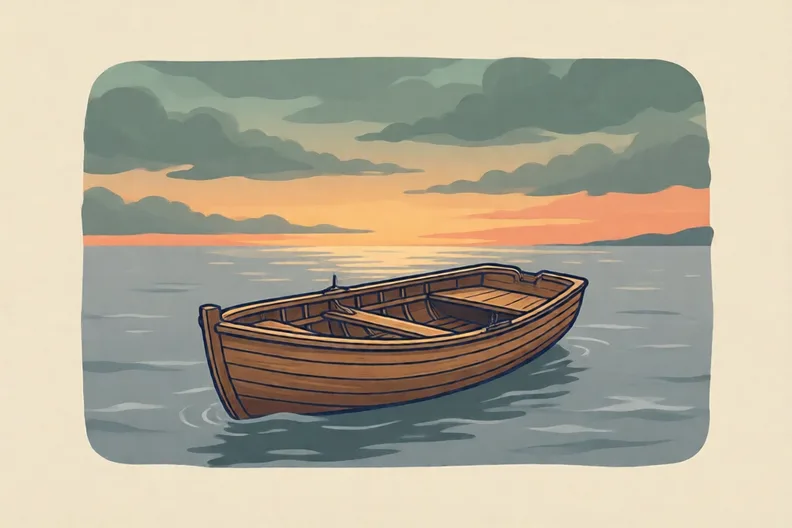
A small wooden boat on a grey sea under a heavy sky, with no people in it
Kit says: “The family in The Journey are migrants. They chose to move to find better jobs.”
  1. 1.

    Explain why Kit is wrong, in one or two sentences.

E Think deeper4 min

  1. 1.

    Francesca Sanna listened to real refugees before she wrote the book. Why does that matter for the feelings in the story? Write two sentences.

How did it feel?

Think about the family in the story. How did it feel to read about them?

I can do it Nearly Not yet
StudyDen · Year 3 · English · The Journey: diary writingAnswers are on the grown-up page

For the grown-up

Finding the heart of a story · 2 minutes to read

Answers, and what a wrong one tells you

A

1. 1 Ali puts on his coat. · 2 Ali opens the front door. · 3 Ali shuts the door behind him.

2. worried If they pick 'calm', they may be thinking of how calm a place looks. Ask: is there something bad that might happen to them?

3. A fox ran across the field. If they pick the sentence with no full stop, they have checked only the capital letter. Ask them to check both ends of each sentence.

B

1. Pip grew a sunflower from a seed, helped by rain. If they pick the hat sentence, they have kept a small detail. Ask: which sentence tells what happened from start to end?

C

1. Leave out: The colour of the girl's shoes · Keep for the summary: The family's home is no longer safe., The mother decides they must leave.

2. Leave out: What the family ate for breakfast, How tall the sister is · Keep for the summary: The family reach a border., The family sail across the sea.

3. The family must leave home because it is no longer safe.

4. Look for: Two sentences that keep the big events: leaving home to stay safe, crossing a border or the sea, and reaching a train towards a safe place.

D

1. Look for: Says the family are refugees because they had to flee danger and did not choose to leave. If they only say refugees are poor or sad, bring them back to the key idea: refugees must leave to stay safe. Ask: did the family choose to go?

E

1. Look for: Says the feelings are real because they come from true stories, so readers can understand what fleeing feels like.

Words to use

Say“What is the one sentence that tells the whole story? Which small details can we leave out?”
Instead of“Tell them the answer, or ask them to remember every detail of the story.”

After the sheet

Pick a short story or film you both know at home. Summarise it in one sentence together, then say what you left out and why.

Tick what your child got right in StudyDen. Anything missed comes back in a later Look back box, so there's no need to redo the sheet.

The rest of this unit

7 more sheets come with a StudyDen plan, in teaching order:

  1. Feelings and big ideas(with a plan)
  2. Past and present in diaries(with a plan)
  3. Planning my journey notes(with a plan)
  4. Writing a diary opening(with a plan)
  5. Planning my feelings paragraph(with a plan)
  6. Ola's diary: the second paragraph(with a plan)
  7. Publishing my diary entry(with a plan)

Every Year 3 English worksheet

The worksheets plan opens a printable sheet for every lesson in Years 1 to 6, each with its answers on a separate page for you. It costs £6.99 a month or £59 a year for the whole family, with no free trial.

The full StudyDen plan adds the lessons themselves, marked as your child works, with the worksheets included. It is 7 days free, then £29.99 a month.

Both start with a free account; you choose the plan when you sign up.