← Year 3 English worksheets

Year 3 The Day the Crayons Quit: reading and writing persuasive letters worksheet

“Objects can be characters” is free to print, with no account. It is the first sheet in the Year 3 English unit “The Day the Crayons Quit: reading and writing persuasive letters”, for children aged 7 to 8, and takes about 20 minutes.

Print it on A4. The child's pages come first; the answers, and what each wrong answer tells you, are on the grown-up page that follows. Weeks 33 to 34 of the year, 8 sheets in the unit.

Free sample · answers on the last page

Objects can be characters

Name: ____________ · Date: ____________
Year 3 · English · about 20 minutes
Answers are on the grown-up page

Today I can find the character in a story, even when the character is an object.

A Look back3 min

  1. 1.

    Which word describes the crayon in 'the red crayon'?

    redcrayonthe
  2. 2.

    Which word fits the gap in 'Duncan ___ home'?

    Duncanhome
    runsDuncanhome
  3. 3.

    Put these parts of a story in order. Write 1, 2 and 3 in the boxes.

    1. End: the problem is solved
    2. Beginning: a problem starts
    3. Middle: the problem gets bigger

B Watch me, then you4 min

A bike is left out in the rain all week. It writes to its owner, Leo, to say it is soaked and fed up.
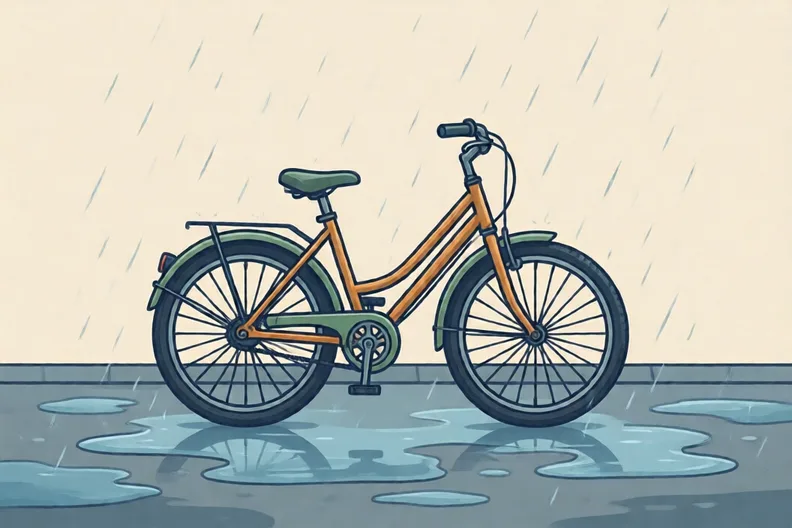
Watch me
A bicycle standing alone on a wet pavement in the rain

The writer is the bike. It is a thing, not a person.

It has feelings and it writes a letter.

So the bike is a character in this story, just like Leo.

Now you
  1. 1.

    A paint tin writes to Mia. It is tired of being shaken every day. Which object in this story is a character? Circle your answer.

    the paint tinMiathe shelf
  2. 2.

    A bag of old socks says: “Nobody has washed us for ages.” How do the socks feel? Circle your answer.

    grumpypleasedhungry

C Your turn7 min

Each question changes one thing. Read the story bit, then answer.
A kitchen worktop with a cup and a window behind it
  1. 1.

    A kettle says: “Nobody ever uses me, so I am fed up.” Who is the character? Circle your answer.

    the kettlethe kitchenthe cup
  2. 2.

    Look back at what the kettle says. Which words tell how it feels? Circle your answer.

    kettlefed upnobody
  3. 3.

    A pencil writes a letter to Ayla. The recipient is the one who gets the letter. Who is the recipient? Circle your answer.

    WriterLetterReader
    the pencilAylathe letter
  4. 4.

    Write two sentences from the pencil to Ayla. Say one thing it is unhappy about.

    PencilLetterAyla

Say it out loud: Which words in each sentence told you the thing had feelings or a voice?

D Spot the mistake3 min
Crayons lying flat on a wooden table beside a blank folded sheet of paper.
Ravi says: “A character in a book has to be a person or an animal.”
  1. 1.

    Is Ravi right? Write what you think and why.

E Think deeper4 min
A kitchen shelf holding a kettle, a teapot and a wooden spoon
  1. 1.

    Name two objects in your home that could be characters. What might each one say about its job?

How did it feel?

I can do it Nearly Not yet
StudyDen · Year 3 · English · The Day the Crayons Quit: reading and writing persuasive lettersAnswers are on the grown-up page

For the grown-up

Objects can be characters · 2 minutes to read

Answers, and what a wrong one tells you

A

1. red

2. runs If your child picks Duncan or home, ask which word tells what Duncan does. That word is the action word.

3. 1 Beginning: a problem starts · 2 Middle: the problem gets bigger · 3 End: the problem is solved

B

1. the paint tin

2. grumpy If your child picks hungry, ask how the socks feel about being left dirty. Feelings words tell us how a character feels.

C

1. the kettle

2. fed up If your child picks kettle, say: that is the character's name, not how it feels. Look for the feeling words.

3. Ayla If your child picks the pencil, ask who receives the letter. The recipient is the one who reads it.

4. Look for: Two sentences from a pencil to Ayla, with one unhappy reason, such as being too short to use.

D

1. Look for: Says No and explains that a character can be an object, such as a crayon with feelings. If your child says yes, ask: can a crayon write a letter and feel cross? Then it is a character.

E

1. Look for: Two named household objects, each with a feeling or opinion about its job, written as a character would.

Words to use

Say“Which thing in the story has feelings? How do you know?”
Instead of“Crayons are just crayons, so they can't be characters.”

After the sheet

Pick three things on the kitchen table. Ask your child to give one a feeling and a short line it would say about its job.

Tick what your child got right in StudyDen. Anything missed comes back in a later Look back box, so there's no need to redo the sheet.

The rest of this unit

7 more sheets come with a StudyDen plan, in teaching order:

  1. Crayon Feelings in Statements(with a plan)
  2. Features of a persuasive letter(with a plan)
  3. Planning the red crayon's letter(with a plan)
  4. Red crayon's first paragraph(with a plan)
  5. Red's second paragraph(with a plan)
  6. Editing in three rounds(with a plan)
  7. Reading aloud with power(with a plan)

Every Year 3 English worksheet

The worksheets plan opens a printable sheet for every lesson in Years 1 to 6, each with its answers on a separate page for you. It costs £6.99 a month or £59 a year for the whole family, with no free trial.

The full StudyDen plan adds the lessons themselves, marked as your child works, with the worksheets included. It is 7 days free, then £29.99 a month.

Both start with a free account; you choose the plan when you sign up.