← Year 3 English worksheets

Year 3 Reading and performing scripts worksheet

“Reading and performing a play script” is free to print, with no account. It is the first sheet in the Year 3 English unit “Reading and performing scripts”, for children aged 7 to 8, and takes about 20 minutes.

Print it on A4. The child's pages come first; the answers, and what each wrong answer tells you, are on the grown-up page that follows. Week 36 of the year, 4 sheets in the unit.

Free sample · answers on the last page

Reading and performing a play script

Name: ____________ · Date: ____________
Year 3 · English · about 20 minutes
Answers are on the grown-up page

Today I can name the parts of a play script and the people who help put on a play.

A Look back3 min

  1. 1.

    Write a feeling word that could describe how a small owl feels in the dark.

  2. 2.

    Which word is a verb in this sentence? The owl sat on the gate.

    noun: a naming wordverb: a doing wordadjective: describes
    owlsatgate
  3. 3.

    Which sentence is a question?

    tells you somethingasks you somethingshows strong feeling
    The owl is in the barn.Where is the owl?What a big owl!

B Watch me, then you4 min

Plop is a young barn owl who is scared of the dark. Look at the parts of a play script.

Watch me
Scene headingName and wordsStage direction

A play script is split into scenes, and each scene has a heading.

Each character's name comes before the words they say.

Stage directions in brackets tell the actors how to speak or move.

A playwright writes the script, and a director helps the actors rehearse it.

Now you
  1. 1.

    Which person writes a play?

    writes the playrehearses with castwatches the show
    actorplaywrightdirectoraudience member
  2. 2.

    Which line is a stage direction?

    Plop: The dark is too big.Scene 3: The Garden at Night(shivering, by the barn door)

C Your turn8 min

Read each question carefully, then answer it.
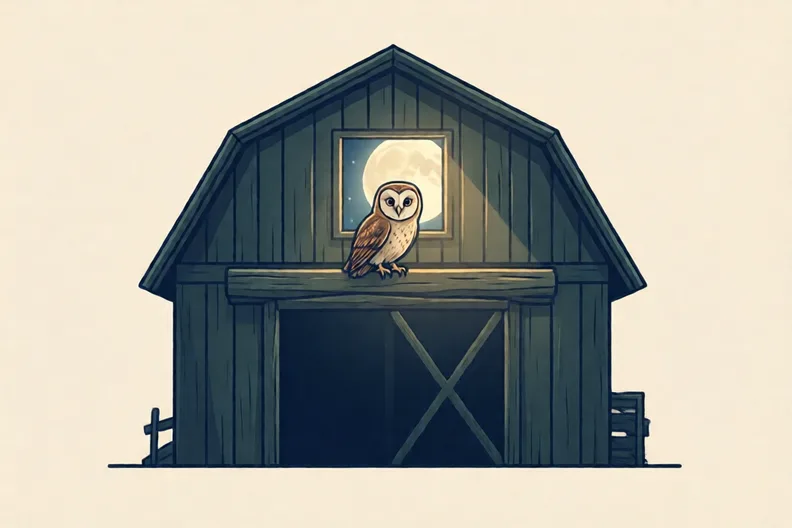
A dark barn at night with a small owl perched high on a beam
  1. 1.

    Write each card in the right column of the table.

    Scene 2: A Barn at NightMia: Are you ready, Plop?(whispering, looking up)
    Scene headingDialogueStage direction
  2. 2.

    Who tells the actors where to stand and how to move? Circle one.

    actordirectorstage crewaudience
  3. 3.

    Put these steps in order. Number each step from 1 to 4.

    1. The audience watches the performance.
    2. The director helps them rehearse again and again.
    3. The playwright writes the play script.
    4. Actors read the script aloud.
  4. 4.

    Write one stage direction that tells Plop how to move or speak. Put it in brackets.

Say it out loud: Which lines tell the actors what to say, and which lines tell them how to act?

D Spot the mistake3 min
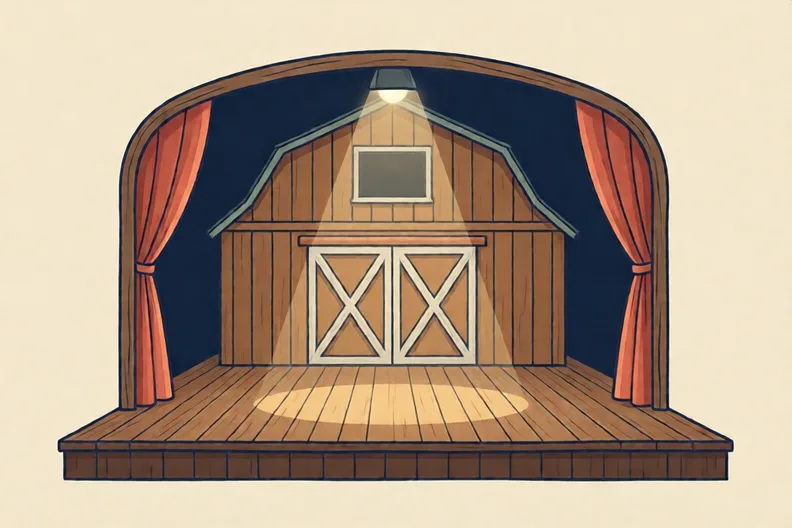
An empty theatre stage with a painted barn backdrop and one spotlight
Jo says: “A play is ready in one afternoon. No rehearsing is needed.”
  1. 1.

    Write one reason Jo is wrong, in your own words.

E Think deeper3 min

  1. 1.

    The stage crew want the audience to feel that Plop is in the dark. Describe one thing they could do, and say why it helps.

    setlightingsound effects

How did it feel?

Think about how it felt to read or perform the lines. Talk about it with your grown-up.

I can do it Nearly Not yet
StudyDen · Year 3 · English · Reading and performing scriptsAnswers are on the grown-up page

For the grown-up

Reading and performing a play script · 2 minutes to read

Answers, and what a wrong one tells you

A

1. Look for: A feeling word such as scared, nervous, frightened or worried.

2. sat your child has picked a thing, not an action. Fix: a verb tells what someone or something does. Ask: what does the owl do?

3. Where is the owl?

B

1. playwright your child may have picked someone who acts in or watches the play. Ask: who writes the words before anyone rehearses?

2. (shivering, by the barn door) your child may have picked a spoken line or a scene heading. Fix: stage directions sit in brackets and tell the actors how to move or speak.

C

1. Dialogue: Mia: Are you ready, Plop? · Scene heading: Scene 2: A Barn at Night · Stage direction: (whispering, looking up)

2. director your child has picked the actor. Actors say the lines and follow the moves. Fix: ask who watches the rehearsal and gives the moves.

3. 1 The playwright writes the play script. · 2 Actors read the script aloud. · 3 The director helps them rehearse again and again. · 4 The audience watches the performance.

4. Look for: A stage direction in brackets that describes how Plop moves or speaks, such as nervously, slowly or quietly.

D

1. Look for: A reason that plays need weeks of rehearsing, with actors and the director practising again and again before the audience comes. your child may only say that Jo is wrong. Fix: ask what the actors do before the audience arrives, and how many times they practise.

E

1. Look for: One stage crew idea, such as dimming the lights, using quiet sounds or changing the set, with a clear reason linked to the audience feeling the dark.

Words to use

Say“Which lines are the stage directions, and how do you know?”
Instead of“Just read it through once, that's enough for a play.”

After the sheet

Read a short bedtime story together as a play. One of you reads what the characters say. The other reads the rest, in a voice that fits.

Tick what your child got right in StudyDen. Anything missed comes back in a later Look back box, so there's no need to redo the sheet.

The rest of this unit

3 more sheets come with a StudyDen plan, in teaching order:

  1. Bringing Charlotte's Web to life(with a plan)
  2. Reading a play script(with a plan)
  3. Making it up live(with a plan)

Every Year 3 English worksheet

The worksheets plan opens a printable sheet for every lesson in Years 1 to 6, each with its answers on a separate page for you. It costs £6.99 a month or £59 a year for the whole family, with no free trial.

The full StudyDen plan adds the lessons themselves, marked as your child works, with the worksheets included. It is 7 days free, then £29.99 a month.

Both start with a free account; you choose the plan when you sign up.