← Year 6 English worksheets

Year 6 Antarctic animals: non-chronological report worksheet

“Finding the report's features” is free to print, with no account. It is the first sheet in the Year 6 English unit “Antarctic animals: non-chronological report”, for children aged 10 to 11, and takes about 21 minutes.

Print it on A4. The child's pages come first; the answers, and what each wrong answer tells you, are on the grown-up page that follows. Weeks 26 to 28 of the year, 12 sheets in the unit.

Free sample · answers on the last page

Finding the report's features

Name: ____________ · Date: ____________
Year 6 · English · about 21 minutes
Answers are on the grown-up page

Today I can spot the features that make a non-chronological report easy to use.

A Look back3 min

  1. 1.

    Number these steps 1, 2 and 3 to show the order they happened.

    1. The butterfly came out of the chrysalis.
    2. The egg hatched into a tiny caterpillar.
    3. The caterpillar grew and shed its skin.
  2. 2.

    Circle the sentence where the comma is in the right place.

    OpeningphraseMain clause
    After lunch, we walked to the pond.After lunch we, walked to the pond.After, lunch we walked to the pond.
  3. 3.

    Number these words 1, 2 and 3 in alphabetical order.

    1. larva
    2. antenna
    3. chrysalis

B Watch me, then you4 min

This is a report about a dragonfly. The reader can jump to any section, so the sections are not in time order.
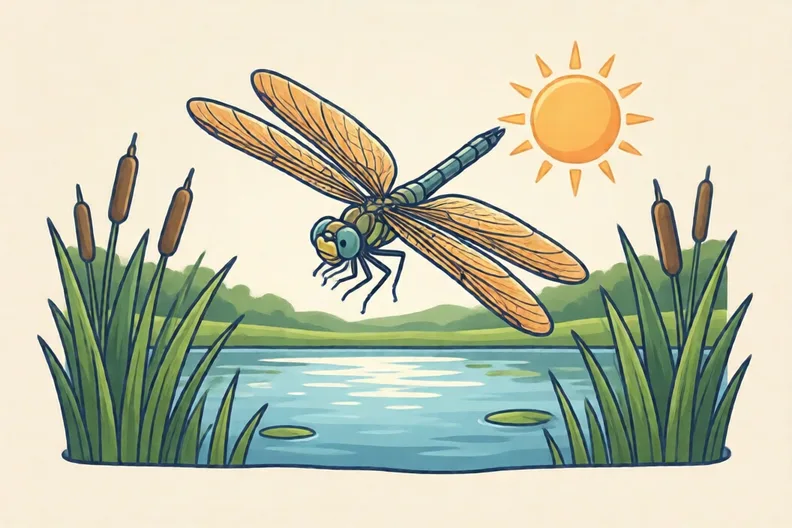
A dragonfly hovering over a still pond in summer sunshine, with reeds at the edge
Watch me
TitleIntroductionThemed sectionsConclusion

The title names the subject: dragonflies.

The introduction gives general facts about the whole subject.

Each themed section has a subheading and paragraphs on one theme.

The conclusion zooms back out to a final thought.

Now you
  1. 1.

    In the chain, the blank box shows one feature. Circle the feature that goes in the blank.

    TitleIntroductionConclusion
    themed sections with subheadingsa timeline of events in ordera list of the author's favourite words

C Your turn6 min

Each question is about a different paragraph in a dragonfly report. Circle the best subheading for it.

ParagraphMain topicSubheading
  1. 1.

    Paragraph: Dragonfly nymphs hunt tiny creatures under the water. They grab tadpoles and small fish with a jaw that shoots out. Circle the best subheading.

    What do dragonfly nymphs eat?Why do dragonflies matter?Where do dragonflies sleep?
  2. 2.

    Paragraph: Dragonflies live near still or slow water, such as ponds and marshes. Some also fly over ditches and slow rivers. Circle the best subheading.

    Where are dragonflies found?How do dragonflies grow?What do dragonflies eat?
  3. 3.

    Paragraph: An adult dragonfly has two pairs of wings. Its huge eyes cover most of its head, and its long body is often brightly coloured. Circle the best subheading.

    What does a dragonfly look like?Where do dragonflies live?How long do dragonflies live?
  4. 4.

    Paragraph: The adult lays its eggs on plants that grow in water. When an egg hatches, a tiny nymph swims out. Circle the best subheading.

    How does a dragonfly begin its life?What does a dragonfly eat?What does a dragonfly look like?

Say it out loud: Which words in each paragraph told you the subheading? Say the word that gave it away.

D Spot the mistake3 min

Kit says: “A paragraph is just one long sentence, because it only has to be about one theme.”
Sentence 1Sentence 2Sentence 3
  1. 1.

    Explain in one or two sentences why Kit is wrong.

E Think deeper4 min

  1. 1.

    Choose an insect. Write a title, then three subheadings as questions. Under one subheading, write one sentence about that theme only.

    Title

How did it feel?

I can do it Nearly Not yet
StudyDen · Year 6 · English · Antarctic animals: non-chronological reportAnswers are on the grown-up page

For the grown-up

Finding the report's features · 2 minutes to read

Answers, and what a wrong one tells you

A

1. 1 The egg hatched into a tiny caterpillar. · 2 The caterpillar grew and shed its skin. · 3 The butterfly came out of the chrysalis. your child has put the last event first. Ask: which thing had to happen before the others could?

2. After lunch, we walked to the pond. your child has put the comma in the wrong place. Ask: where does the opening phrase end, and where does the main clause start?

3. 1 antenna · 2 chrysalis · 3 larva your child has ordered the words by their meaning or by when they appear in a story. Ask: which letter comes first in the alphabet?

B

1. themed sections with subheadings your child has chosen the timeline, which belongs to a recount in time order. Ask: does this report jump between topics or follow the days?

C

1. What do dragonfly nymphs eat? your child chose a general heading, not one about food. Ask: which word in the paragraph tells the reader the topic?

2. Where are dragonflies found? your child picked a heading about growing or food. Ask: what does the paragraph say about places?

3. What does a dragonfly look like? your child chose a heading about time or place. Ask: is the paragraph describing the body or the life?

4. How does a dragonfly begin its life? your child has picked a heading about food or looks. Ask: what is the paragraph about, the start of life or the body?

D

1. Look for: Says a paragraph is usually several linked sentences about one theme, each adding a detail, not one long sentence.

E

1. Look for: A title, three question subheadings, and one sentence that links only to the theme of its subheading.

Words to use

Say“Which heading would you read first to find a fact fast, and why?”
Instead of“Tell them the answers, or say that headings do not matter.”

After the sheet

Take a library book or a leaflet at home. Find its headings, read two of them aloud, and say which section you would read first and why.

Tick what your child got right in StudyDen. Anything missed comes back in a later Look back box, so there's no need to redo the sheet.

The rest of this unit

11 more sheets come with a StudyDen plan, in teaching order:

  1. Three kinds of complex sentence(with a plan)
  2. Penguin notes and sources(with a plan)
  3. Notes sorted by theme(with a plan)
  4. Threats to penguins(with a plan)
  5. Parenthesis in penguin facts(with a plan)
  6. Linking facts with care(with a plan)
  7. Sections with a strong start(with a plan)
  8. Linking Ideas in Reports(with a plan)
  9. Ending a penguin report(with a plan)
  10. Editing with three checks(with a plan)
  11. Publishing my penguin report(with a plan)

Every Year 6 English worksheet

The worksheets plan opens a printable sheet for every lesson in Years 1 to 6, each with its answers on a separate page for you. It costs £6.99 a month or £59 a year for the whole family, with no free trial.

The full StudyDen plan adds the lessons themselves, marked as your child works, with the worksheets included. It is 7 days free, then £29.99 a month.

Both start with a free account; you choose the plan when you sign up.