← Year 6 English worksheets

Year 6 Using five sentence types worksheet

“Three kinds of clause” is free to print, with no account. It is the first sheet in the Year 6 English unit “Using five sentence types”, for children aged 10 to 11, and takes about 22 minutes.

Print it on A4. The child's pages come first; the answers, and what each wrong answer tells you, are on the grown-up page that follows. Week 1 of the year, 4 sheets in the unit.

Free sample · answers on the last page

Three kinds of clause

Name: ____________ · Date: ____________
Year 6 · English · about 22 minutes
Answers are on the grown-up page

Today I can tell adverbial, relative and non-finite clauses apart by their opening words.

A Look back3 min

  1. 1.

    Which word is the verb in 'The owl hooted softly'? Circle it.

    The owlsoftly
    owlhootedsoftlyThe
  2. 2.

    Write each group in the right column.

    Rain fellon the roof
    Rain fell on the roof.On the wet roof.
    A full sentenceNot a full sentence
  3. 3.

    Which mark ends a sentence? Circle it.

    Rain fell
    full stopcommaapostrophe

B Watch me, then you4 min

Ola waited on the harbour wall while the boats came in. Read the example, then check each group of words.

A small harbour at dusk with fishing boats sailing in
Watch me
Ola waitedwhile boatscame in

Ola waited on the harbour wall. It has a verb and makes sense alone, so it is a main clause.

while the boats came in. It has a verb but cannot stand alone, so it is subordinate.

It starts with 'while', a subordinating conjunction, so it is an adverbial clause.

Now you
  1. 1.

    The kettle, which was old, whistled. What type of clause is 'which was old'? Circle the right type.

    The kettle,which was old,whistled.
    adverbial clauserelative clausenon-finite (-ing) clause
  2. 2.

    Kit felt the wind on his face, rowing across the bay. What type of clause is 'rowing across the bay'? Circle the right type.

    Kit feltthe windrowing out
    adverbial clauserelative clausenon-finite (-ing) clause

C Your turn7 min

Each sentence starts with Ali packing his bag. Only the clause after it changes. Circle the type of that clause.

  1. 1.

    Ali packed his bag after the bell rang. What type is 'after the bell rang'? Circle the right type.

    Ali packedhis bag
    adverbial clauserelative clausenon-finite (-ing) clause
  2. 2.

    Ali packed his bag, which had a torn strap. What type is 'which had a torn strap'? Circle the right type.

    Ali packedhis bag
    adverbial clauserelative clausenon-finite (-ing) clause
  3. 3.

    Ali packed his bag, holding the torn strap tight. What type is 'holding the torn strap tight'? Circle the right type.

    Ali packedhis bag
    adverbial clauserelative clausenon-finite (-ing) clause
  4. 4.

    Ali packed his bag because the bus was early. What type is 'because the bus was early'? Circle the right type.

    Ali packedhis bag
    adverbial clauserelative clausenon-finite (-ing) clause

Say it out loud: Say it out loud: what is the first word of the clause, and what type does that word tell you?

D Spot the mistake3 min
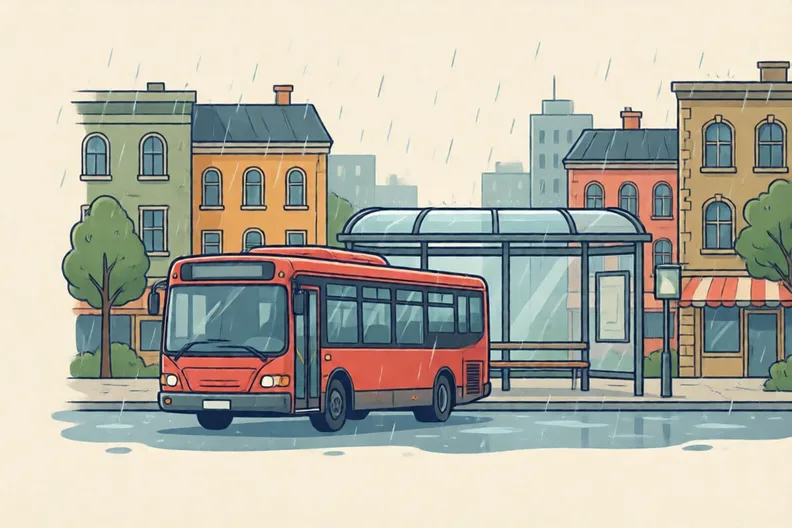
A red bus at a wet bus stop in a town street
Priya says: “The big red bus is a subordinate clause, because it is not a main clause.”
  1. 1.

    What is 'The big red bus' really? Write it and say why.

    Thebigredbus

E Think deeper4 min

Imagine a castle on a hill. Write your own sentences about it.
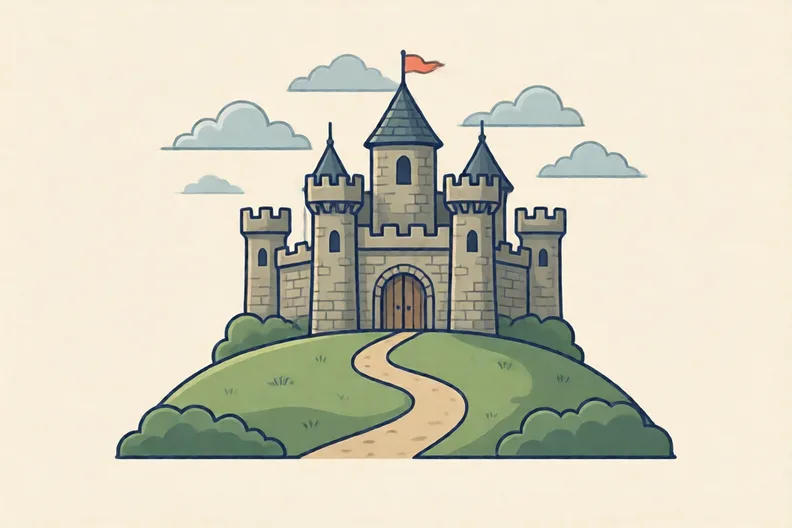
A stone castle on a grassy hill under a grey sky
  1. 1.

    Write three sentences about the castle. Use an adverbial clause, a relative clause and a non-finite (-ing) clause, one in each. Underline the clause in each sentence and name its kind in the margin.

How did it feel?

I can do it Nearly Not yet
StudyDen · Year 6 · English · Using five sentence typesAnswers are on the grown-up page

For the grown-up

Three kinds of clause · 2 minutes to read

Answers, and what a wrong one tells you

A

1. hooted your child may have picked 'owl', which is a thing. Ask: what did the owl do? The verb is the doing word.

2. A full sentence: Rain fell on the roof. · Not a full sentence: On the wet roof. If the wet roof group went in the first column, ask: is there a doing word in it? Read it aloud and listen for whether it sounds finished.

3. full stop

B

1. relative clause If your child chose 'adverbial clause', ask which word starts the group. 'Which' is a relative pronoun, not a conjunction like 'when' or 'because'.

2. non-finite (-ing) clause If your child said 'relative clause', check the opening word. Relative clauses often begin with 'who' or 'which'. This one starts with an -ing verb.

C

1. adverbial clause If your child picked 'relative clause', point at 'after'. It is a subordinating conjunction about time, so it is adverbial.

2. relative clause

3. non-finite (-ing) clause If your child picked 'adverbial clause', look for a joining word like 'when' or 'because'. There is none here, so the -ing verb is the clue.

4. adverbial clause

D

1. Look for: A phrase, because there is no verb in the group of words. If your child says 'subordinate clause', they think any group that is not a main clause counts. Ask: is there a verb? Find the doing word, and if there is none, it is only a phrase.

E

1. Look for: Three sentences, each with a subordinate clause of a different type, labelled correctly.

Words to use

Say“Show me the first word of that group. Does it tell you the type? Could the group stand alone?”
Instead of“That's right, well done. Move on quickly.”

After the sheet

At teatime, each person says one sentence with a 'because' part. Ask whether the part after 'because' could stand alone, then swap turns.

Tick what your child got right in StudyDen. Anything missed comes back in a later Look back box, so there's no need to redo the sheet.

The rest of this unit

3 more sheets come with a StudyDen plan, in teaching order:

  1. Five sentence types(with a plan)
  2. Connecting words that link ideas(with a plan)
  3. Who does what to whom(with a plan)

Every Year 6 English worksheet

The worksheets plan opens a printable sheet for every lesson in Years 1 to 6, each with its answers on a separate page for you. It costs £6.99 a month or £59 a year for the whole family, with no free trial.

The full StudyDen plan adds the lessons themselves, marked as your child works, with the worksheets included. It is 7 days free, then £29.99 a month.

Both start with a free account; you choose the plan when you sign up.