← Year 6 English worksheets

Year 6 Debating important topics worksheet

“How to debate” is free to print, with no account. It is the first sheet in the Year 6 English unit “Debating important topics”, for children aged 10 to 11, and takes about 20 minutes.

Print it on A4. The child's pages come first; the answers, and what each wrong answer tells you, are on the grown-up page that follows. Week 24 of the year, 5 sheets in the unit.

Free sample · answers on the last page

How to debate

Name: ____________ · Date: ____________
Year 6 · English · about 20 minutes
Answers are on the grown-up page

Today I can explain the parts of a debate speech and why a plan helps.

A Look back3 min

  1. 1.

    The bus was late ___ the roads were icy. Which word gives the reason? Circle one.

    Roadswere icyBus was late
    becausebeforeafter
  2. 2.

    Sort these words into nouns and verbs. Write each word in the right column.

    Adasatdown
    riverrungardenjump
    NounVerb
  3. 3.

    Which sentence puts a comma in the right place after the opening words? Circle one.

    Quietlythe catcrept in
    Quietly, the cat crept in.Quietly the cat, crept in.

B Watch me, then you4 min

Ruby and Jun are debating a school trip. Ruby wants the trip to be longer. Here is her speech in four parts.

Watch me
PointExplanationProofSummary

Point: The trip should be longer, because pupils learn more outdoors.

Explanation: Think about how much you remember from a short visit.

Proof: In a made-up survey, 9 of 10 pupils said they learned most on trips.

Summary: A longer trip helps everyone learn, so please vote yes.

Now you
  1. 1.

    A speaker says: “I think the trip should be longer, because pupils learn more.” Which PEPS part is this? Circle one.

    I thinkbecauselearn more
    PointExplanationProofSummary

C Your turn6 min

Each sentence comes from one part of a PEPS speech. Circle the part.

  1. 1.

    I think school should start at 10am, because children sleep better. Which PEPS part? Circle one.

    I thinkbecausesleep better
    PointExplanationProofSummary
  2. 2.

    In a made-up poll of 100 pupils, 80 said they felt tired before lessons. Which PEPS part? Circle one.

    made-up poll100 pupils80 felt tired
    PointExplanationProofSummary
  3. 3.

    To finish, a later start helps everyone sleep well, so please vote for it. Which PEPS part? Circle one.

    To finishplease vote
    PointExplanationProofSummary
  4. 4.

    Imagine a pupil who arrives exhausted. Her mind wanders in the first lesson. Which PEPS part? Circle one.

    Imaginearrives exhaustedmind wanders
    PointExplanationProofSummary

Say it out loud: Which words told you the part? Say the clue words out loud.

D Spot the mistake3 min
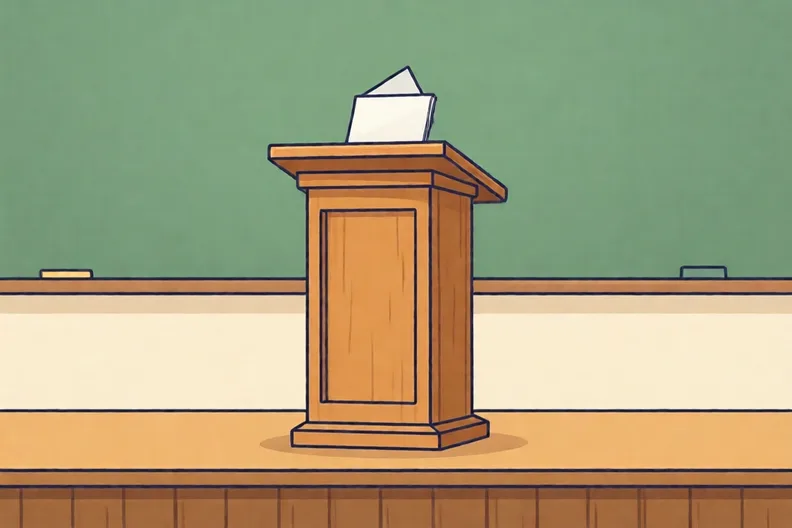
An empty wooden lectern on a school hall stage with a folded card on top
Kit says: “I can make my whole speech up on the spot, so I do not need a plan.”
  1. 1.

    Write one reason why Kit is wrong. Use the word plan or PEPS in your answer.

    PlanSpeechCalm speaker

E Think deeper3 min

  1. 1.

    Think of a debate topic about school, such as the length of lunch. Write one opinion and one because-reason that someone on the other team could challenge.

    OpinionbecauseReason

How did it feel?

I can do it Nearly Not yet
StudyDen · Year 6 · English · Debating important topicsAnswers are on the grown-up page

For the grown-up

How to debate · 2 minutes to read

Answers, and what a wrong one tells you

A

1. because If your child picks before or after, ask which came first: the ice or the late bus. Then ask which word shows the reason.

2. Noun: river, garden · Verb: run, jump If a verb sits under Noun, ask your child to act out the word. If they can do it, it is a verb.

3. Quietly, the cat crept in. If your child picks the second sentence, ask them to read it aloud and pause. The comma should come after the opening word, not before the verb.

B

1. Point If your child picks Explanation, ask where the speaker first says what they think. The opinion and the one reason come first, in the Point.

C

1. Point If your child picks Proof, ask whether any evidence is given. There is none, just an opinion and a reason, which is the Point.

2. Proof If your child picks Explanation, ask whether the sentence gives a number or a finding. A poll result is evidence, so it is Proof.

3. Summary If your child picks Point, ask whether the sentence repeats earlier points or states a new one. Repeating and ending with a call to action is the Summary.

4. Explanation If your child picks Point, ask whether the sentence gives a new reason or paints a picture to help the audience feel the idea. Painting a picture is the Explanation.

D

1. Look for: Gives one reason linked to a plan or PEPS, such as keeping the speech in order or helping a nervous speaker remember what comes next. If your child agrees with Kit, ask what they would say next if they froze halfway through. Then ask why a plan would help.

E

1. Look for: A clear opinion about school with a because-reason that a person on the other side could reasonably question.

Words to use

Say“Which PEPS part is this sentence doing? What clue word told you?”
Instead of“Your speech sounds fine. Just say it confidently and you will be fine.”

After the sheet

Pick a family question, such as whether pets should sleep in bedrooms. Say a Point, an Explanation, a Proof and a Summary aloud, in that order.

Tick what your child got right in StudyDen. Anything missed comes back in a later Look back box, so there's no need to redo the sheet.

The rest of this unit

4 more sheets come with a StudyDen plan, in teaching order:

  1. Writing Strong Motions(with a plan)
  2. Preparing a debate speech(with a plan)
  3. Running a full debate(with a plan)
  4. Scoring and reflecting on a debate(with a plan)

Every Year 6 English worksheet

The worksheets plan opens a printable sheet for every lesson in Years 1 to 6, each with its answers on a separate page for you. It costs £6.99 a month or £59 a year for the whole family, with no free trial.

The full StudyDen plan adds the lessons themselves, marked as your child works, with the worksheets included. It is 7 days free, then £29.99 a month.

Both start with a free account; you choose the plan when you sign up.