← Year 6 English worksheets

Year 6 Poetry of place worksheet

“Senses in a poem” is free to print, with no account. It is the first sheet in the Year 6 English unit “Poetry of place”, for children aged 10 to 11, and takes about 20 minutes.

Print it on A4. The child's pages come first; the answers, and what each wrong answer tells you, are on the grown-up page that follows. Weeks 32 to 34 of the year, 12 sheets in the unit.

Free sample · answers on the last page

Senses in a poem

Name: ____________ · Date: ____________
Year 6 · English · about 20 minutes
Answers are on the grown-up page

Today I can explain how imagery in a poem appeals to the senses and creates mood.

A Look back3 min

  1. 1.

    Which sentence uses a metaphor? Circle one.

    Like or asIs or was
    The sea was like a sheet of glass.The sea was a sheet of glass.The sea looked calm.
  2. 2.

    Which word describes a calm, still mood? Circle one.

    tensepeacefulfurious
  3. 3.

    Which word is an adjective for colour? Circle one.

    quicklygreyunder

B Watch me, then you4 min

Read this short beach text: 'The pebbles clatter as the tide slides back. Each stone feels cold and smooth in my hand. The sun is a bright orange coin above the sea.' Which sense does each sentence use?

Watch me
Clatter: soundCold, smooth: touchOrange coin: sight

'Clatter' is a sound, so the first sentence uses aural imagery.

'Cold and smooth' is how it feels, so the second uses tactile imagery.

'Bright orange coin' is what we see, so the third uses visual imagery.

Now you
  1. 1.

    Read: 'The wind bites my cheeks.' Circle the kind of imagery.

    VisualAuralTactile
  2. 2.

    Read: 'The waves hush softly onto the sand.' Circle the kind of imagery.

    VisualAuralTactile

C Your turn7 min

Each row changes one thing. Look for the word that shows which sense the writer uses. Abstract imagery describes an idea or feeling, such as worry, that you cannot see, hear or touch.
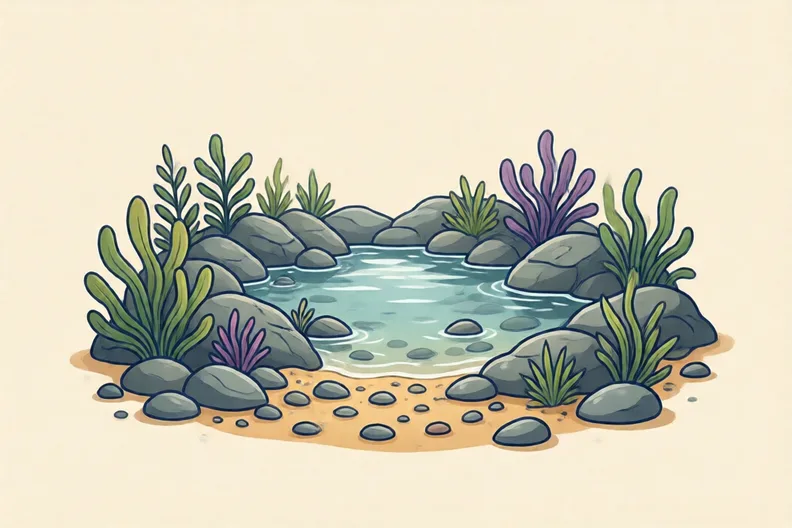
A rock pool on a beach with green and purple weed and pebbles around it
  1. 1.

    Read: 'The sunset paints the sky pink and gold.' Circle the kind of imagery.

    VisualAuralTactile
  2. 2.

    Read: 'Sand scrapes between my toes.' Circle the kind of imagery.

    VisualAuralTactile
  3. 3.

    Copy each sentence into the column that matches its imagery.

    The gulls shriek overhead.The sky glows gold.The stone is gritty.
    VisualAuralTactile
  4. 4.

    Read: 'My hope drifts through my mind, light as a feather.' Circle the kind of imagery.

    VisualAuralTactileAbstract

Say it out loud: Which word gave you the clue? Did it appeal to a sense, or to a feeling?

D Spot the mistake3 min

Sam says: “The line ‘a question bounces in his head’ is visual imagery, because I can picture it clearly.”
VisualAuralTactileAbstract
  1. 1.

    Write the correct type of imagery and say why in one or two sentences. Use the words idea or feeling.

E Think deeper4 min
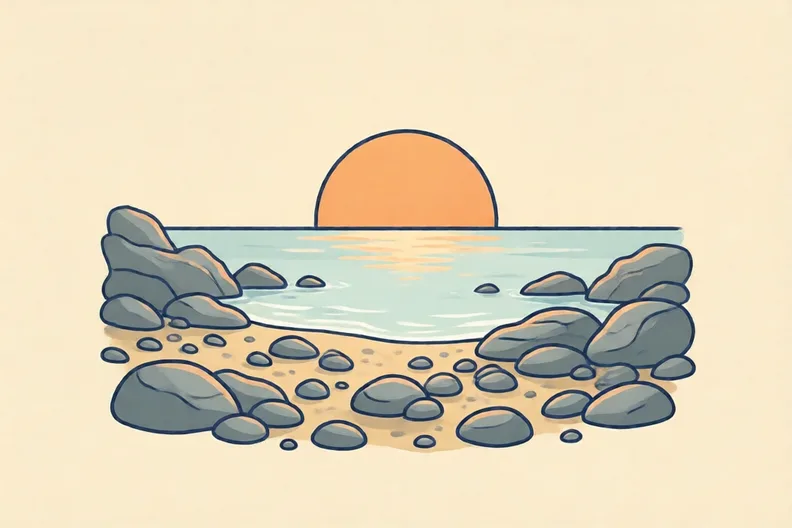
A pebbly beach at sunset with grey stones and a pale sea
  1. 1.

    Which is more powerful: 'the stone was grey' or 'the stone was a worn grey coin'? Explain in two or three sentences, using the words imagery and mood.

How did it feel?

I can do it Nearly Not yet
StudyDen · Year 6 · English · Poetry of placeAnswers are on the grown-up page

For the grown-up

Senses in a poem · 2 minutes to read

Answers, and what a wrong one tells you

A

1. The sea was a sheet of glass. If your child circles the sentence with like, that is a simile. Ask: does the sentence compare one thing to another using like or as, or by saying it is one thing?

2. peaceful If your child circles tense, ask: would a calm beach feel tense? Mood words describe the overall feeling, not one thing in the scene.

3. grey If your child circles quickly, that is an adverb. Ask: does the word tell you what something looks like, or how something moves?

B

1. Tactile If your child says visual, ask: can you see a bite? Bites are felt, so this is tactile imagery.

2. Aural If your child says visual, ask: what does hush appeal to? It is a sound, so the ear is the sense used, which makes it aural.

C

1. Visual If your child says tactile, ask: what does paints show us? Colours are seen with the eyes, so this is visual imagery.

2. Tactile If your child says visual, ask: which sense does scrapes use? You feel the sand, so the reader feels it too.

3. Aural: The gulls shriek overhead. · Visual: The sky glows gold. · Tactile: The stone is gritty. If your child puts the gulls in tactile, ask: what do you hear when gulls shriek? Sound is aural imagery.

4. Abstract If your child says tactile because of the feather, ask: can you hold hope? Hope is an idea or feeling, so this is abstract imagery.

D

1. Look for: Names abstract imagery and says the question is an idea or feeling, not something that can be seen or touched. If your child still says visual, ask: can you point at a question? Mind pictures are not always things we see. Abstract imagery describes ideas and feelings.

E

1. Look for: Makes a clear choice and backs it with a reason about imagery or mood. Most will choose the coin, but a well-argued case for the plain line is also right.

Words to use

Say“Which sense is the writer making you notice? Show me the word that tells you.”
Instead of“Just tell them the answer, or say the poem is pretty.”

After the sheet

Take a walk outside. Pick one thing you can see, one you can hear and one you can touch. Say a short sentence about each, then ask which one makes the reader feel the most.

Tick what your child got right in StudyDen. Anything missed comes back in a later Look back box, so there's no need to redo the sheet.

The rest of this unit

11 more sheets come with a StudyDen plan, in teaching order:

  1. Two poems, two places(with a plan)
  2. A house that remembers(with a plan)
  3. Reading the quiet night(with a plan)
  4. Blake's London in context(with a plan)
  5. Seeing and hearing images(with a plan)
  6. Looking at form(with a plan)
  7. Performing London with feeling(with a plan)
  8. How London makes us feel(with a plan)
  9. Writing about a place(with a plan)
  10. Pictures and feelings in poems(with a plan)
  11. Performing a city poem(with a plan)

Every Year 6 English worksheet

The worksheets plan opens a printable sheet for every lesson in Years 1 to 6, each with its answers on a separate page for you. It costs £6.99 a month or £59 a year for the whole family, with no free trial.

The full StudyDen plan adds the lessons themselves, marked as your child works, with the worksheets included. It is 7 days free, then £29.99 a month.

Both start with a free account; you choose the plan when you sign up.