← Year 6 English worksheets

Year 6 Homophones and tense worksheet

“Same spelling, two meanings” is free to print, with no account. It is the first sheet in the Year 6 English unit “Homophones and tense”, for children aged 10 to 11, and takes about 20 minutes.

Print it on A4. The child's pages come first; the answers, and what each wrong answer tells you, are on the grown-up page that follows. Weeks 6 to 9 of the year, 19 sheets in the unit.

Free sample · answers on the last page

Same spelling, two meanings

Name: ____________ · Date: ____________
Year 6 · English · about 20 minutes
Answers are on the grown-up page

Today I can work out which meaning a homonym has by reading the whole sentence.

A Look back3 min

  1. 1.

    Add un- to safe. What does unsafe mean? Circle the right meaning.

    safeunsafe
    not safevery safesafely
  2. 2.

    Which ending makes help into an adjective meaning full of help? Circle it.

    help
    -ful-less-ly
  3. 3.

    In “The tall tree swayed”, which word is an adjective? Circle it.

    adjectivedescribesa noun
    talltreeswayed

B Watch me, then you5 min

Read both sentences. The word bat is spelled the same each time, but it means something different.
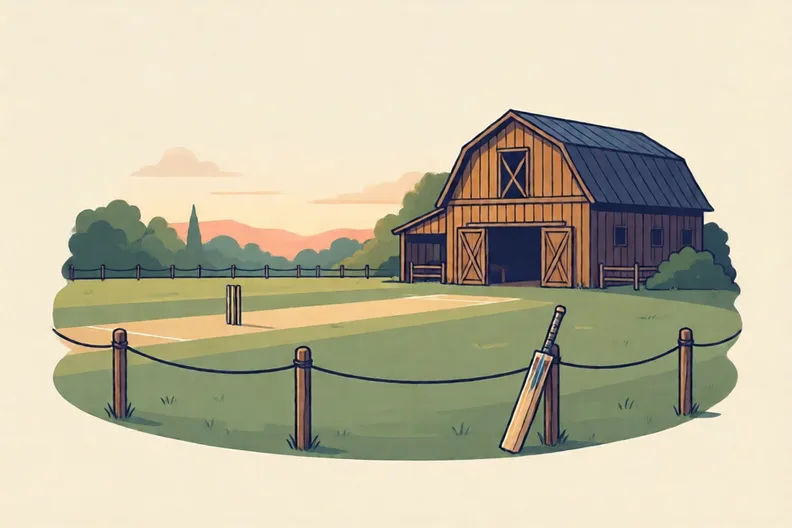
A village cricket pitch beside an old wooden barn at dusk
Watch me
bat:cricket kitbat: flyinganimal

Zara swung the bat at the ball.

A bat flew out of the barn at dusk.

Same spelling, two meanings: the rest of the sentence shows which one.

Now you
  1. 1.

    In “The fair had a big wheel”, what does fair mean? Circle the right meaning.

    fair: a funfairfair: justfair: light
    a funfairjust and evenlight in colour
  2. 2.

    In “Lead is a heavy grey metal”, what word class is lead? Circle it.

    lead: ametallead: toguide
    nounverbadjective

C Your turn6 min

Read each whole sentence. Circle the meaning that fits.

  1. 1.

    Please close the window on the way out. Circle the meaning.

    close:to shutclose:near to
    to shutnear to
  2. 2.

    We sat close to the warm fire. Circle the meaning.

    close:to shutclose:near to
    to shutnear to
  3. 3.

    Lead the way to the playground, Mia. Circle the meaning.

    lead: toguidelead: ametal
    to guidea soft grey metal
  4. 4.

    The old pipe was made of lead. Circle the meaning.

    lead: toguidelead: ametal
    to guidea soft grey metal

Say it out loud: Say each sentence aloud. Did lead sound the same both times? What in the sentence helped you choose?

D Spot the mistake3 min
An old grey metal pipe beside a garden path with a signpost
Kit says: “In ‘Lead the way home’, lead rhymes with ‘red’, so it must mean the metal.”
  1. 1.

    Write one sentence to explain what Kit gets wrong.

E Think deeper3 min

  1. 1.

    Write one sentence where spring is a season, and one where spring means to jump.

    spring:a seasonspring:to jump

How did it feel?

Did reading the whole sentence first help you choose? Talk about it with your grown-up.

I can do it Nearly Not yet
StudyDen · Year 6 · English · Homophones and tenseAnswers are on the grown-up page

For the grown-up

Same spelling, two meanings · 2 minutes to read

Answers, and what a wrong one tells you

A

1. not safe If they circle “very safe”, they think un- means more. Say that un- often means “not”, so unsafe means not safe.

2. -ful If they circle “-less”, ask them what helpless means. Then ask what helpful means, and which ending fits.

3. tall If they circle “tree”, they have found a noun. Ask: does this word describe a thing, or name it?

B

1. a funfair If they circle “just and even”, they have read fair as in fair play. Ask what a big wheel is found at, and which meaning fits.

2. noun If they circle “verb”, ask: is lead the thing the sentence is about, or an action someone does?

C

1. to shut If they circle “near to”, ask them to act out closing a window. Then reread the sentence with that action in mind.

2. near to

3. to guide If they circle “a soft grey metal”, ask: could a metal lead anyone to a playground? Say the sentence aloud. Here lead rhymes with need.

4. a soft grey metal

D

1. Look for: Says that lead here means to guide, is a verb, and rhymes with need. Notes that the metal lead is the word that rhymes with red. If they say Kit is right, ask them to read the whole sentence aloud. Then ask what the sentence is about: a metal or a walk.

E

1. Look for: Two sentences using spring: one where it names a season, one where it means jumping. Each must fit its context.

Words to use

Say“Read the whole sentence aloud before you say the word. What is the sentence about?”
Instead of“Tell them the word is spelled the same, so it must be said the same way every time.”

After the sheet

Find a word with two meanings on a food packet or in the house, such as “light”. Ask your child to write two sentences with it, read each one aloud, and say which meaning each one uses.

Tick what your child got right in StudyDen. Anything missed comes back in a later Look back box, so there's no need to redo the sheet.

The rest of this unit

18 more sheets come with a StudyDen plan, in teaching order:

  1. Same sound, different spelling(with a plan)
  2. Nearly the same sound, different spelling(with a plan)
  3. Noun or verb spellings(with a plan)
  4. Adding -ed to verbs(with a plan)
  5. Adding -ing to verbs(with a plan)
  6. Spelling -er comparisons(with a plan)
  7. Spelling -est words(with a plan)
  8. Plurals with -s and -ies(with a plan)
  9. Plurals with -es and -ves(with a plan)
  10. Irregular plurals(with a plan)
  11. Spelling -le, -el and -il(with a plan)
  12. Adding the suffix -al(with a plan)
  13. The shun sound: -tion or -cian?(with a plan)
  14. Root words and -sion(with a plan)
  15. Spelling -ous and -tious(with a plan)
  16. Adjectives ending -ous and -cious(with a plan)
  17. Spelling -cial and -tial(with a plan)
  18. Roots that keep their c(with a plan)

Every Year 6 English worksheet

The worksheets plan opens a printable sheet for every lesson in Years 1 to 6, each with its answers on a separate page for you. It costs £6.99 a month or £59 a year for the whole family, with no free trial.

The full StudyDen plan adds the lessons themselves, marked as your child works, with the worksheets included. It is 7 days free, then £29.99 a month.

Both start with a free account; you choose the plan when you sign up.