Callouts and Omar's story
Today I can explain how callouts in a graphic novel show what characters say, think and feel.
A Look back3 min
- 1.
The writing cycle has a gap. Which stage goes in the gap?
EditPlanPublish - 2.
Which part of the story is missing from the chain?
MiddleGlossaryIndex - 3.
Circle the mark that should end this sentence: Did Ali run □
?.!
B Watch me, then you4 min
Omar waits in a food queue at the camp. Read what each of the three panels holds, then answer.
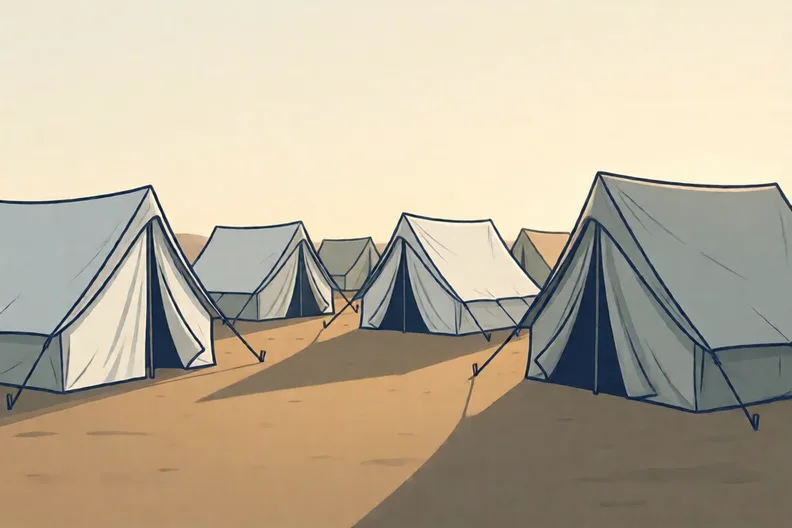
Panel 1 has a speech bubble, so Omar says this out loud.
Panel 2 has a thought bubble, so Omar's thought is private.
Panel 3 has a narration box, so the reader learns more about the camp.
- 1.
A box at the top of a panel says: ‘The camp was home for fifteen years.’ Which callout is this?
speech bubblethought bubblenarration panel
C Your turn6 min
Read each callout. Circle the callout that fits.
- 1.
A round bubble with a tail pointing to Omar says: ‘Hassan, come with me.’ Which callout is it?
speech bubblethought bubblenarration panel - 2.
A cloud-shaped bubble says: ‘I hope we find Mama.’ Which callout is it?
speech bubblethought bubblenarration panel - 3.
A box at the top says: ‘Rain fell on the tents all night.’ Which callout is it?
speech bubblethought bubblenarration panel - 4.
A box at the bottom says: ‘Omar kept the notebook safe.’ Which callout is it?
speech bubblethought bubblenarration panel
Say it out loud: Look at the cloud-shaped bubble. What does Omar's thought tell you about how he feels?
D Spot the mistake3 min
- 1.
Write what is wrong with Kit’s claim.
E Think deeper4 min
- 1.
Omar is one of more than 300,000 people at Dadaab. Write one question you would ask someone else who lived there.